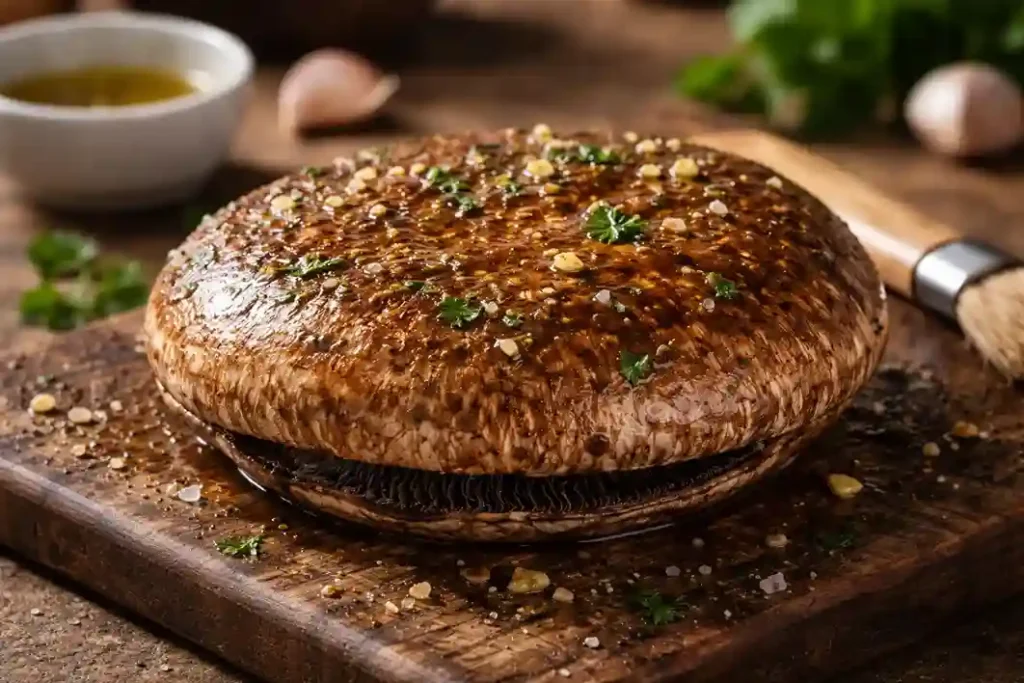
A portobello mushroom represents the fully grown stage of a common cultivated mushroom and shows a wide cap with a dark brown color. Its large size makes it filling enough to serve as a main ingredient. Because it grows broader and thicker than smaller varieties, cooks rely on it for hearty meals. Many home cooks value how one cap anchors an entire dish without extra ingredients.
In cooking, this mushroom matters because it delivers strong flavor with impressive flexibility. It absorbs marinades quickly and maintains its structure under high heat. The taste feels earthy and deeply savory, while the texture stays firm and satisfying. As a result, people choose it often for everyday kitchens and restaurant menus. Its bold taste, generous size, and reliable performance make it a dependable option for simple and creative recipes.
“A portobello mushroom offers rich flavor and a satisfying, meaty texture.”
What Is Portobello Mushroom

Portobello mushrooms represent the final, mature stage of a commonly cultivated mushroom species. As the mushroom grows, its cap expands fully and flattens, while the gills underneath darken and open. This stage gives portobello mushrooms their large size and sturdy structure. Unlike younger forms, they stop growing quickly and focus on developing deeper flavor. Because of this maturity, they feel more substantial and work well as a centerpiece ingredient.
Button mushrooms come from the same species but appear much earlier in the growth cycle. Farmers harvest them while the caps stay small, round, and tightly closed. At that point, the flavor remains mild and subtle. In contrast, portobello mushrooms grow wider and thicker, which changes both taste and texture. While button mushrooms suit soups or quick sautés, mature caps handle grilling, roasting, and stuffing with ease.
Texture creates one of the biggest differences. Button mushrooms feel soft and slightly spongy after cooking. Portobello mushrooms stay firm and dense, even under high heat. This firmness gives them a meat-like bite that many cooks value. Flavor also shifts with age. Younger mushrooms taste light and neutral, while mature ones develop an earthy, savory depth often described as umami-rich.
Because of these traits, portobello mushrooms stand apart in cooking. Their growth stage shapes their size, texture, and flavor. Together, these qualities explain why many recipes treat them as more than just another mushroom.
Nutritional Value of Portobello Mushroom
Portobello mushrooms offer more than bold flavor and hearty texture. They also provide strong nutritional value with very few calories. Many people include them in meals to support balanced eating goals. Their nutrient profile fits well into plant-forward, low-calorie, and heart-conscious diets. From essential vitamins to helpful antioxidants, portobello mushrooms contribute benefits beyond taste. Understanding their nutritional value helps explain why they remain a popular choice for everyday cooking and health-focused recipes.
Calories and Macronutrients
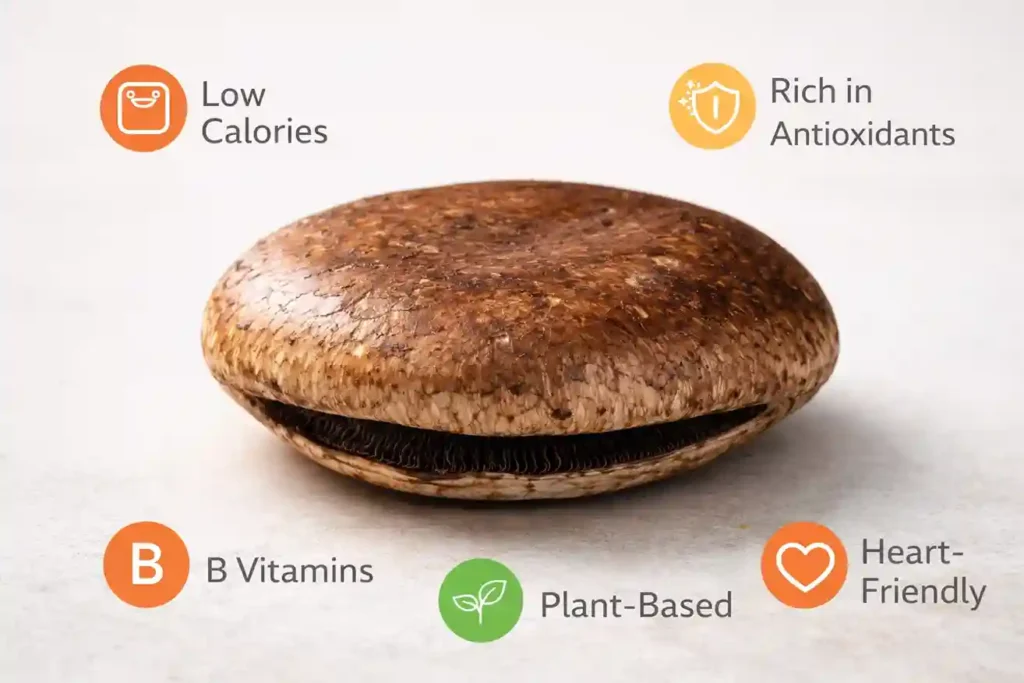
A portobello mushroom offers strong nutrition with very few calories. One large cap contains roughly 35 to 40 calories. This low energy value makes it ideal for weight-focused meals. Despite the low calories, it provides useful macronutrients. Carbohydrates remain modest and come mostly from natural sugars and fiber. Protein content stays moderate for a vegetable-based food. While it cannot replace animal protein alone, it supports balanced meals well. Fat levels stay extremely low, which helps heart-conscious diets. Because of this profile, many people include portobello mushrooms in calorie-controlled and plant-forward eating plans.
Vitamins and Minerals
Portobello mushrooms provide several essential vitamins and minerals. They supply B vitamins such as riboflavin, niacin, and pantothenic acid. These nutrients support energy metabolism and nervous system health. Potassium appears in meaningful amounts and helps regulate fluid balance and muscle function. Selenium also stands out as a key mineral. It supports immune defense and antioxidant activity. When exposed to sunlight or UV light, portobello mushrooms can provide vitamin D. This benefit matters for people with limited sun exposure. Copper and phosphorus also contribute to bone health and cellular repair. Together, these micronutrients make portobello mushrooms more than just a low-calorie food.
Fiber and Antioxidant Benefits
Fiber content adds another advantage. A single portobello mushroom contains enough fiber to support digestion without causing heaviness. Fiber helps regulate blood sugar levels and supports gut health. It also promotes fullness, which can reduce overeating. Antioxidants play an equally important role. Portobello mushrooms contain compounds like ergothioneine and glutathione. These antioxidants help protect cells from oxidative stress. They support long-term health by reducing damage linked to aging.
Unlike many vegetables, mushrooms store these antioxidants in stable forms. Cooking does not destroy them easily. As a result, both raw and cooked preparations retain nutritional value. Overall, the nutritional value of portobello mushroom combines low calories with meaningful nutrients. Its balance of macros, vitamins, fiber, and antioxidants explains its growing role in healthy cooking.
Health Benefits of Portobello Mushrooms
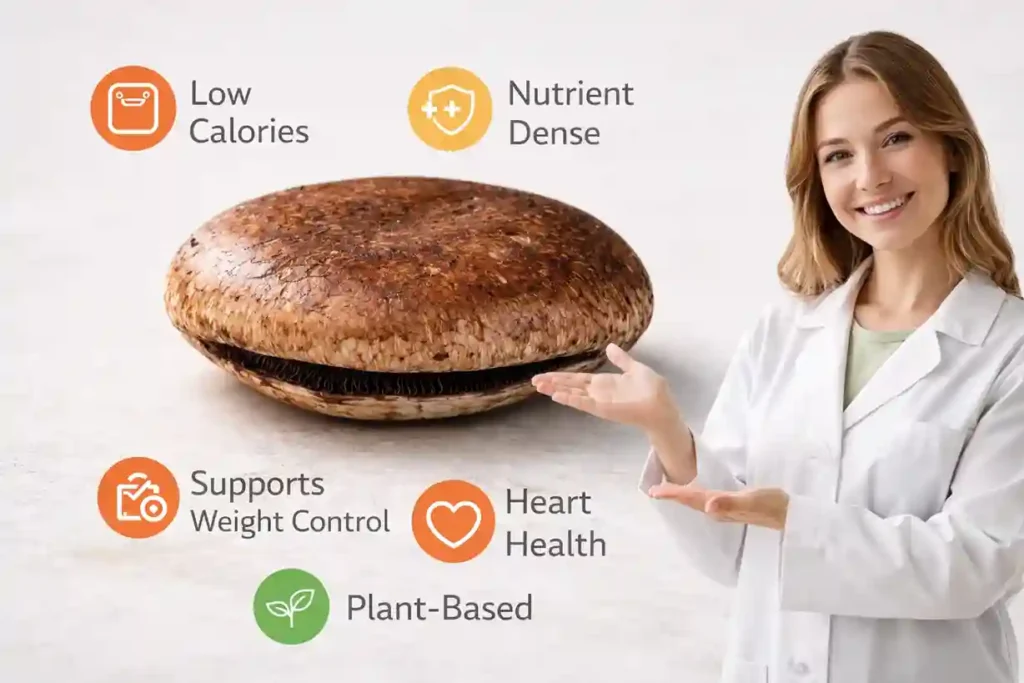
Portobello mushrooms offer more than taste and texture. They also support overall health in practical ways. Their low calorie count and nutrient density make them useful in everyday meals. Many people choose them to support weight control, heart health, and plant-based eating. Because they fit easily into many diets, their benefits extend beyond specific eating styles.
Support for Weight Management
Portobello mushrooms support weight management through low calories and high volume. One large cap adds substance without excess energy. Because of this, meals feel filling while staying light. Fiber also plays a key role. It slows digestion and helps control hunger between meals. Additionally, the firm texture encourages slower eating. This habit improves fullness signals and reduces overeating. As a result, many weight-focused diets include portobello mushrooms regularly.
Benefits for Heart Health
Heart health benefits from foods that reduce strain on the cardiovascular system. Portobello mushrooms contain almost no saturated fat or cholesterol. This profile supports healthy blood lipid levels. They also provide potassium, which helps regulate blood pressure. Antioxidants further protect cells from oxidative stress linked to heart disease. Because they replace higher-fat ingredients easily, portobello mushrooms support heart-friendly meal planning naturally.
Role in Plant-Based Diets
Plant-based diets rely on foods that provide satisfaction and nutrition. Portobello mushrooms meet both needs effectively. Their meaty texture makes meals feel complete without animal products. They pair well with grains, legumes, and vegetables. While they do not replace protein entirely, they support balanced plant-based meals. For many people, portobello mushrooms make plant-focused eating easier and more enjoyable.
Portobello Mushroom Taste and Texture
Portobello mushrooms stand out because of their bold taste and satisfying bite. Their flavor feels deeper than most other mushroom varieties. This depth makes them popular in meals where taste matters most. Many cooks rely on them to add richness without heavy ingredients.
The umami flavor defines their appeal. Portobello mushrooms deliver an earthy, savory taste that intensifies with cooking. Heat draws out natural compounds that create a rich, almost roasted flavor. Grilling or roasting enhances this effect even more. Because of this, dishes gain complexity without added sauces or fats. The flavor pairs well with herbs, garlic, and spices.
Texture plays an equally important role. Portobello mushrooms remain firm and dense when cooked properly. Unlike softer mushrooms, they do not collapse or turn mushy. Their thick caps provide a chewy, satisfying bite. This quality makes meals feel hearty and substantial. Many people compare the texture to grilled meat.
Because of both taste and texture, portobello mushrooms often replace meat. Their size allows them to serve as burger patties or main plates. They absorb marinades well and brown beautifully under high heat. As a result, cooks use them to create plant-forward meals that still feel complete and indulgent.
How to Select Fresh Portobello Mushrooms
Choosing fresh portobello mushrooms ensures better flavor, texture, and cooking results. Quality selection also helps avoid waste and food safety issues. By paying attention to appearance, smell, and structure, you can confidently pick mushrooms that perform well in any recipe. Understanding the difference between caps and stems further improves meal planning and preparation.
Visual Signs of Freshness
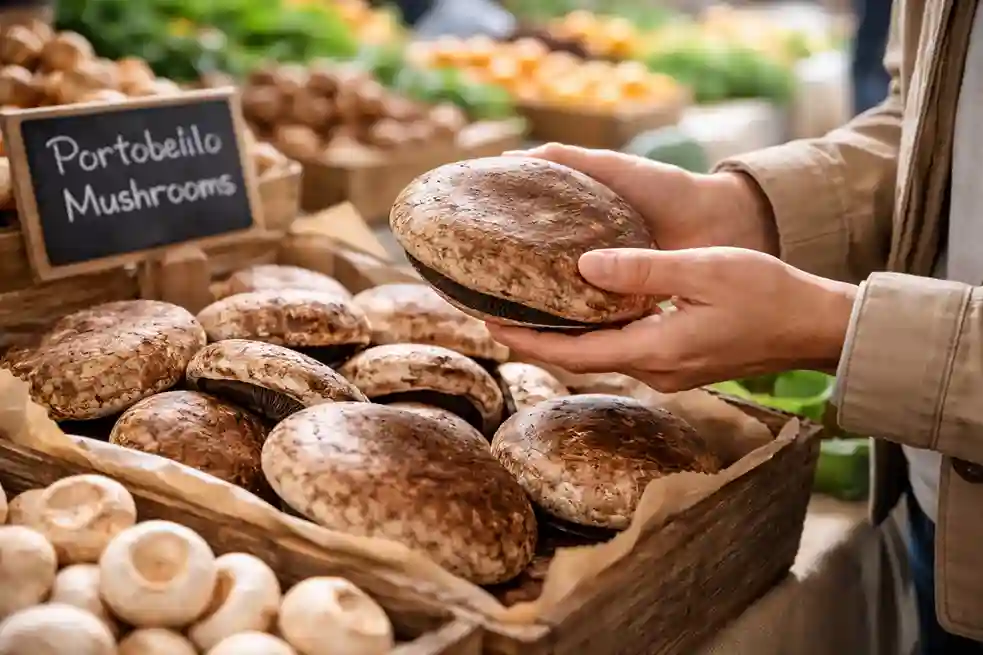
Fresh portobello mushrooms show clear visual quality. Look for caps that appear firm, smooth, and evenly colored. A healthy cap displays a deep brown shade without wrinkles or dark patches. The surface should feel dry to the touch. Gills underneath should look dark and intact, not wet or slimy. Mushrooms should also feel heavy for their size, which indicates proper moisture and freshness.
How to Avoid Spoiled Mushrooms
Avoid spoiled portobello mushrooms by checking smell and texture. Fresh mushrooms give off a mild, earthy aroma. A sour or unpleasant smell signals spoilage. Gently press the cap to test firmness. Mushy or sticky surfaces indicate breakdown. Also watch for excess moisture inside packaging. Too much liquid often means the mushrooms are aging. Any visible mold, including white or green fuzz, confirms they are no longer safe to use.
Choosing Caps Versus Stems
Choosing caps or stems depends on cooking needs. Large caps work best for grilling, roasting, or stuffing. They hold shape well and look appealing on the plate. Stems remain edible but feel slightly tougher. Many cooks chop stems for soups, sauces, or sautés. Selecting mushrooms with intact caps and attached stems gives the most flexibility in meal preparation.
Portobello Mushroom as a Meat Substitute
Portobello mushrooms have become a popular alternative to meat in many kitchens. Their size, texture, and flavor allow them to replace animal-based ingredients without sacrificing satisfaction. Many cooks choose them to create hearty meals that feel complete and balanced. Because they adapt well to seasoning and cooking methods, they fit naturally into meat-free dishes.
Why Portobello Mushrooms Work Well
Portobello mushrooms work well as a meat substitute because of their dense structure. The thick caps hold shape under high heat. They grill, roast, and sear without falling apart. Their umami-rich flavor adds depth similar to cooked meat. They also absorb marinades easily, which enhances taste. As a result, meals feel rich and filling without added heaviness.
Best Recipes Using Mushroom Caps
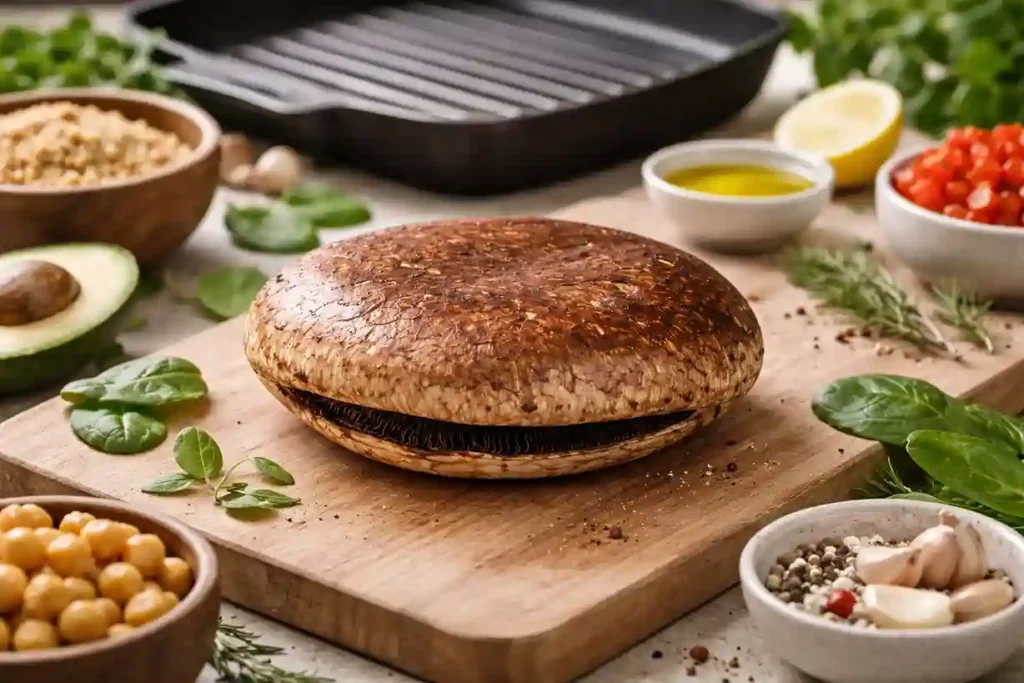
Large mushroom caps suit many meat-style recipes. Grilled caps work well as burger replacements. Stuffed caps pair nicely with grains, vegetables, and herbs. Roasted caps fit pasta dishes and grain bowls easily. Many cooks also slice caps for fajitas, stir-fries, or sandwiches. Because of their size, one cap often replaces a single meat portion cleanly.
Protein Pairing Suggestions
While portobello mushrooms add texture and flavor, pairing them with protein improves balance. Legumes such as lentils or chickpeas work well. Whole grains like quinoa add complementary amino acids. Nuts and seeds contribute both protein and healthy fats. Tofu or tempeh also pair well in plant-based meals. Together, these combinations create satisfying dishes with complete nutrition.
Common Mistakes When Cooking Portobello Mushrooms
Cooking portobello mushrooms seems simple, but small mistakes can affect flavor and texture. Because they contain natural moisture, they respond quickly to heat and seasoning choices. Avoiding a few common errors helps preserve their rich taste and firm structure. With the right approach, they deliver consistently satisfying results.
Overcooking Issues
Overcooking remains one of the most common problems. Portobello mushrooms release water as they cook. Too much heat or time causes them to shrink and turn soggy. High heat for a short time works best. Grilling or roasting quickly helps moisture evaporate without softening the caps. Removing them at the right moment preserves firmness and flavor.
Seasoning Errors
Seasoning mistakes often reduce overall taste. Many cooks under-season portobello mushrooms, assuming their natural flavor will carry the dish. Salt, herbs, and spices enhance their umami profile. On the other hand, too much oil can make them greasy. Light, even seasoning before cooking works best. Marinating briefly also improves depth without overpowering the mushrooms.
Texture Problems to Avoid
Texture issues usually come from improper handling. Washing mushrooms under running water causes them to absorb excess moisture. Instead, wipe them clean with a damp cloth. Pressing mushrooms down while cooking forces out juices and leads to dryness. Let them cook undisturbed for better browning. These simple steps help maintain a firm, meaty bite.
Portobello Mushroom vs Other Mushrooms
Portobello mushrooms differ from other popular varieties in size, flavor, and use. Their maturity gives them unique qualities that affect cooking and nutrition. Comparing them with cremini and shiitake mushrooms helps clarify where each fits best. Understanding these differences improves recipe choices and meal balance.
Portobello Mushroom vs Cremini
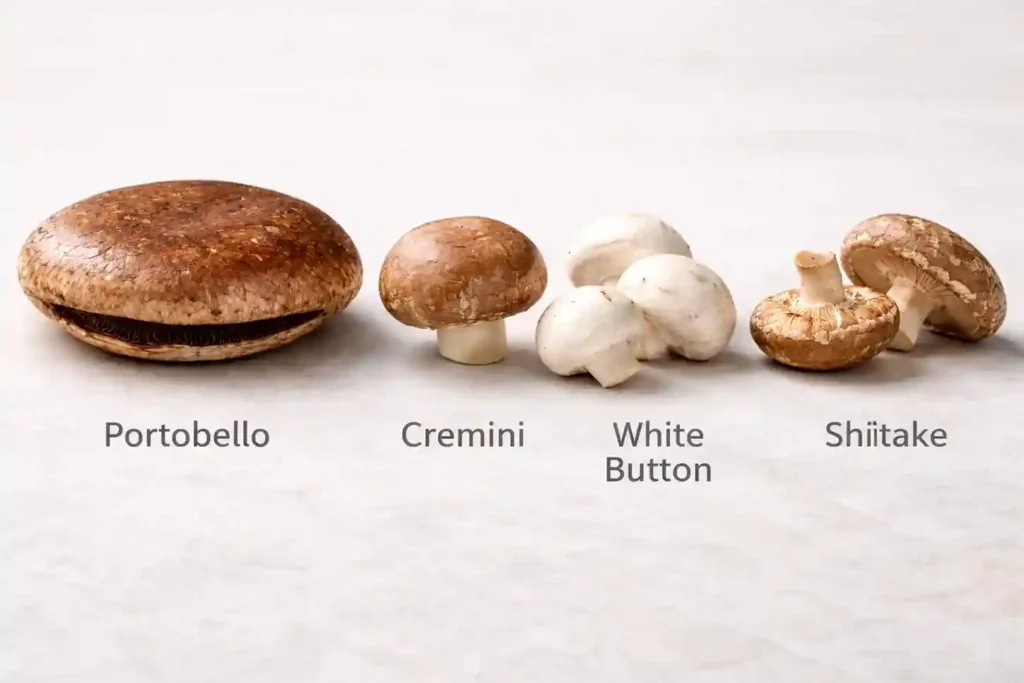
Portobello and cremini mushrooms come from the same species. The difference comes from growth stage. Cremini mushrooms are harvested earlier, while portobello mushrooms reach full maturity. Cremini caps stay smaller and firmer. Their flavor remains mild and slightly earthy. Portobello mushrooms grow much larger and develop deeper flavor. Their caps flatten and thicken, which supports grilling and stuffing. Nutritionally, both offer similar vitamins and minerals. However, portobello mushrooms often feel more filling because of size and texture.
Portobello Mushrooms vs Shiitake
Shiitake mushrooms differ in both origin and character. They grow on wood rather than soil. Shiitake mushrooms deliver a smoky, rich flavor with a chewy bite. Their caps stay smaller, and stems feel tougher. Portobello mushrooms taste milder but more rounded. They also provide a broader surface for cooking. Shiitake mushrooms contain higher levels of certain antioxidants, while portobello mushrooms offer more potassium and volume per serving.
Flavor and Nutrition Comparison
Flavor intensity varies across types. Shiitake mushrooms taste bold and smoky. Cremini mushrooms taste light and subtle. Portobello mushrooms balance earthiness with savory depth. Nutritionally, all three remain low in calories and fat. Portobello mushrooms stand out for portion size and versatility, making them ideal for main dishes.
| Nutrient (per serving) | Portobello Mushroom | Cremini Mushroom | Shiitake Mushroom |
|---|---|---|---|
| Calories | Very low | Very low | Low |
| Protein | Moderate | Average | Moderate |
| Carbohydrates | Low | Less | Low |
| Fat | Nearly zero | Nearly zero | Very low |
| Dietary Fiber | Moderate | Average | Moderate |
| Potassium | High | Moderate | Lower |
| B Vitamins | High (B2, B3, B5) | Max (B2, B3) | High (B5, B6) |
| Vitamin D* | Moderate (if UV-exposed) | Moderate (if UV-exposed) | Low |
| Selenium | Moderate | High | Moderate |
| Antioxidants | Moderate | Moderate | High |
*Vitamin D content increases when mushrooms are exposed to UV light.
Are Portobello Mushrooms Safe for Everyone
Portobello mushrooms are safe for most people when handled and cooked properly. They appear often in everyday meals because they offer nutrition without common dietary risks. Still, certain individuals should take simple precautions. Understanding allergies, preparation methods, and portion size helps ensure safe consumption.

Allergies and Sensitivities
Mushroom allergies are uncommon but possible. Some people may experience itching, digestive discomfort, or mild swelling after eating mushrooms. Those with mold sensitivities may react more easily. If symptoms appear, avoiding mushrooms and consulting a healthcare provider is wise. People with digestive sensitivity may also notice bloating if they eat large amounts. Cooking usually reduces this risk.
Raw vs Cooked Concerns
Eating portobello mushrooms raw raises some concerns. Raw mushrooms contain compounds that can be harder to digest. They may also carry surface bacteria if not cleaned well. Cooking breaks down these compounds and improves safety. Heat also enhances flavor and texture. Grilling, sautéing, or roasting ensures better digestion and lowers food safety risks. For most people, cooked mushrooms remain the safest choice.
Portion Guidance
Portion size also matters. Generally, one large cap or two smaller caps count as a standard serving. This amount delivers nutrients without excess fiber. However, very large portions may cause bloating for some people. To avoid this, pair mushrooms with grains, vegetables, or protein. In balance, moderate servings fit comfortably into most diets.
Frequently Asked Questions About Portobello Mushrooms
Conclusion
Portobello mushrooms stand out for their size, flavor, and versatility. Throughout this guide, they show why many cooks rely on them for everyday meals. They offer a rich, savory taste while staying low in calories and fat. As a result, they fit easily into balanced and plant-forward diets.
Moreover, their firm texture makes them ideal for grilling, roasting, and stuffing. They also work well as a meat substitute when paired with other protein sources. When selected fresh and cooked properly, they remain safe and easy to enjoy. Overall, understanding how to choose, prepare, and use portobello mushrooms helps you cook with confidence. With the right approach, they can elevate simple dishes into satisfying, flavorful meals.
“Portobello bring rich flavor and hearty satisfaction to any meal.”
Enjoy cooking with portobello mushrooms? Share your favorite recipe or tip in the comments and join the conversation.

Amina Pierce is a tech-savvy blogger with a specialty in electronics, where she shares practical insights on gadgets, innovations, and the latest trends shaping our digital world. With a strong interest in how technology impacts everyday life, she breaks down complex topics into clear, easy-to-understand articles for readers of all backgrounds. While electronics is her main focus, Amina also enjoys writing on a variety of other subjects, including lifestyle, travel, and personal growth, making her content both diverse and engaging.
Outside of blogging, Amina loves tinkering with new devices, exploring smart home solutions, and capturing her experiences through travel photography. Her blend of technical knowledge and approachable style makes her a trusted source of information and inspiration.