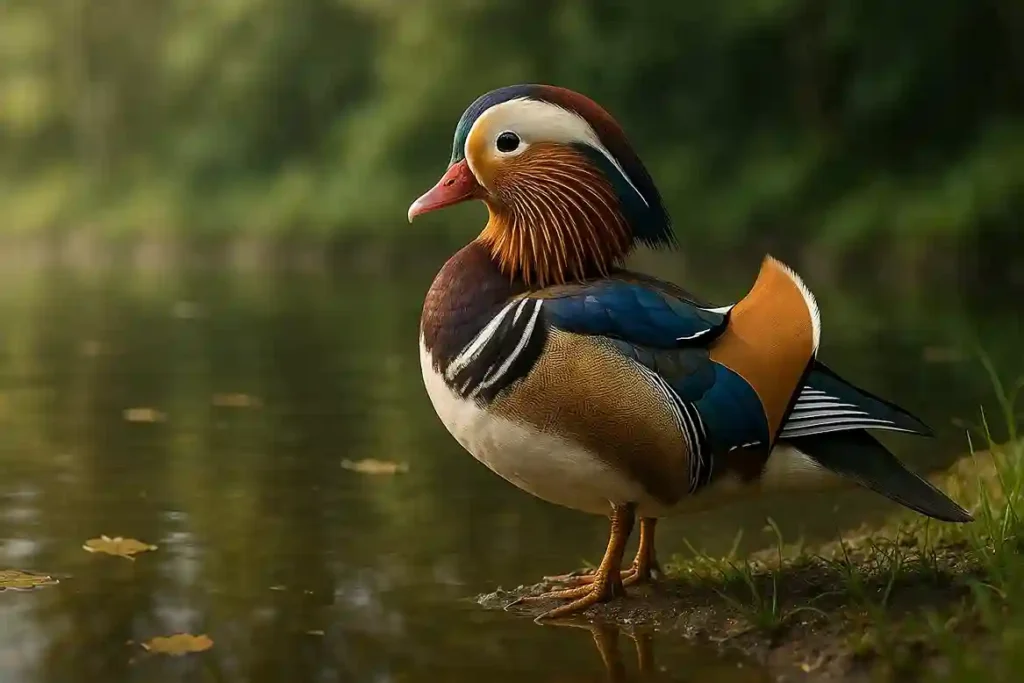
The mandarin duck ranks among the most colorful birds in the world. Bright feathers create a vivid look that draws instant attention. Many people admire this species in Asia, Europe, and North America, so its charm now spans continents. Cultures also attach deep meaning to this bird. In many traditions, it represents love and loyalty because bonded pairs stay close through each season.
This guide gives you a clear view of what makes the mandarin duck special. You explore its bold feather patterns. Learn how it behaves during courtship and nesting. You also see why art and stories celebrate this species. In addition, you get a simple look at its habitat needs and the steps people use to protect it.
By the end, you gain helpful insights for birdwatching. Yxou also build a deeper respect for this vivid duck and the wetlands it depends on.
“The mandarin duck thrives where calm water meets quiet woods, reminding us that beauty grows best in peace.”
Origin and Habitat of the Mandarin Duck
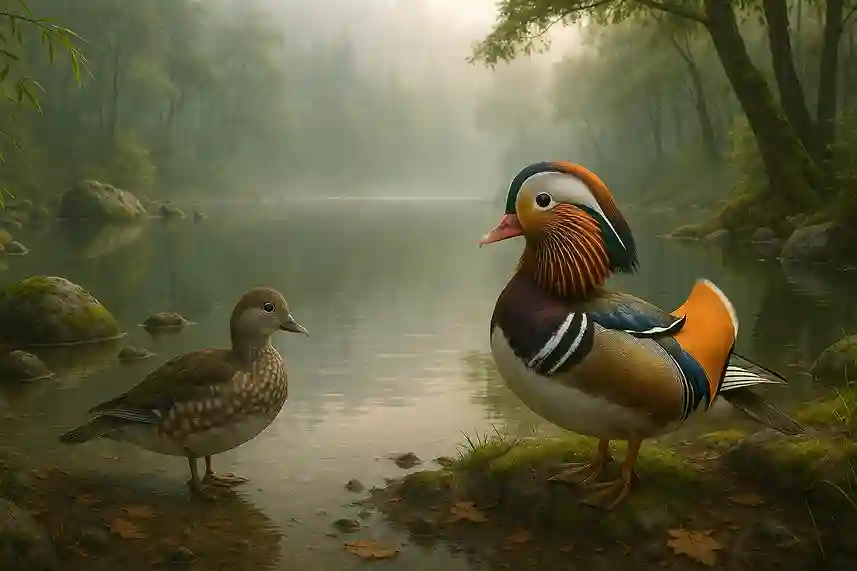
The mandarin duck comes from the rich wetlands of East Asia. China holds the largest native groups, and Japan, Korea, and parts of Russia also support long-standing populations. These regions offer the calm forests, soft banks, and steady water flow that this species depends on. Many travelers first spot the bird near quiet ponds or rivers tucked inside wooded areas.
Over time, people introduced the mandarin duck to Europe and North America. Because the species adjusts well, it formed stable groups in countries such as the United Kingdom, Ireland, and the United States. You now see small but healthy flocks in parks, nature reserves, and private estates. These new regions give the bird fresh space to grow, yet they also create new challenges.
Wooded lakes remain the ideal home for this species. The duck prefers still water, deep shade, and plenty of branches for nesting. Slow rivers with gentle curves also attract these birds because they offer safety and food. Clear water helps them find seeds, plants, and small insects with ease.
However, the mandarin duck shows strong flexibility. It tolerates cold winters, warm summers, and mixed landscapes. As people built ponds and managed green spaces, the duck adapted to these new conditions. This ability allows the species to survive far beyond its original home range.
As a result, many birdwatchers now enjoy sightings in places once unfamiliar to this species. The spread highlights how habitat quality—and not only geography—shapes wildlife success.
Distinctive Features and Color Patterns
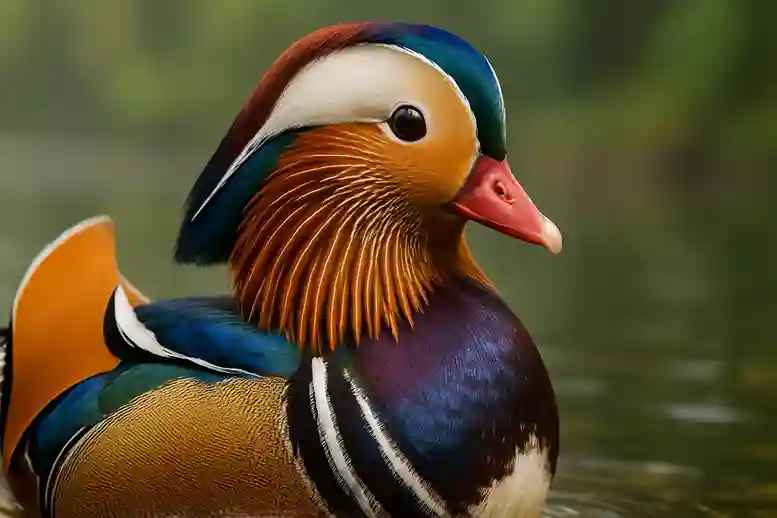
The mandarin duck male stands out with rich, sharp colors. Bright orange “sail” feathers rise from each wing and create a fan-like shape that catches light. Metallic blues and greens run across the back, while deep purple and chestnut tones frame the head. A white crescent above each eye adds contrast and guides attention toward the bird’s face. These colors create a striking look that helps the male attract a mate during the breeding season. When he moves across calm water, the feathers shift in the light and form vivid reflections that strengthen this effect.
Female Color Patterns: Soft Tones and Natural Blending
The female shows a very different look. Soft gray and gentle brown feathers cover most of her body. White spots sit near the eyes, giving her a calm expression. These muted colors help her blend into wooded areas, riverbanks, and shaded nests. Because she often guards eggs or leads young ducklings, her subtle tones increase safety. While less bright than the male, her pattern creates strong camouflage in tall grass, tree roots, or low branches.
Attraction and Camouflage: How These Features Work
The male’s colors serve as a visual display that signals health and strength. Bright feathers show that he eats well, avoids danger, and stays active. During courtship, he uses head tilts, wing lifts, and slow turns to show off these features. Because females look for strong partners, his bold plumage increases the chance of forming a pair bond.
In contrast, the female’s softer tones keep her hidden. This advantage protects her nest from predators and shields young ducklings during early life stages. Both color patterns work together to ensure survival and successful breeding.
Molting and Seasonal Changes
Like many duck species, the mandarin duck goes through molting periods. During summer, the male loses his bright sails and metallic colors. New feathers grow in, but they form a duller pattern. This “eclipse plumage” looks similar to the female’s tones. The change gives him better camouflage when he cannot fly well. As cooler seasons return, fresh bright feathers grow back, and his vibrant look appears again before courtship begins.
Females also molt, yet their color shifts stay mild. Because they rely on steady camouflage, their patterns remain consistent throughout the year.
This blend of bright display, soft shading, and seasonal change makes the mandarin duck one of the most visually unique birds worldwide.
Symbolism and Cultural Importance
The mandarin duck carries deep meaning in Chinese and Japanese culture. Many couples see this bird as a sign of love. Its strong pair bonds inspire stories about loyalty. When two ducks stay close through each season, people link that bond with steady commitment. Weddings often feature wooden or painted pairs to bless the couple with a long and peaceful union.

Presence in Art and Folklore
Artists use the mandarin duck to show harmony. You find the bird in old paintings, silk embroidery, carved screens, and ceramic work. Many stories describe a pair that refuses to part, even during storms or long journeys. These tales teach that true loyalty stays firm when life changes. Because of this, the bird often appears in poems and family symbols. The soft lines of its shape and the bright colors of the male’s feathers add beauty to each piece.
Modern Meaning Around the World
Today, the mandarin duck stands as a global icon of beauty and trust. People admire its calm behavior, smooth movement, and strong pair bonds. Many also see it as a symbol of peace because it prefers quiet water and gentle surroundings. Birdwatchers value the species for its vivid colors, yet they also respect how the female uses soft tones to protect her young. These traits create a balance that people link with unity and care.
As the bird spreads into Europe and North America, its meaning spreads as well. Couples place images of mandarin ducks in homes to encourage closeness. Photographers use the bird to show natural harmony. Teachers use its story to explain loyalty, partnership, and respect. Because of this wide influence, the mandarin duck now represents a shared global idea: beauty grows stronger when trust stays steady.
Mandarin Ducks in Captivity and Birdwatching
The mandarin duck attracts many hobby farmers and birdwatchers. Its bright colors and calm nature make it a favorite in private aviaries. Many people enjoy raising small pairs in spacious ponds with clean water and shaded areas. The bird’s gentle behavior makes daily care simple, and its strong pair bonds create steady routines. Because the species adapts well, keepers across several regions now enjoy watching these ducks thrive in managed spaces.
Legal and Ethical Points to Consider
Anyone who wants to keep mandarin ducks must follow local rules. Some regions require permits, while others limit captive breeding. These rules protect wild populations and prevent the release of birds into unsuitable areas. Ethical care also matters. The ducks need clean water, safe shelter, balanced food, and enough space to swim and rest. Strong fencing protects them from predators. Responsible owners pair birds carefully and avoid overcrowded ponds. Good care supports the health of each duck and keeps the species respected among keepers.
Birdwatching Tips for Better Sightings
Watching mandarin ducks in the wild offers a peaceful experience. You find them near still ponds, slow rivers, and wooded banks. Early morning gives the best light and the calmest water. Many birds feed during that time, so movement increases. Quiet steps help you avoid scaring them away.
Look for the male first because his bright colors stand out. The female stays closer to shaded edges, where her soft tones blend into branches and grass. During the breeding season, pairs swim close together. You may see gentle head turns, quiet calls, or short flights across the water. These simple actions help you understand their bond and daily rhythm.
With patience and calm observation, you gain a clear view of how this species lives, feeds, and interacts in natural or managed settings.
Beginner Mistakes to Avoid When Observing or Raising Mandarin Duck
Many beginners place too many birds in one space. Tight areas raise stress and increase the chance of injury. A simple layout with shade, open water, and steady airflow works better. Strong shelters with dry flooring protect the ducks during rain and wind. When each bird gets room to swim and rest, daily behavior stays calm and healthy.
Clean Water and Balanced Feeding
Some keepers forget how fast water becomes dirty. Because mandarin ducks depend on clean ponds, fresh water needs regular checks. Clear pools help the birds bathe, feed, and stay healthy. A balanced diet matters as much as water. Seeds, grains, insects, and fresh greens keep energy levels steady. Snacks like bread or processed food cause health problems, so beginners should avoid them.
Weak Predator Protection and Seasonal Gaps
Predators create real risks for ducks kept near open land. Foxes, dogs, raccoons, and large birds look for easy targets. Strong fencing, covered pens, and safe night shelters reduce those risks. Seasonal change also affects care. Winter needs deeper bedding and windbreaks. Summer needs shade, airflow, and extra water checks. Good planning keeps the birds safe through each shift in weather.
Responsible Breeding and Steady Care
Some new keepers pair birds without thinking about space or long-term needs. Healthy breeding starts with strong pairs, clean ponds, and safe nesting areas. Good records help prevent crowding and protect future generations. Calm daily checks keep birds relaxed and aware of human presence.
When beginners avoid these basic mistakes, mandarin ducks stay healthy, active, and secure in any well-managed space.
Mandarin Duck Farming Legal in the United States?
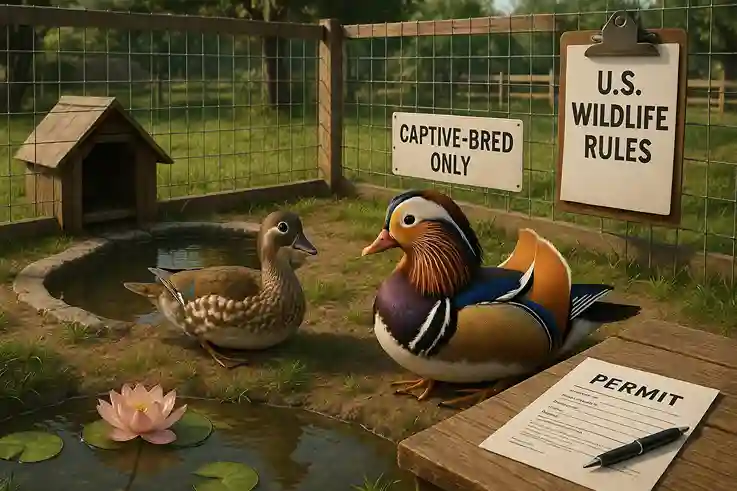
The mandarin duck attracts many new keepers because of its color, calm behavior, and easy care needs. Many people ask if farming this species is legal in the United States. The short answer stays simple: yes, you can farm mandarin ducks in most regions, but each state shapes its own rules. Because of that, beginners should check local laws before they start.
Mandarin ducks are non-native, and they do not count as invasive in the U.S. This status removes the strict limits placed on protected wildlife. Most states allow people to keep, breed, and sell these ducks. Rural areas offer more freedom because they support small farms and backyard ponds. Urban zones may require extra steps because open water and animal shelters sit near homes.
Some regions ask for permits. A county may request an exotic bird license or a small wildlife permit. These documents track ownership and help prevent accidental release into nearby wetlands. Clean water, strong fencing, and humane care remain legal requirements everywhere. Good care supports healthy birds and protects local ecosystems.
Breeding adds one more layer. People who sell ducklings may need business registration and simple health paperwork. Safe transport across state lines often needs a vet certificate. These steps keep disease risks low and support the wider bird community.
In the end, mandarin duck farming stays possible across most of the United States. A quick check with local authorities gives you the clear rules you need. With good shelter, clean ponds, and steady daily care, these ducks can thrive on small farms and backyard ponds.
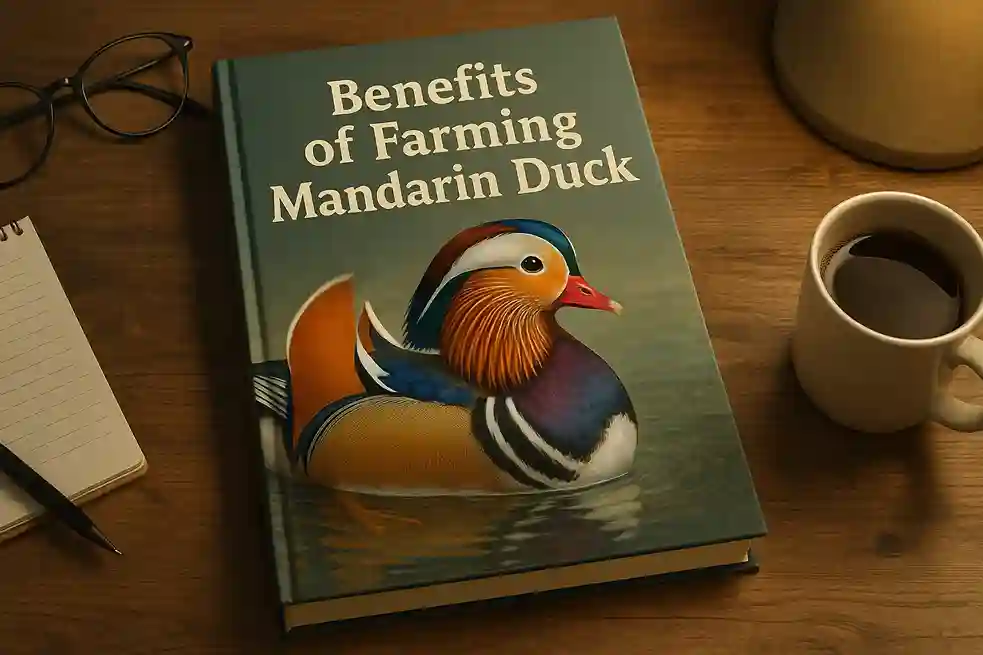
Benefits of Farming Mandarin Duck
Farming mandarin ducks offers several clear advantages for small keepers and hobby farmers. Their calm nature and bright colors make them easy to manage, interesting to observe, and rewarding to raise.
1. Low Maintenance and Easy Care
Mandarin ducks stay clean, active, and healthy with simple routines. They need clean water, safe shelter, and a balanced diet. Because they adapt well to different climates, beginners find them easier to manage than many other exotic birds.
2. Strong Disease Resistance
This species often shows good natural resistance to common poultry diseases. Clean ponds and proper hygiene keep the ducks in strong condition. Healthy birds reduce veterinary costs and make daily care smoother.
3. High Aesthetic and Cultural Value
The bright colors of the male and the soft patterns of the female give farms a peaceful and attractive look. Many visitors enjoy seeing these ducks, and their presence can raise interest in small farms, eco-parks, and homesteads.
4. Steady Breeding Behavior
Mandarin ducks form strong pairs and follow stable breeding cycles. This consistency helps small farmers plan for ducklings each year. With proper nesting boxes and safe ponds, pairs raise young with minimal trouble.
5. Eco-Friendly Pond Management
These ducks feed on insects, seeds, and water plants. Their feeding habits help control pests and keep small ponds balanced. They also stir shallow water during foraging, improving pond health naturally.
6. Educational and Recreational Value
Families, students, and bird lovers enjoy watching mandarin ducks. Their calm behavior and bright markings create relaxing and educational moments. Many farms use them in nature tours, photography sessions, or wildlife awareness programs.
7. Ethical, Small-Scale Income Potential
Some farmers sell fertile eggs, young ducklings, or adult pairs. Because the species is popular among collectors and aviary keepers, demand stays steady. Ethical breeding and good care help maintain healthy lines.
Farming mandarin ducks brings beauty, steady routines, and natural benefits that enrich any small homestead or backyard setup.
8 FAQ About Mandarin Duck
Conclusion
The mandarin duck stands out as one of the most striking and meaningful birds in the world. Its bright colors, soft movements, and strong pair bonds create a blend of beauty and calm that many people admire. As you explore this species, you see how its habits, patterns, and behavior support life in quiet ponds and shaded forests. You also discover why cultures link this bird with trust, unity, and lifelong love.
Farmers, birdwatchers, and nature lovers enjoy the mandarin duck for many reasons. Because it adapts well, it shows steady routines and brings natural charm to small ponds or open wetlands. With clean care, safe shelters, and mindful breeding, the species thrives in both wild and managed spaces.
As a result, when you understand the bird’s needs and its long history of symbolism, your respect grows even more. The mandarin duck reminds us that beauty and balance often come from simple, peaceful environments, and therefore, it continues to inspire people everywhere.
Share your thoughts about the mandarin duck and your own experiences with birdwatching or small-scale duck keeping.
If you’ve seen this species in the wild or raised a pair at home, your story can help others learn.
Join the discussion, ask questions, and explore how these colorful birds fit into your own nature journey.

Michael Reyes is a versatile blogger with a primary focus on farming and sustainable living. Growing up close to nature, he developed a deep interest in agriculture and enjoys sharing practical tips on backyard farming, modern cultivation techniques, and eco-friendly practices. While farming remains his specialty, Michael also writes on a wide range of topics, from lifestyle and travel to everyday inspiration, making his work relatable to a broad audience.
Outside of writing, Michael enjoys spending time outdoors, experimenting with new farming methods, and exploring different cultures through food and travel. His approachable voice and well-researched insights make his blogs both informative and engaging.