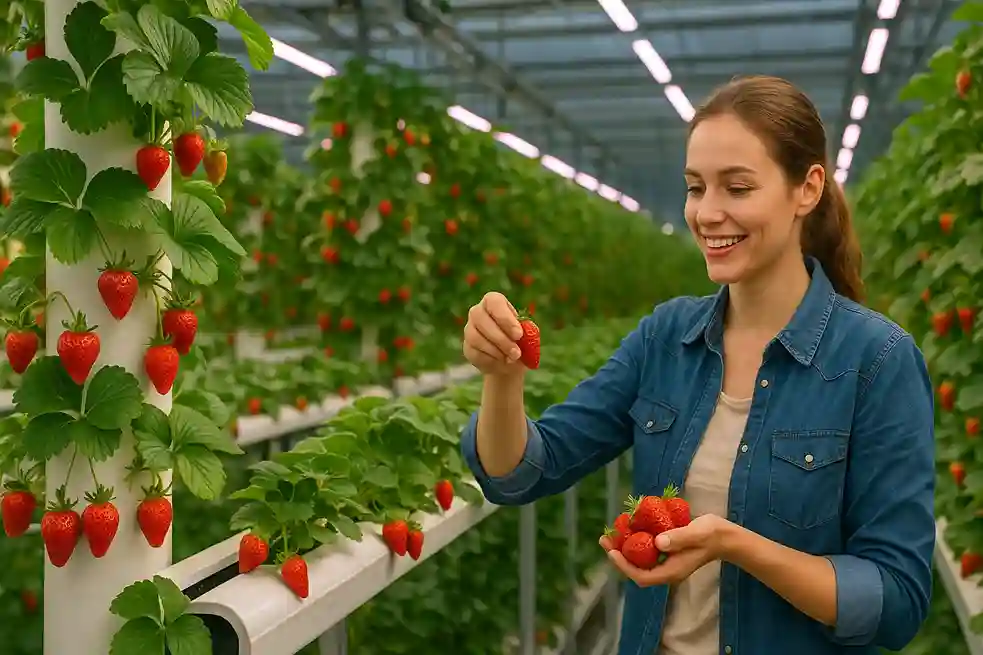
Hydroponic strawberries are transforming how farmers and home growers produce fresh fruit. Instead of relying on soil, these berries thrive in nutrient-rich water systems that deliver everything the plants need directly to their roots. This modern approach allows growers to harvest strawberries all year, regardless of weather or location. With hydroponic setups, every season becomes strawberry season.
The method reduces soil-related challenges like pests, weeds, and inconsistent nutrients, creating cleaner and healthier harvests. Because each plant receives balanced nutrition, growth is faster and yields are higher than in traditional fields. Moreover, hydroponic systems use less water and space, making them ideal for urban farms and small-scale gardeners. As technology and sustainability merge, hydroponic strawberries stand out as the future of fresh farming — sweet, efficient, and always in season.
What Are Hydroponic Strawberries?
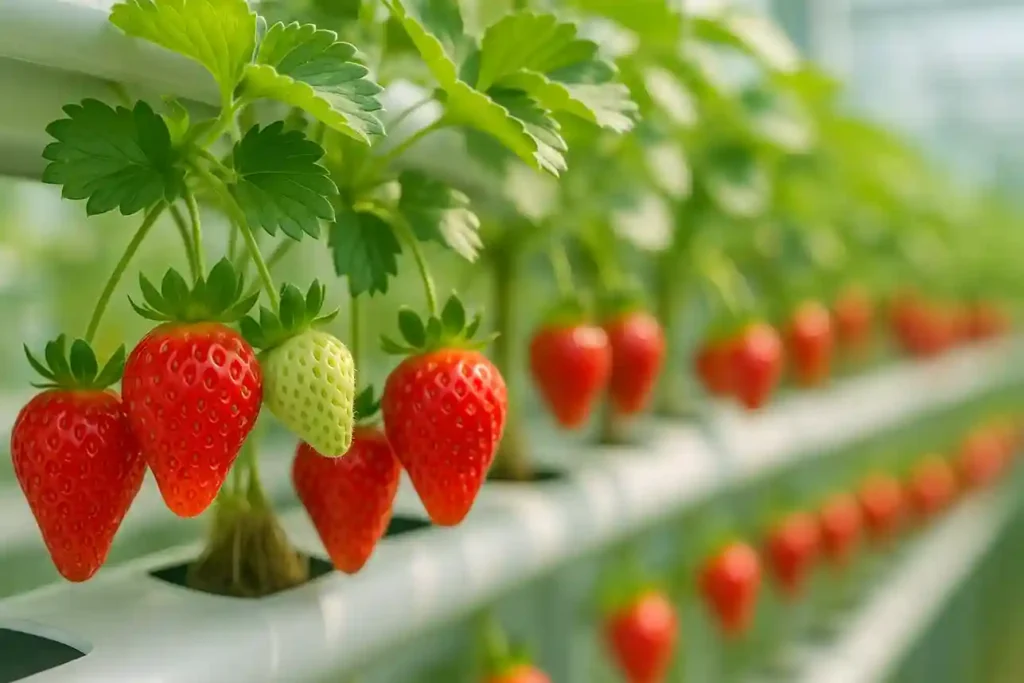
Hydroponic strawberries grow without soil, using nutrient-enriched water to deliver everything the plants need directly to their roots. In this method, the roots sit in a controlled environment where minerals, oxygen, and water flow consistently. The absence of soil means fewer pests, less disease, and more control over growth conditions. Every drop of water and nutrient serves a precise purpose, leading to healthier plants and sweeter berries.
Unlike traditional soil farming, where strawberries depend on the quality of the earth and changing weather, hydroponic cultivation removes these limits. Soil-grown crops face unpredictable nutrient absorption, uneven moisture, and exposure to weeds. In contrast, hydroponic strawberries grow faster, require less space, and often produce higher yields with better flavor consistency. They thrive indoors, in greenhouses, or even on balconies under LED lights.
Several systems support hydroponic strawberry growth. The Nutrient Film Technique (NFT) gently circulates a thin layer of nutrient solution along plant roots, promoting constant hydration and aeration. The drip system delivers nutrients directly to each plant through small tubes, ideal for conserving water. The deep-water culture method suspends roots in oxygenated nutrient water, allowing rapid nutrient uptake and strong development.
Each system shares the same goal — efficient, clean, and sustainable cultivation. As growers refine these technologies, hydroponic strawberries continue to prove that soil isn’t essential for sweetness. Instead, precision, balance, and innovation now define how strawberries can flourish all year long.
“Hydroponic strawberries prove that sweetness doesn’t come from the soil — it grows from precision, care, and innovation.”
Setting Up Your Hydroponic Strawberry System
Choose the Right Container and System
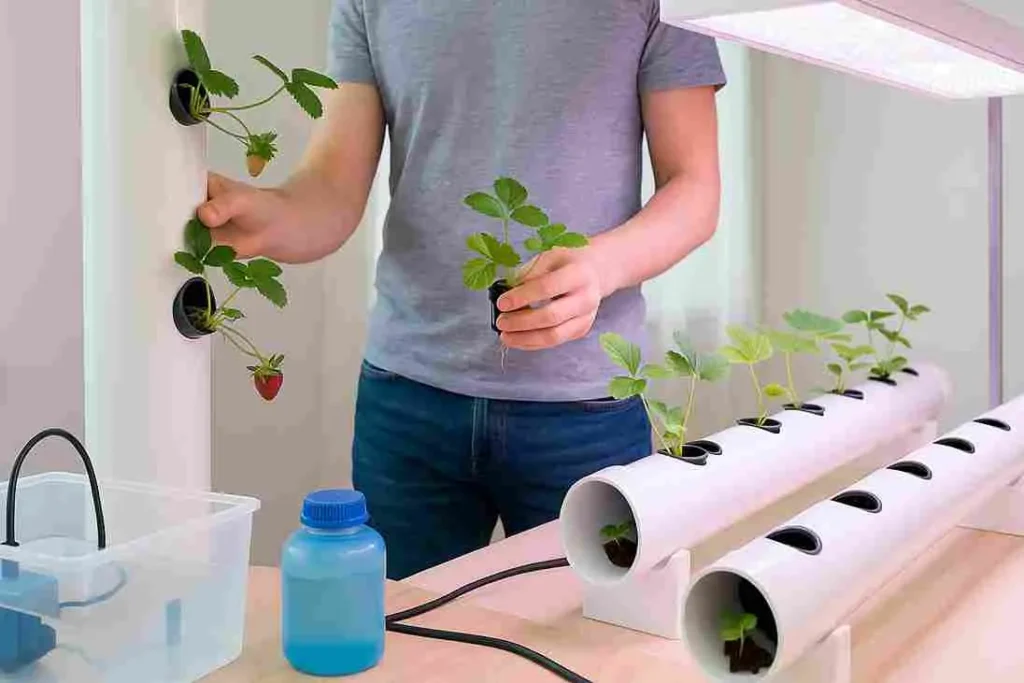
The foundation of hydroponic strawberries starts with the system itself. For beginners, compact units like Nutrient Film Technique (NFT) or drip systems are ideal because they balance efficiency and control. NFT systems circulate a thin film of nutrient-rich water through channels where the roots grow, ensuring constant feeding. Drip systems, on the other hand, use tubing to deliver measured nutrient drops to each plant.
For larger spaces, a deep-water culture system offers excellent oxygen flow and root support. Containers made from food-grade plastic or PVC channels are durable and safe. Always ensure proper drainage to prevent root rot.
Select a Quality Growing Medium
Hydroponic strawberries don’t rely on soil, but they still need a medium to anchor their roots. Choose materials that retain moisture without suffocating the plant. Coconut coir, perlite, and rock wool work best because they balance water retention and aeration. Coconut coir is sustainable and holds nutrients well, while perlite adds lightness and improves drainage. Mixing these media often gives excellent results.
Install Lighting, Nutrients, and Irrigation
Since hydroponic systems often operate indoors or in controlled greenhouses, light becomes crucial. Full-spectrum LED grow lights simulate natural sunlight, helping strawberries photosynthesize effectively. Maintain a light cycle of 12–14 hours daily for optimal flowering and fruiting.
Next, prepare your nutrient solution — a mix of nitrogen, potassium, calcium, magnesium, and trace minerals. Keep the pH between 5.5 and 6.5 for best absorption. Use an EC (electrical conductivity) meter to monitor concentration levels. A steady irrigation system ensures each plant receives consistent moisture, preventing both dryness and overwatering.
Optimize Space for Urban Growing
One major benefit of hydroponic strawberries is space efficiency. Vertical towers, stacked trays, or wall-mounted systems maximize yield in compact areas. Urban growers can even set up systems on balconies or rooftops, where sunlight and airflow are abundant. Hydroponic setups thrive where traditional gardens can’t — proving that even in small apartments, fresh strawberries can flourish year-round.
With the right setup, hydroponic strawberries transform farming from a field task into an indoor art form — sustainable, clean, and endlessly productive.
Choosing the Best Strawberry Varieties
Not all strawberries perform equally well in hydroponic systems. Some varieties adapt better to controlled environments, producing steady yields and rich flavor. Selecting the right cultivar determines how successful and rewarding your hydroponic strawberry garden becomes.
Albion – The Reliable Everbearing Choice
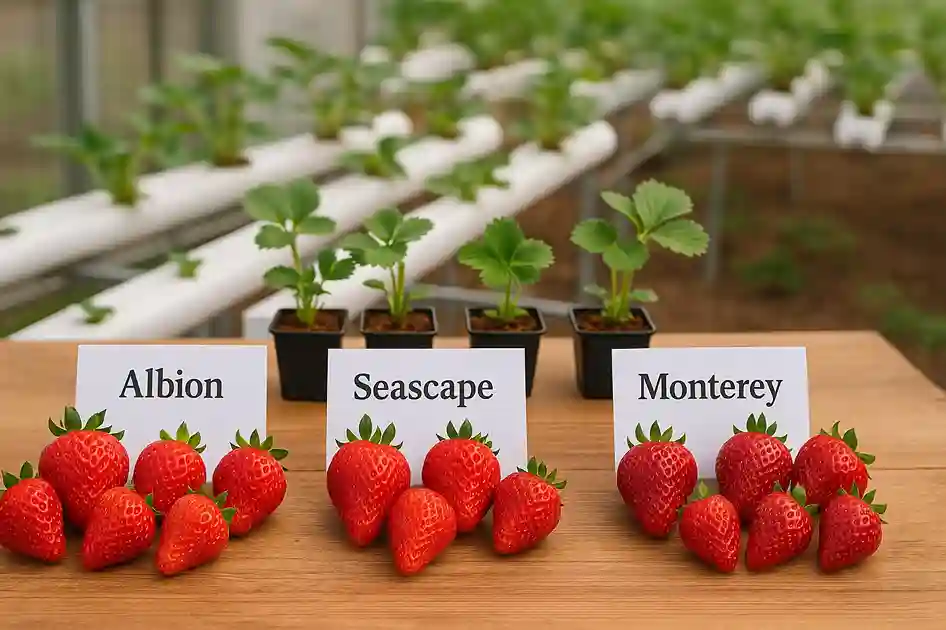
Albion strawberries are a favorite among hydroponic growers for their dependability. As an everbearing variety, Albion produces multiple harvests throughout the year. The berries grow large, firm, and exceptionally sweet with a glossy red finish. Albion plants thrive in systems with consistent temperature and nutrient control, making them perfect for both hobbyists and commercial hydroponic setups. They also tolerate variable lighting well, so even small indoor spaces can yield impressive results.
Seascape – The Disease-Resistant Performer
For growers seeking resilience, Seascape stands out. Developed by the University of California, this day-neutral variety resists many common diseases such as powdery mildew and verticillium wilt. Seascape strawberries have a balanced flavor — not overly sweet, yet pleasantly aromatic. They adapt quickly to different hydroponic systems, including NFT and deep-water culture. Because of their toughness and consistent production, Seascape strawberries are ideal for beginners who want a low-maintenance start without sacrificing quality.
Tribute – The Sweet and Balanced Option
Tribute strawberries offer a mix of sweetness, firmness, and productivity. Their compact growth habit suits vertical and stacked hydroponic setups. Tribute berries are known for their rich aroma and balanced flavor, making them perfect for fresh eating, smoothies, or desserts. They also tolerate moderate environmental shifts, which helps maintain yield consistency in changing indoor conditions.
With the right cultivar, flavor thrives even without soil. Choosing varieties like Albion, Seascape, or Tribute ensures your hydroponic strawberries deliver sweetness, durability, and beauty in every bite — all year long.
Recent research from Auburn University highlights the growing feasibility and profitability of hydroponic strawberry production for small and commercial farmers alike.
Caring for Hydroponic Strawberries Year-Round
Keeping hydroponic strawberries healthy requires consistency and attention to detail. Because these plants depend entirely on their environment, small changes in temperature, light, or nutrients can affect growth. With the right care, your strawberries can thrive every month of the year, producing juicy fruit in every season.
Control Temperature, Humidity, and Light Cycles
Strawberries prefer moderate temperatures between 60°F and 75°F (15°C–24°C). Keep your setup stable, since sudden drops or spikes can interrupt flowering. High humidity levels above 70% can invite mold or mildew, while very low humidity dries out the leaves. Aim for a balanced 55%–65% humidity range for optimal results.
Lighting plays a central role in hydroponic systems. Because indoor plants lack natural sunlight, full-spectrum LED grow lights are essential. Maintain 12–14 hours of light daily to support fruiting. During winter, adjust intensity or add reflective panels to make the most of available light. Balanced light exposure ensures uniform growth and a steady harvest cycle year-round.
Maintain Nutrient Solution and Water Recirculation
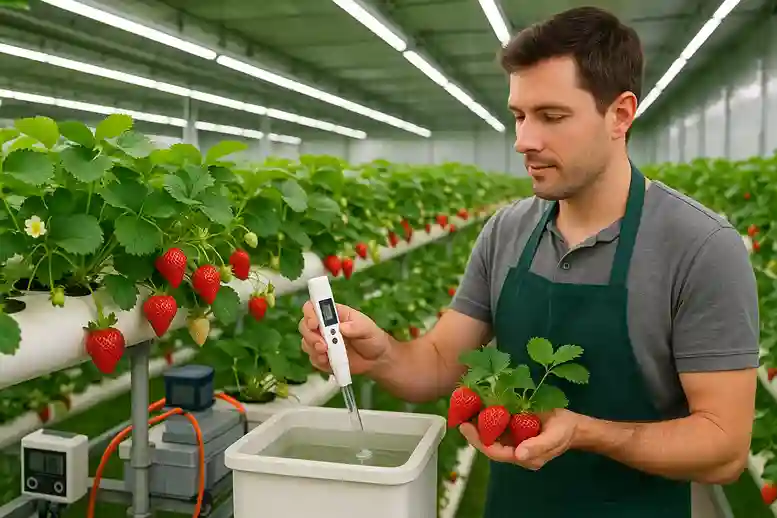
Your strawberries feed directly from the nutrient solution, so consistency matters. Monitor pH levels frequently, keeping them between 5.5 and 6.5 for best nutrient absorption. Check EC (electrical conductivity) weekly to ensure the concentration isn’t too strong, as that may burn roots.
Replace or refresh your nutrient solution every two weeks to prevent buildup of salts and imbalance. In recirculating systems like NFT or deep-water culture, make sure pumps run continuously to deliver oxygen and nutrients evenly. Clean the tanks and tubing regularly to prevent algae growth. Fresh, oxygenated water keeps the root zone healthy and encourages faster fruiting.
Troubleshoot Common Growth Issues
Even in controlled environments, problems can appear. Leaf burn often signals excess nutrients or strong light exposure. Dilute the nutrient mix and adjust the light distance to resolve it. Root rot usually results from stagnant water or poor aeration — increase airflow, clean the reservoir, and trim affected roots. Yellowing leaves may indicate low nitrogen, while slow fruiting could stem from low light or temperature imbalance.
By staying consistent with care, hydroponic strawberries can produce flavorful fruit every month. Regular monitoring, balanced nutrients, and clean water keep your plants strong — proving that precision farming can deliver sweetness all year long.
Harvesting and Enjoying the Fruits of Your Work
After weeks of patient care, your hydroponic strawberries finally reward you with vibrant color and rich aroma. The harvesting stage marks the most satisfying part of your growing journey. With a little timing and technique, you can enjoy berries at their sweetest peak — fresh, flavorful, and chemical-free.
Harvesting Timeline and Technique
Hydroponic strawberries typically reach maturity 8 to 10 weeks after planting, though this can vary by variety and growing conditions. You’ll know they’re ready when the berries turn deep red from tip to stem and give slightly when gently pressed. Avoid picking them too early, as strawberries stop ripening once detached from the plant.
Use clean scissors or pruning shears to snip the stem just above the fruit rather than pulling it by hand. This method prevents bruising and protects nearby blossoms. Harvest in the morning, when the air is cool, to preserve maximum sweetness and firmness. Regular picking also encourages more blooms and consistent fruiting.

Post-Harvest Storage Tips
Once picked, handle your strawberries with care. Don’t wash them immediately — moisture can lead to mold. Instead, store the unwashed berries in a shallow container lined with paper towels to absorb excess humidity. Keep them refrigerated at 32°F–36°F (0°C–2°C) for up to one week. When ready to use, rinse gently under cool water and let them air dry.
For longer storage, freezing works perfectly. Hull and freeze strawberries on a tray before transferring them to airtight bags. This keeps their color, flavor, and texture intact.
Delicious Ways to Enjoy Your Harvest
Hydroponic strawberries shine in countless recipes. Blend them into refreshing smoothies, layer them into desserts like parfaits or shortcakes, or cook them into rich preserves and jams. Their consistent sweetness and clean taste make them perfect for both fresh snacking and culinary creativity.
Every berry grown in your hydroponic system tells a story of patience, precision, and pride. With the right care and harvest habits, your strawberries will deliver freshness that rivals any store-bought fruit — all year long.
Eco Benefits and Sustainability Impact
Hydroponic strawberries aren’t just a technological innovation — they’re a sustainable farming revolution. By eliminating the need for soil and using controlled water systems, these plants grow efficiently while minimizing waste. This approach is redefining how communities think about agriculture, especially in regions where land and water are increasingly scarce.
Reduced Land and Water Use
Traditional farming demands large tracts of fertile land and substantial irrigation. In contrast, hydroponic strawberries thrive in compact systems that require up to 90% less water. The closed-loop design recycles and reuses the nutrient solution, reducing overall consumption and preventing runoff that often contaminates natural water sources. Since hydroponic systems stack vertically or fit into small spaces, they eliminate the pressure to clear more farmland. Every square foot produces more fruit with less environmental cost.
This efficient use of resources makes hydroponics an eco-friendly solution to global food challenges. Less water, no pesticides, and minimal land disturbance mean smaller carbon footprints and healthier ecosystems.
Perfect for Urban and Vertical Farming
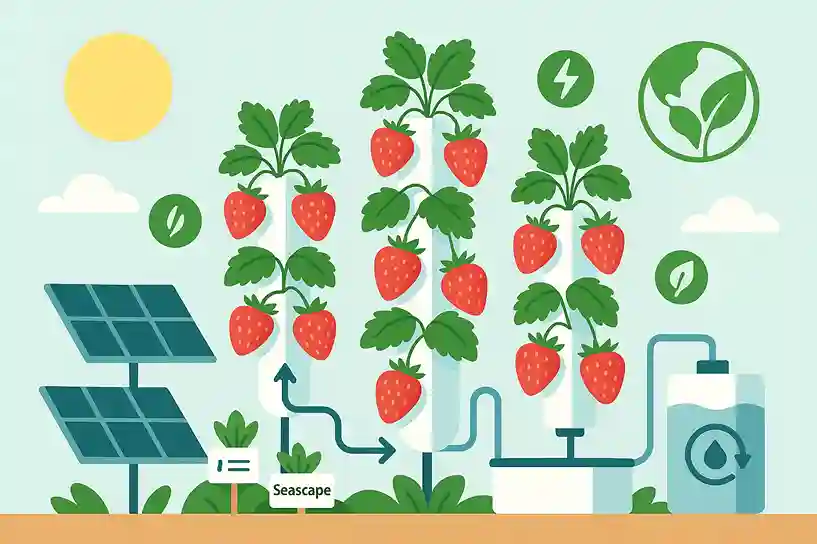
Hydroponic strawberries adapt beautifully to urban environments. With vertical towers, rooftop setups, and modular systems, city dwellers can grow fresh strawberries close to where they live. This reduces transportation emissions and keeps produce fresher from harvest to table.
Vertical farms, in particular, use advanced automation to regulate temperature, humidity, and light. By stacking layers of strawberry plants, these farms achieve maximum output in minimal space — even in warehouses or basements. Such innovations make year-round fruit production possible in places once unsuitable for farming.
As climate shifts, hydroponics keeps fresh produce within reach. By blending sustainability with smart design, hydroponic strawberries demonstrate that modern farming can nourish both people and the planet — efficiently, cleanly, and continuously.
Cost and Profit Potential for Small Growers
Growing hydroponic strawberries offers more than sustainability — it can also be financially rewarding. While the initial investment may seem high, consistent yields, premium pricing, and low resource use balance out expenses over time. Whether you’re a home grower or a small farm owner, understanding cost dynamics helps maximize your return.

Setup Costs vs. Maintenance Costs
Starting a hydroponic strawberry system involves several key investments. A small home setup (10–20 plants) may cost $250–$600, depending on materials and lighting. For a small commercial setup (200–500 plants), expect a range of $2,000–$8,000. Major expenses include:
- Hydroponic system (NFT or drip): $100–$2,000
- LED grow lights: $80–$500 per unit
- Pumps, reservoirs, and tubing: $100–$400
- Nutrient solutions and pH meters: $50–$150
- Grow media and containers: $50–$200
Maintenance costs are minimal after setup. Monthly expenses include electricity, nutrients, and water — typically $20–$50 for small systems. Because hydroponics reuses water and nutrients, running costs stay low compared to traditional soil farming.
ROI and Earning Potential
Hydroponic strawberries typically yield 20–30% more fruit than soil-grown varieties, and as a result, growers enjoy higher overall productivity. Moreover, the system supports faster turnover cycles, allowing continuous planting and harvesting throughout the year. In fact, a well-managed setup can produce three to five harvests annually, depending on the strawberry variety. For small-scale farmers, this is especially rewarding, since local markets often offer average retail prices between $5 and $8 per pound for pesticide-free berries.
After initial setup, most growers recover their investment within 12–18 months. With steady yields, yearly profits can range from $1,000–$5,000 for small home-based systems and much higher for scaled operations. The high market value of clean, local produce ensures strong long-term potential.
Local Market Demand for Pesticide-Free Berries
Consumers increasingly prefer fresh, chemical-free fruits. Farmers’ markets, organic shops, and community-supported agriculture (CSA) programs consistently report strong demand for locally grown hydroponic strawberries. Shoppers are willing to pay a premium for freshness, traceability, and sustainability.
Hydroponic systems give small growers an edge — the ability to supply strawberries year-round, independent of seasons or soil quality.
Ultimately, hydroponic strawberries turn smart investment into steady income. With efficient systems, local demand, and sustainable appeal, even small growers can cultivate both sweetness and profit — one berry at a time.
FAQ About Hydroponic Strawberries
Conclusion: The Future Is Hydroponic and Sweet
Ultimately, hydroponic strawberries redefine how we think about freshness and sustainability. As a result, growers can now produce juicy, flavorful fruit throughout every season. Moreover, this method minimizes waste, saves water, and eliminates harmful pesticides. Therefore, it supports both the planet and the people who depend on it.
In addition, hydroponic systems give even small growers the chance to succeed without needing acres of farmland. Because of this, urban gardeners and local farmers can enjoy higher yields in compact spaces. Furthermore, by controlling light, nutrients, and humidity, they ensure every berry reaches peak sweetness and texture.
Consequently, consumers benefit from produce that’s cleaner, fresher, and available year-round. As climate patterns continue to shift, hydroponic technology ensures food security and reliable harvests. In summary, the future of strawberry farming lies not in soil, but in innovation — proving that with precision and care, nature’s sweetest fruit can flourish anytime, anywhere.
Ready to Grow Your Own Sweet Success?
Join the conversation below! Share your growing tips, challenges, or favorite strawberry recipes — let’s inspire a new wave of sustainable farming together.

Michael Reyes is a versatile blogger with a primary focus on farming and sustainable living. Growing up close to nature, he developed a deep interest in agriculture and enjoys sharing practical tips on backyard farming, modern cultivation techniques, and eco-friendly practices. While farming remains his specialty, Michael also writes on a wide range of topics, from lifestyle and travel to everyday inspiration, making his work relatable to a broad audience.
Outside of writing, Michael enjoys spending time outdoors, experimenting with new farming methods, and exploring different cultures through food and travel. His approachable voice and well-researched insights make his blogs both informative and engaging.