A hydroponic garden is a soil-free farming system that grows plants using nutrient-rich water. It delivers essential minerals directly to the roots for faster, healthier growth. This innovative method is gaining popularity among modern farmers across the United States. It offers better control over growing conditions and produces higher yields in smaller spaces. Farmers appreciate how it reduces the risks linked to poor soil quality and unpredictable weather. Sustainability also fuels its rise, as hydroponics uses significantly less water than traditional farming.
It eliminates the need for pesticides, making crops safer and cleaner. Even better, plants can thrive year-round, unaffected by seasonal changes or droughts. These advantages attract both commercial growers and home-based enthusiasts. As agriculture faces rising challenges, hydroponic gardening emerges as a forward-thinking solution. It redefines traditional farming by blending technology, precision, and sustainability to build a greener, more productive future.
What Makes Hydroponic Gardening So Magical?
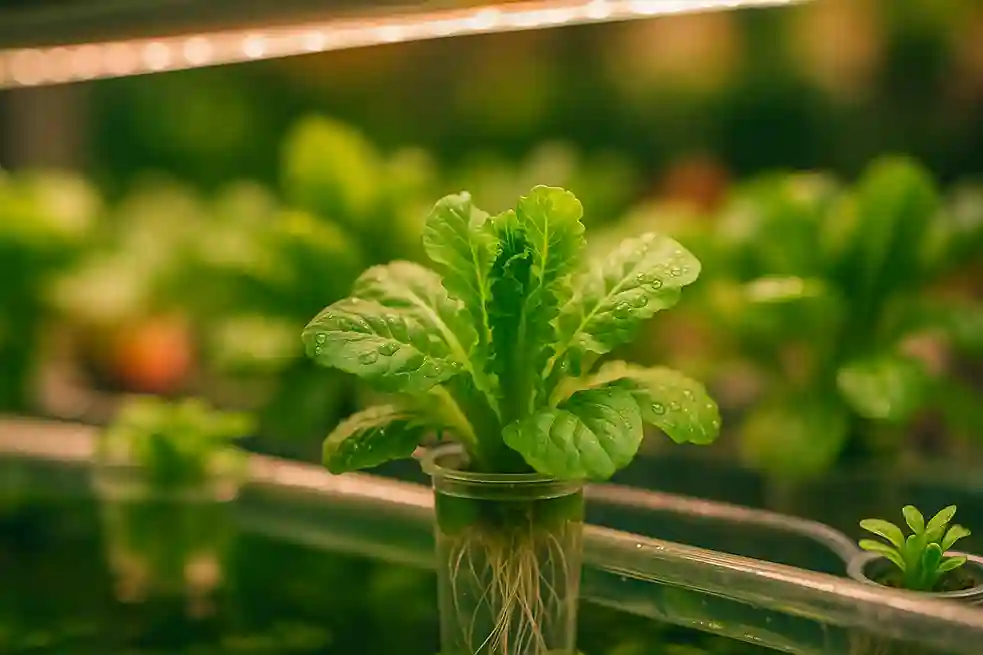
A hydroponic garden works like a precise, living ecosystem. Plants grow without soil, relying on nutrient-enriched water for nourishment. Each root absorbs essential minerals directly, skipping the slow soil process. This direct absorption speeds up growth and improves overall plant health. Nutrient solutions are carefully balanced to meet every plant’s exact need.
In traditional farming, much of the water and fertilizer go to waste. In contrast, a hydroponic garden recycles its water through a closed-loop system. The same nutrient-rich solution flows repeatedly, saving up to 90% of the water used in soil farming. Waste is almost nonexistent because nutrients are measured and reused. This makes hydroponic farming both sustainable and highly efficient.
Another magical feature is the control it offers. Farmers can manage light, humidity, and temperature precisely. There are no weeds, no pests from soil, and no weather interference. The result is faster plant growth with consistent quality every time. Lettuce, spinach, and herbs often reach harvest weeks earlier than in soil systems.
The system also ensures cleaner produce. Plants remain untouched by dirt or chemicals, making them ideal for health-conscious consumers. Urban growers find it especially practical since hydroponics requires minimal space and resources.
Because of these combined benefits—speed, efficiency, and sustainability—farmers are rapidly embracing hydroponic gardening. They see not just a method but a transformation. This shift represents the evolution of agriculture itself, where innovation replaces limitation and the future of farming grows greener every day.
“In a hydroponic garden, nature meets precision—every drop, every nutrient, every moment of growth is perfectly balanced.”
Types of Hydroponic Garden Systems
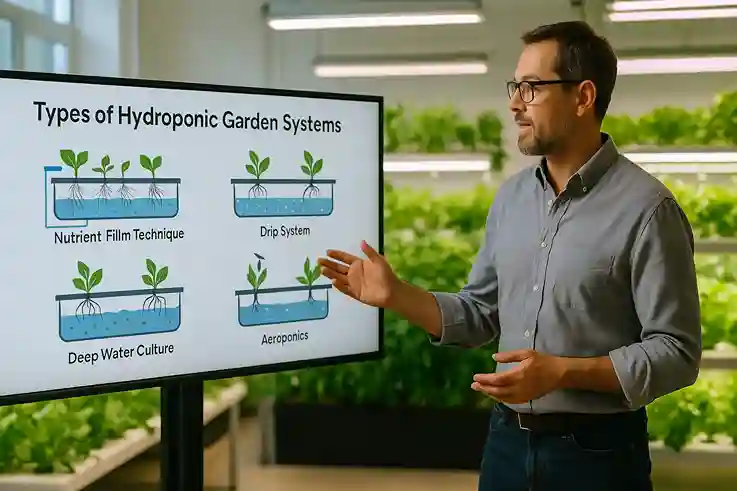
A hydroponic garden can take many forms, each with its own method of delivering nutrients and oxygen to plants. Choosing the right system depends on the grower’s space, budget, and goals. Whether it’s a compact home garden or a large commercial farm, understanding these systems helps farmers make informed decisions. Below are six of the most common and effective types of hydroponic systems used today.
Nutrient Film Technique (NFT)
The Nutrient Film Technique is one of the most popular hydroponic systems. In this method, a thin stream of nutrient-rich water constantly flows over the roots. Plants sit in slanted channels, allowing gravity to move the solution. Because the roots are always moist and oxygenated, growth is fast and efficient. NFT is ideal for lightweight crops like lettuce, herbs, and spinach. It’s best suited for small to medium-scale hydroponic garden setups or indoor farms where space and control matter most.
Deep Water Culture (DWC)
In Deep Water Culture, plant roots are suspended directly in oxygenated water filled with nutrients. An air pump keeps the solution rich in oxygen, preventing root rot and ensuring consistent growth. This method is simple, cost-effective, and great for beginners. DWC works well for leafy greens and can also support fruiting plants like tomatoes or peppers. It’s perfect for small home systems due to its minimal maintenance and setup requirements.
Wick System
The Wick System is the most basic hydroponic design. It uses a wick—often cotton or nylon—to draw nutrient solution from a reservoir to the plant’s roots. Since it requires no pumps or electricity, it’s an excellent option for beginners or low-cost gardens. However, it works best for smaller plants that need less water, such as herbs and microgreens. This system suits hobbyists looking to start a simple, passive hydroponic garden.
Ebb and Flow (Flood and Drain)
The Ebb and Flow system periodically floods the plant tray with nutrient solution and then drains it back into a reservoir. This gives roots time to absorb nutrients and oxygen alternately, encouraging strong growth. It’s versatile and supports a wide range of crops, including flowers, fruits, and vegetables. The system requires a timer and pump, making it slightly more advanced. Ebb and Flow is popular in both home and commercial hydroponic gardens because of its adaptability.
Aeroponics
Aeroponics takes hydroponics to a higher level of innovation. Here, plant roots hang freely in air and are misted with nutrient-rich water at regular intervals. This system offers maximum oxygen exposure, leading to extremely rapid growth. It uses minimal water and nutrients, making it one of the most efficient systems available. However, aeroponics demands careful monitoring and advanced equipment, so it’s mostly used in research facilities or large-scale commercial operations.
Drip System
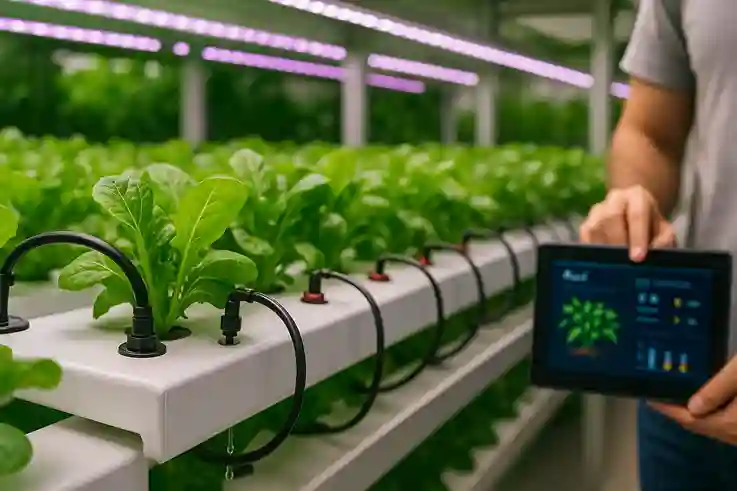
The Drip System delivers nutrients directly to each plant through a small tube, drop by drop. It allows precise control over water and nutrient delivery, reducing waste. This flexibility makes it suitable for a wide range of crops and scales—from small indoor gardens to industrial farms. Though setup costs are higher, the system’s efficiency and scalability make it a top choice for professional growers.
Choosing the Right System
Each system in a hydroponic garden serves a different purpose, from small-scale home projects to full-scale commercial farms. By understanding how these systems function, farmers can match their goals, space, and resources to the right setup. This knowledge ensures better yields, reduced costs, and sustainable farming practices. Ultimately, choosing wisely helps farmers build a hydroponic garden that thrives—efficiently, cleanly, and productively—in any environment.
Setting Up Your First Hydroponic Garden
1. Choose the Right Location
Pick a clean, stable area with good airflow and easy access to water and electricity. Many beginners set up in basements, balconies, or spare rooms. Ensure the area maintains a consistent temperature, ideally between 65°F and 75°F. Avoid direct sunlight if you’re using artificial grow lights, as too much heat can harm plants.
2. Set Up Lighting
Light is crucial for photosynthesis in a hydroponic garden. Use LED grow lights since they’re energy-efficient and emit minimal heat. Position them close to plants but not so near that leaves burn. Keep lights on 12–16 hours daily for balanced growth. Adjust height as plants grow taller to maintain even coverage.

3. Prepare the Nutrient Solution
Hydroponic plants get all nutrients from the water. Use a balanced nutrient mix with essential elements like nitrogen, potassium, and calcium. Mix nutrients according to the manufacturer’s instructions. Always monitor the pH level, keeping it between 5.5 and 6.5 for optimal absorption. Test weekly and adjust using pH up or down solutions.
4. Add Air and Water Circulation
Healthy roots need oxygen. Place an air pump and air stone in your nutrient reservoir to keep water moving and oxygenated. Constant circulation prevents root rot and helps distribute nutrients evenly.
Pro Tip: Add an extra air stone if your system supports multiple plants—it keeps oxygen levels stable and boosts root strength.
5. Select Beginner-Friendly Crops
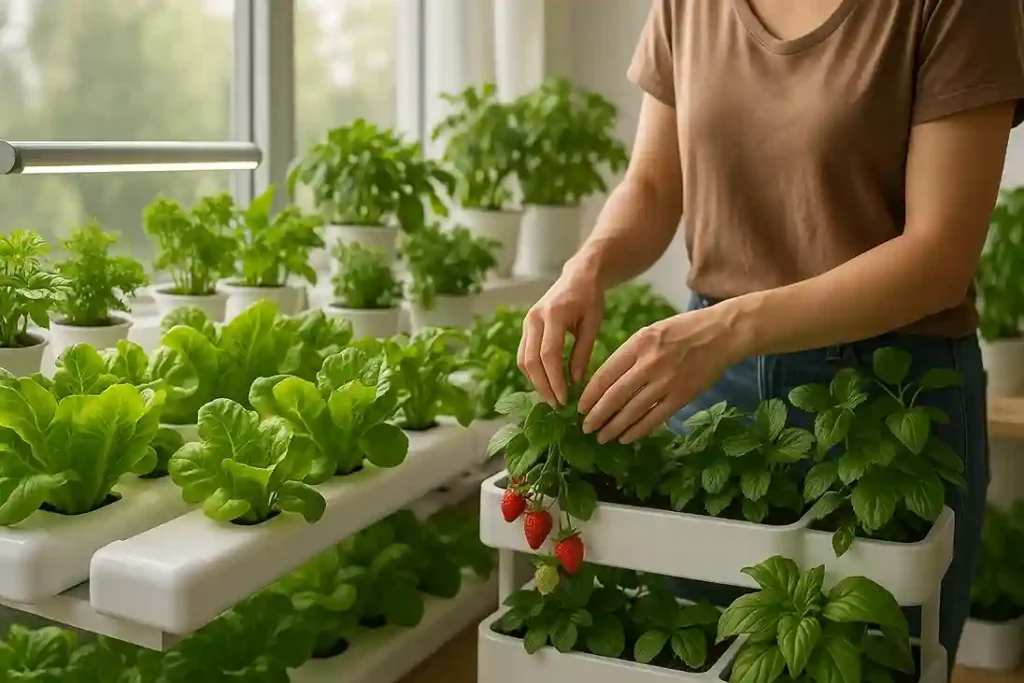
Start with easy, fast-growing plants. Lettuce, spinach, basil, and strawberries thrive in hydroponic systems and require minimal care. Once you gain experience, experiment with tomatoes, cucumbers, or peppers.
6. Monitor Growth and Adjust
Check plants daily for color, leaf strength, and water levels. Clean the system weekly to prevent algae buildup. Track growth cycles so you can harvest efficiently.
Setting up a hydroponic garden doesn’t demand huge investment—just commitment and curiosity. Once the system runs smoothly, costs drop, and yield rises steadily. Next, let’s explore how this method boosts sustainability and long-term value for farmers and growers alike.
The Green Advantage: Sustainability in Every Drop
A hydroponic garden stands as a beacon of sustainable farming in the modern world. It minimizes resource waste, protects the environment, and ensures consistent crop production. Farmers everywhere are discovering how this innovative method reshapes agriculture with less water, fewer chemicals, and lower emissions. Through smart design and precision control, hydroponic systems align productivity with environmental responsibility.
Water Conservation: Every Drop Reused
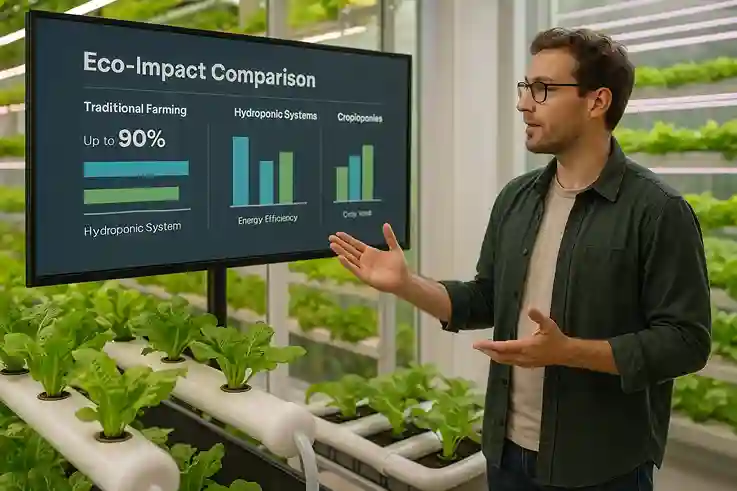
Traditional soil farming wastes a large portion of irrigation water through evaporation and runoff. In contrast, a hydroponic garden uses up to 90% less water. The nutrient solution flows through the system and returns to a reservoir, ready for reuse. Because of this closed-loop process, no drop is lost, and crops receive exactly what they need. As a result, farmers can grow more with less—an essential benefit in drought-prone regions. Moreover, hydroponic systems allow fine-tuning of moisture levels, preventing both overwatering and nutrient loss. Therefore, water conservation becomes effortless, efficient, and effective year-round.
Pesticide-Free Farming for Healthier Produce
Hydroponic gardens eliminate the need for soil, which also removes a primary source of pests and diseases. Consequently, farmers can grow food without pesticides or herbicides. This not only protects consumers from harmful chemical residues but also benefits the planet. Because no toxic runoff enters the environment, surrounding ecosystems remain unharmed. Furthermore, reduced pesticide use preserves biodiversity, especially beneficial insects like pollinators. Clean, nutrient-rich crops appeal to health-conscious buyers, adding economic value while maintaining ecological balance. Thus, hydroponic gardening promotes both wellness and sustainability in a single, efficient system.
Reducing the Carbon Footprint
Growing food closer to urban centers reduces transportation distances significantly. As a result, hydroponic farms produce fewer greenhouse gas emissions than traditional rural farms. Many growers now use renewable energy—such as solar or wind—to power pumps and lights, cutting their carbon output even further. Additionally, controlled indoor conditions reduce crop loss from weather damage, minimizing waste and improving efficiency. Therefore, every harvest becomes a step toward climate-friendly food production.
Indoor Farming and Climate Resilience
Indoor hydroponic systems are transforming how communities adapt to climate challenges. Since plants grow under regulated light, temperature, and humidity, they remain unaffected by droughts, floods, or soil degradation. Because of this consistency, farmers enjoy stable year-round yields despite unpredictable weather patterns. Moreover, these systems can thrive in places once unsuitable for farming, such as urban rooftops or arid zones. Consequently, hydroponic gardens enhance food security while reducing dependence on global supply chains.
A Path Toward Sustainable Profitability
The environmental advantages of hydroponics also lead to strong economic returns. As systems recycle water, reduce input costs, and improve yields, operational expenses decline steadily. Furthermore, the growing demand for clean, local produce increases market opportunities. Thus, sustainability becomes both a moral and financial investment.
In conclusion, a hydroponic garden embodies the perfect balance between ecological care and agricultural progress. Through efficient water use, pesticide-free produce, and reduced emissions, it delivers greener growth for the planet. Next, let’s examine how these eco-friendly systems translate into cost savings and profitability, proving that sustainability and success can grow side by side.
Cost, Yield, of a Hydroponic Garden
| Setup Type | Initial Cost (USD) | Yield Increase vs. Soil | Water Savings |
|---|---|---|---|
| Home System (Small) | $300 – $700 | 35% higher | 80–90% less |
| Medium Greenhouse Setup | $2,000 – $5,000 | 45% higher | 85–90% less |
| Commercial Farm (Large) | $10,000 – $25,000+ | 50% higher | 90% less |
Common Challenges and Smart Solutions
While a hydroponic garden offers impressive efficiency and sustainability, it also comes with specific challenges. From nutrient management to energy reliability, farmers must learn to balance precision with care. Fortunately, most issues have straightforward solutions that strengthen systems over time. Addressing these problems early helps maintain steady growth and prepares farmers for future innovation.
Nutrient Imbalance: The Root of Many Issues
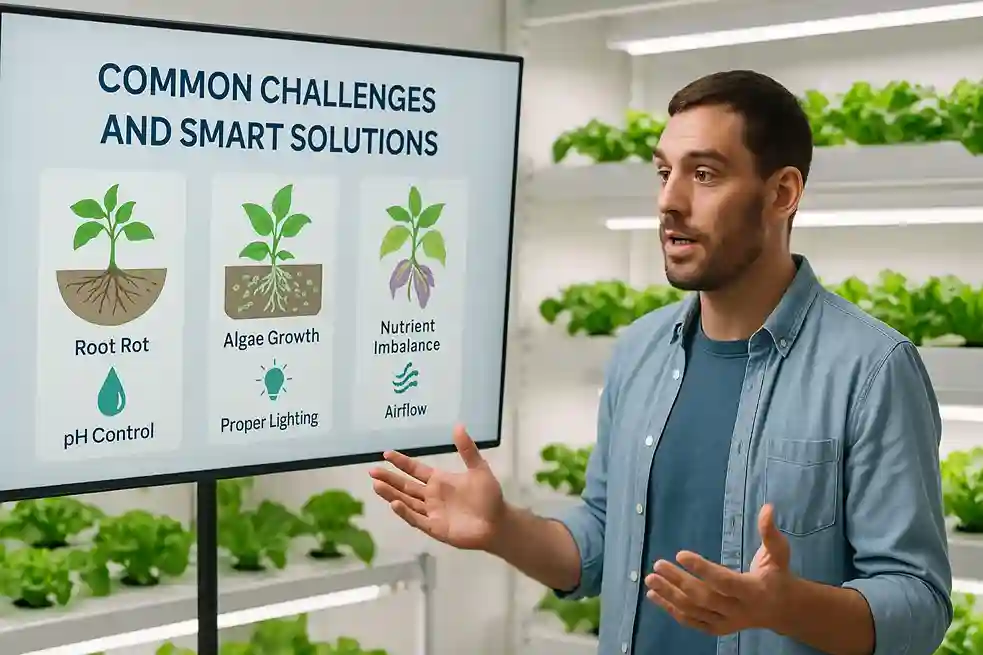
In hydroponics, plants rely entirely on the nutrient solution. When nutrients are too strong or too weak, growth suffers. Leaves may yellow, roots can burn, and yields decline. To prevent this, farmers should test nutrient concentration regularly using an EC (electrical conductivity) meter. Consistent monitoring ensures plants receive the right mix of minerals. Additionally, changing the nutrient solution every two weeks prevents buildup and keeps roots healthy.
Smart Solution: Always follow manufacturer guidelines for nutrient ratios and keep a detailed log of pH and EC readings. Regularly flushing the system with clean water can restore balance quickly.
Algae Growth: The Silent Invader
Algae thrive in light, moisture, and nutrient-rich water—conditions common in a hydroponic garden. If left unchecked, algae compete with plants for oxygen and nutrients. Farmers can prevent this by blocking light from nutrient tanks and keeping reservoirs covered. Using opaque or dark-colored tubing helps too.
Smart Solution: Clean all equipment weekly and use mild, plant-safe disinfectants. Adding an air stone improves oxygen circulation, making it harder for algae to grow.
Power Dependency: Keeping Systems Running
Hydroponic systems often depend on electricity to power pumps, lights, and air stones. During outages, water stagnates, and roots may suffocate. Farmers can reduce this risk by installing backup power sources such as solar batteries or small generators.
Smart Solution: Invest in a timer-based system that pauses operation safely during power cuts. Regularly maintain pumps and wiring to avoid unexpected breakdowns.
Real-World Success Story
In California, farmer Luis Ramirez started a small hydroponic lettuce farm in his garage. Early on, he faced nutrient fluctuations and algae problems that slowed growth. After implementing weekly cleaning schedules and upgrading his monitoring tools, his plants thrived. Within months, Luis expanded his system and began selling fresh lettuce to local restaurants. His success shows how small adjustments can turn early struggles into long-term achievements.
Looking Ahead: Challenges Inspire Innovation
Each obstacle in hydroponic gardening offers a chance to improve. As farmers refine systems, they push technology forward—creating smarter, more resilient setups. With better sensors, automated pH control, and renewable energy integration, the future looks bright. These solutions not only overcome current issues but also prepare hydroponic gardens to thrive in tomorrow’s climate-conscious world.
The Future of Farming Lies in the Hydroponic Garden
The future of agriculture is taking shape in controlled environments powered by innovation. A hydroponic garden represents more than just a growing method—it symbolizes a shift toward smarter, cleaner, and more resilient food systems. Across cities and rural areas alike, this technology is transforming how people grow, share, and understand food production.

Urban Farming and Smart Technology
Urban farming is expanding rapidly as cities search for sustainable ways to feed growing populations. Rooftops, warehouses, and even shipping containers are turning into productive green spaces. Because hydroponic gardens require little land and water, they fit perfectly in urban landscapes. Farmers now integrate AI sensors and automation to monitor plant health, adjust nutrients, and optimize light conditions. These intelligent systems make farming more precise and less labor-intensive. As a result, even small spaces can yield significant amounts of fresh, high-quality produce year-round.
Furthermore, AI-driven tools predict plant needs before issues arise, ensuring consistent growth. Through real-time data, farmers save time, resources, and energy. Therefore, technology not only supports efficiency but also enhances sustainability.
Hydroponics and Global Food Security
As the global population rises, food security becomes a growing concern. Hydroponic systems provide a reliable solution by producing crops in controlled environments. Because these systems are unaffected by droughts, poor soil, or harsh climates, they ensure stable harvests everywhere. Communities in desert regions, disaster-prone areas, and urban centers can all benefit from hydroponic farming. Additionally, shorter supply chains reduce dependency on imported food. Consequently, hydroponics helps nations strengthen local food production while reducing environmental impact.
Educational and Community Benefits
Hydroponic gardens are increasingly finding their place in schools, universities, and community centers. Not only do they serve as living classrooms that teach science, sustainability, and nutrition, but they also offer students a hands-on way to understand how plants grow and how technology enhances modern farming. Meanwhile, communities are adopting hydroponic systems to produce fresh, local food, fostering self-sufficiency and collaboration. In addition, these gardens create new employment opportunities, empowering people to participate in meaningful agricultural innovation.
A Global Shift Toward Greener Growth
The widespread adoption of hydroponics marks the beginning of a global agricultural revolution. As more regions invest in sustainable farming technology, the world moves closer to a food-secure and environmentally balanced future. Governments, entrepreneurs, and local growers are all contributing to this transformation. With hydroponic systems, the path forward is clear: farming becomes efficient, inclusive, and planet-friendly.
The future of farming truly lies in the hydroponic garden—a place where innovation meets nature, and growth knows no boundaries.
According to Hydroponics: Current Trends in Sustainable Crop Production, recent studies show significant yield increases and greater resource efficiency through hydroponic systems.
Frequently Asked Questions (FAQ)
Conclusion: Growing Greener, Smarter, and Stronger
A hydroponic garden is the future of farming, and therefore, it leads the shift toward sustainable food production. Moreover, it saves water, space, and energy while ensuring clean, chemical-free harvests all year long. Consequently, farmers can grow more food with fewer resources, creating a balance between profit and planet.
Furthermore, because hydroponics eliminates soil and pesticides, it reduces environmental harm and promotes healthier living. In addition, urban areas benefit greatly, as small indoor systems transform unused spaces into thriving green farms. Hence, even city dwellers can contribute to food security and sustainability.
Also, as technology advances, AI sensors and automation continue to make hydroponic systems more efficient and resilient. Therefore, this innovation not only supports consistent yields but also protects crops from climate uncertainty.
Ultimately, hydroponic gardens symbolize progress. Through efficiency, adaptability, and care, they redefine how humanity grows food—greener, smarter, and stronger than ever before.
Tell us in the comments: What will you grow first in your hydroponic garden?

Michael Reyes is a versatile blogger with a primary focus on farming and sustainable living. Growing up close to nature, he developed a deep interest in agriculture and enjoys sharing practical tips on backyard farming, modern cultivation techniques, and eco-friendly practices. While farming remains his specialty, Michael also writes on a wide range of topics, from lifestyle and travel to everyday inspiration, making his work relatable to a broad audience.
Outside of writing, Michael enjoys spending time outdoors, experimenting with new farming methods, and exploring different cultures through food and travel. His approachable voice and well-researched insights make his blogs both informative and engaging.