
Homeschooling resources shape how children learn beyond the traditional classroom. Across the USA, homeschooling has expanded rapidly, driven by parents seeking flexible and personalized education. Families now design lessons tailored to individual needs, yet success depends on the strength of the tools they use. Without structured and reliable materials, lessons risk becoming inconsistent or incomplete. That’s why access to free, high-quality educational platforms matters so much.
These resources give students a balanced mix of academics, creativity, and critical thinking without adding financial strain. Moreover, they allow parents to align learning with state standards while preserving independence. As technology evolves, free digital options continue to rival paid curricula in depth and design. In this guide, you’ll find the best homeschooling resources organized by subject and grade—each chosen for accessibility, effectiveness, and credibility—so every learner, from elementary to high school, can grow confidently through structured self-guided learning.
Understanding Free Homeschooling Resources
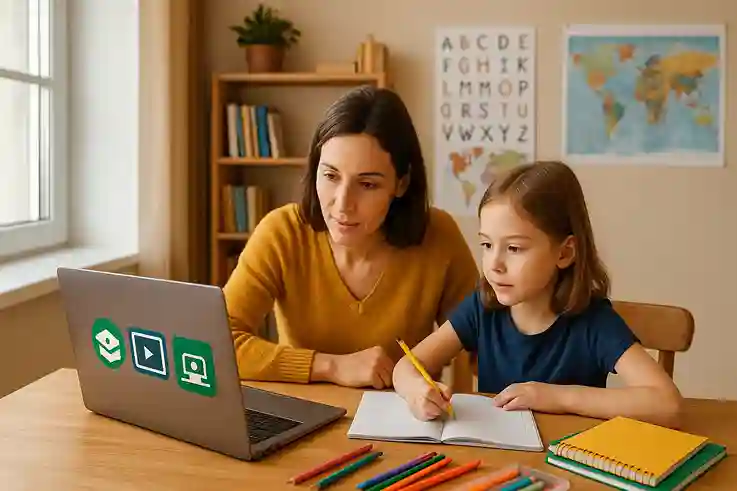
In education, the word free can carry different meanings. Within homeschooling resources, free often refers to open-access or nonprofit materials that remove cost barriers while preserving educational value. Open-access tools are usually created by educators, universities, or public institutions that share lessons, videos, and textbooks under licenses allowing unrestricted use. Nonprofit platforms, meanwhile, operate on grants or donations, ensuring their content remains available without subscription fees.
High quality doesn’t always depend on price. Many free homeschooling tools meet or even exceed academic standards because they draw from research-backed teaching methods and expert contributions. For example, platforms such as Khan Academy or CK-12 provide complete subject coverage from math to science, using interactive methods proven to improve comprehension. Public library databases also extend free access to e-books, educational videos, and virtual tutoring through local systems across the USA.
Furthermore, open educational resources (OER) allow parents to customize content for their child’s pace and learning style. This adaptability supports both structured lesson planning and creative exploration without added cost. Libraries, universities, and community organizations continue to expand these collections, closing learning gaps and fostering equal opportunity for every family, regardless of location or income.
Ultimately, free homeschooling resources offer more than savings—they deliver flexible, credible, and inclusive education. These foundational tools make learning accessible to all families, empowering parents to build meaningful educational experiences within reach of every learner.
“Education should never be limited by cost; knowledge grows strongest when shared freely.” — Anonymous
Core Academic Tools by Subject
Language Arts
Strong literacy skills form the heart of every successful homeschool program. Free reading and writing tools help students develop comprehension, vocabulary, and expression. Platforms like Project Gutenberg offer thousands of classic texts for all grade levels, while ReadWorks provides leveled reading passages with comprehension questions to build analytical skills. For writing and grammar, Grammarly for Education and Quill guide students through interactive exercises that strengthen syntax, punctuation, and sentence structure. When learners engage daily, they improve fluency and confidence naturally. Reading and writing confidence begins with strong daily practice.
Math
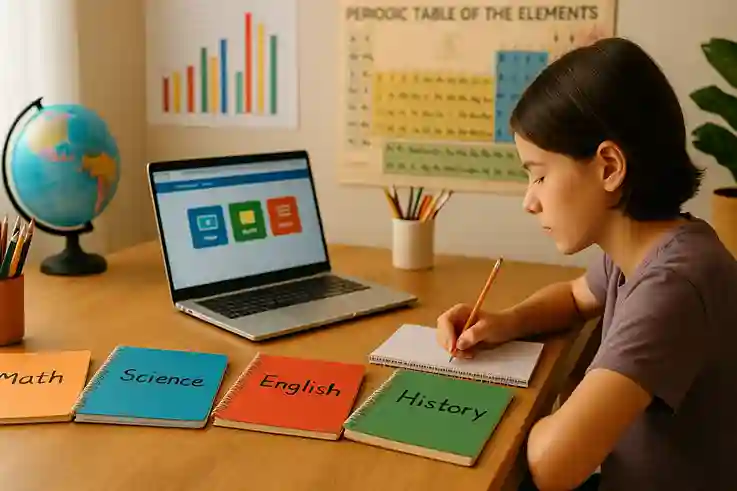
Mathematics builds reasoning through repetition and visual understanding. Free learning platforms such as Khan Academy, IXL Free Mode, and Math is Fun offer lessons from basic arithmetic to calculus. Printable worksheets from these sites let parents reinforce skills offline, ensuring mastery through consistent review. Each tool provides feedback that helps learners correct mistakes in real time. By integrating visual examples and step-by-step solutions, students grasp abstract concepts with clarity. These build logical skills without costly materials.
Science
Curiosity drives science learning best through interaction. Platforms like the Smithsonian Learning Lab, PhET Interactive Simulations, and NASA Kids’ Club turn complex topics into engaging, hands-on exploration. Students can simulate experiments, watch chemical reactions safely, and visualize planetary motion. These tools encourage discovery through play while reinforcing scientific reasoning. Parents can guide learning using structured lesson plans or allow independent exploration to spark interest. Science learning thrives through visual and hands-on exploration.
Social Studies
Understanding society requires immersive, story-driven study. The National Archives’ DocsTeach lets students handle real historical documents, while Google Arts & Culture provides virtual tours of landmarks and museums across the world. Learners explore U.S. history, geography, and civics through visuals, maps, and interactive stories. These resources encourage critical thinking about culture, citizenship, and context. Contextual learning builds informed future citizens.
Specialized Resources for Different Grades
Elementary Level
Early learning thrives on engagement and play. Platforms like ABCmouse (free trial available) guide young learners through reading, math, and art with colorful lessons and gamified challenges. Starfall offers phonics-based literacy programs that help children master sounds and simple words interactively. For well-rounded fun, FunBrain mixes games, stories, and puzzles to strengthen focus while reinforcing basic academic skills. These platforms keep early education light, structured, and joyful—ideal for building foundational curiosity.

Middle School Level
As students grow, content should evolve to challenge reasoning and self-guided learning. CK-12 provides free, customizable digital textbooks and simulations that align with middle school standards. Its FlexBooks system lets families adjust difficulty for math, science, or social studies. Meanwhile, Scholastic Learn at Home offers themed daily lessons combining reading comprehension, discussion, and critical thinking. Both help parents guide independent learners toward responsibility and deeper understanding.
High School Level
High school homeschoolers benefit from structured academic rigor. OpenStax delivers peer-reviewed, college-level textbooks in science, math, and social studies—completely free. Additionally, Coursera provides “audit” options that allow learners to join online university-level courses without paying for certification. These platforms prepare students for advanced study or college transitions, supporting both credit-based and enrichment paths.
Grade-based planning helps match tools to students’ learning levels, ensuring a consistent path from discovery to mastery throughout the homeschooling journey.
Creative and Skill-Building Extras
Coding and Digital Problem-Solving
Technology skills shape future readiness. Code.org helps students learn programming through visual games, puzzles, and creative projects. Each lesson builds logic and persistence while introducing core computer science ideas. Coding supports both math and critical thinking, turning digital play into structured learning.
Visual Arts and Expression
Art fuels imagination and emotional growth. Through Artsonia, students can create digital portfolios, upload artwork, and connect with classroom communities online. It’s a safe and encouraging environment that celebrates creativity while helping parents track artistic progress. Artistic projects reinforce focus and patience, skills essential for lifelong learning.
Music and Sound Exploration
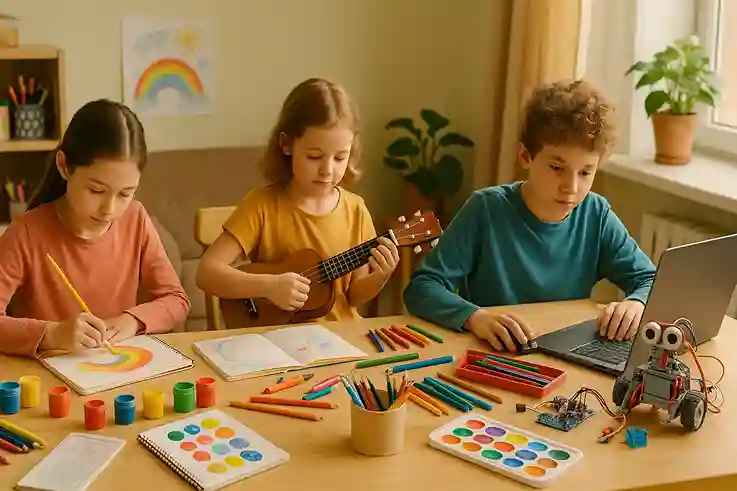
Music education sharpens rhythm, memory, and pattern recognition. Chrome Music Lab lets students visualize melodies, experiment with harmonies, and explore musical science interactively. It’s free, fun, and accessible across all devices, allowing even beginners to compose and learn through play.
Integrating STEM and Creativity
STEM and art together form STEAM, a model combining technical mastery with imagination. Projects that blend coding, music, and design train both sides of the brain—encouraging invention and curiosity. Students gain not only academic strength but also adaptability and empathy.
Balanced resources nurture both intellect and imagination, giving homeschooling families the freedom to inspire creativity alongside structured learning.
U.S.-Based Libraries and Government Resources
Free Public Library e-Learning Portals
Local libraries across the United States offer powerful homeschooling resources through free digital platforms. Many systems provide e-learning access to audiobooks, educational videos, and subject-specific databases using a simple library card. Networks such as Libby, Hoopla, and OverDrive let families download study materials or stream interactive lessons directly from home. Public libraries also host virtual tutoring programs, live workshops, and printable worksheets covering literacy, math, and science. These free tools strengthen both independent and guided learning, ensuring every student can access reliable academic support without cost barriers.
Government-Supported Educational Tools (.gov Platforms)
Families can rely on official .gov websites for trustworthy and curriculum-aligned content. The U.S. Department of State’s EducationUSA platform provides academic guidance, global study information, and support for students exploring higher education pathways. For younger learners, NASA Kids’ Club turns complex space concepts into playful activities that build science curiosity. These sites are updated regularly, ensuring information accuracy and national education standard alignment.
Why These Resources Matter for Homeschoolers
Public and government-backed platforms deliver credibility, inclusivity, and structure—qualities vital to effective homeschooling. They bridge gaps in access and content quality while keeping materials transparent and verifiable. Parents can confidently use them to supplement any grade or subject.
Government-backed platforms ensure credible, curriculum-aligned support, empowering families to homeschool with confidence and clarity.
Tips for Parents Using Free Homeschooling Resources

Create a Consistent Learning Schedule
A structured routine helps children stay focused and organized. Parents should plan lessons by subject and time, using homeschooling resources that match each child’s pace. For instance, morning sessions can emphasize core academics like math or language arts, while afternoons allow for creative subjects such as art or coding. Moreover, maintaining a weekly timetable ensures steady progress and prevents burnout.
Rotate Resources for Variety and Engagement
Using the same platform daily can reduce interest, so rotate between digital and hands-on tools. For example, alternate Khan Academy lessons with printable worksheets or science kits. This variety keeps learners curious and motivated. Additionally, tracking which resources your child enjoys most can help refine future lesson planning.
Blend Online and Offline Learning Methods
Balanced education comes from both screen-based and real-world experiences. After completing a reading passage online, discuss it together or assign a handwritten summary. Likewise, pair digital simulations with simple home experiments for deeper comprehension. Transitioning smoothly between digital and tactile learning builds retention and critical thinking skills.
Track Progress and Celebrate Growth
Most free homeschooling resources offer progress dashboards or printable reports. Parents can use these to monitor skill development and set achievable goals. Celebrate milestones—finishing a course or mastering a new topic—to boost motivation and confidence.
Parental engagement transforms tools into real learning success, ensuring that every free resource contributes meaningfully to a child’s educational journey.
Challenges and How to Overcome Them
Managing Time Effectively
Time management remains one of the biggest challenges in homeschooling. Parents often juggle multiple roles—teacher, planner, and caregiver—while trying to maintain balance. Setting realistic goals and using digital planners or apps linked to homeschooling resources helps structure the day. Prioritize core subjects in the morning when attention is highest, and reserve afternoons for creative or hands-on learning. Furthermore, including short breaks prevents fatigue and boosts focus throughout the study schedule.

Overcoming Technology Limitations
Not every household has constant access to fast internet or multiple devices. To overcome this, parents can download lessons in advance from platforms like Khan Academy or use printable materials from CK-12 and ReadWorks. Local libraries often lend devices or offer internet access to homeschool families. Blending offline resources with online materials ensures consistent learning even when tech challenges arise.
Maintaining Student Motivation
Keeping students motivated can be difficult, especially over long study periods. Parents should encourage curiosity by offering choices—letting children pick which homeschooling resources to use for specific subjects. Adding gamified platforms, creative projects, or short challenges turns study sessions into enjoyable experiences. In addition, connecting with virtual study groups or online homeschooling communities provides peer interaction and shared accountability, keeping learners inspired.
A supportive routine helps overcome these barriers effectively, allowing families to sustain momentum, adapt to challenges, and create a balanced homeschooling environment where students can truly thrive.
FAQ: About Homeschooling Resources
Conclusion: Free Tools, Limitless Learning
Ultimately, homeschooling success depends on access to the right guidance and reliable tools. Across the USA, families now have an incredible range of homeschooling resources that make quality education both flexible and affordable. Moreover, from reading programs and STEM simulations to creative art platforms, each tool opens a new path toward curiosity and lifelong learning.
Importantly, free doesn’t mean limited—it means opportunity. In fact, open-access and nonprofit platforms empower parents to customize lessons, track progress, and match content to their child’s interests. Additionally, whether your learner thrives through hands-on science, story-driven history, or digital creativity, there’s always a resource that fits every educational need.
Furthermore, community networks, libraries, and government sites strengthen these efforts with credible, standards-aligned support. Consequently, they form a powerful foundation for growth, independence, and confidence within the homeschooling journey.
Finally, with structured use and consistent parental involvement, homeschooling resources transform ordinary lessons into extraordinary journeys of discovery. Therefore, these tools prove that learning, when shared freely, truly knows no limits.
Homeschooling thrives on shared ideas and trusted tools. So, which homeschooling resources have helped your family most?
Share your favorite platforms, tips, or success stories in the comments below — your experience could inspire another parent on their learning journey!

Ellie Clark is a passionate blogger with a specialty in education, where she shares insights on learning methods, study strategies, and ways to make knowledge more accessible. With a background in teaching and a love for lifelong learning, she brings clarity and creativity to her writing, helping readers of all ages unlock their potential. While education remains her core focus, Ellie also writes on a variety of other topics, including lifestyle, travel, and personal development, giving her blog a well-rounded appeal.
When she’s not writing, Ellie enjoys reading, exploring new cultures, and spending time in nature. Her approachable style and thoughtful advice make her a trusted voice for readers seeking both guidance and inspiration.