
Homeschooling in Ohio offers families a legal and flexible way to take full control of their children’s education. Parents who choose this path often value the ability to tailor learning to their child’s unique strengths and pace. In Ohio, homeschooling means teaching at home under state guidelines while maintaining the freedom to design your own curriculum.
Many families appreciate how this approach strengthens family bonds and allows for a more personal, meaningful learning experience. Whether your goal is academic excellence, character development, or a calmer learning environment, homeschooling provides the space to achieve it. Ohio’s laws support families who wish to educate at home, requiring only a few clear steps to begin. With careful planning, parents can create a thriving learning environment right at home. Before you begin, let’s explore how Ohio’s homeschool process works step by step.
“Homeschooling allows you to educate the heart as much as the mind.” — Anonymous
File the Notice of Intent for Homeschooling in Ohio

Filing the Notice of Intent to Homeschool is a required and important first step for families beginning homeschooling in Ohio. This document officially informs your local school district superintendent that you plan to educate your child at home for the coming school year. It ensures your family’s compliance with Ohio’s homeschooling laws and establishes your legal right to operate as a home educator.
Your annual notice must include several key details:
- The parent’s name and address
- The child’s name and age
- A brief outline of the curriculum or subjects you intend to teach
- A signed assurance that your child will receive at least 900 hours of instruction per year
While the process is straightforward, submitting your notice before the school year begins is highly recommended. Early submission helps avoid any misunderstandings with your local school district and gives you peace of mind as you start planning lessons.
Keep a copy of your notice and any correspondence for your records. Many families also include optional materials, such as a short educational philosophy or a list of learning resources, though Ohio law does not require these.
Remember, the Notice of Intent isn’t meant to restrict your teaching—it simply confirms your responsibility for your child’s education. Once the notice is accepted, you’re free to design a program that fits your child’s learning style and pace. After filing, focus on building your homeschool plan, selecting resources, and setting goals for a successful year.
Create Your Plan and Curriculum for Homeschooling in Ohio
Creating a strong homeschool plan and curriculum is one of the most exciting parts of homeschooling in Ohio. The state gives families remarkable flexibility, allowing parents to design a learning experience that fits their child’s interests, pace, and goals. Unlike traditional schooling, Ohio does not require a specific textbook or state-approved program. Instead, parents can select or design a curriculum as long as it covers key academic subjects.
Ohio’s Flexible Homeschool Options
Families who choose homeschooling in Ohio enjoy the freedom to teach in the way that works best for their children. Some prefer structured lesson plans, while others follow a more relaxed, interest-led approach. Both are acceptable under Ohio law. Parents can use textbooks, digital courses, or hands-on learning experiences. Many families combine several methods—traditional study, online learning, and field experiences—to create a rich, balanced education.
This flexibility helps children learn through real-world exploration as well as through formal instruction. Whether your child learns best by reading, experimenting, or creating, your homeschool plan can adapt easily to their needs.
Core Subjects Required in Ohio
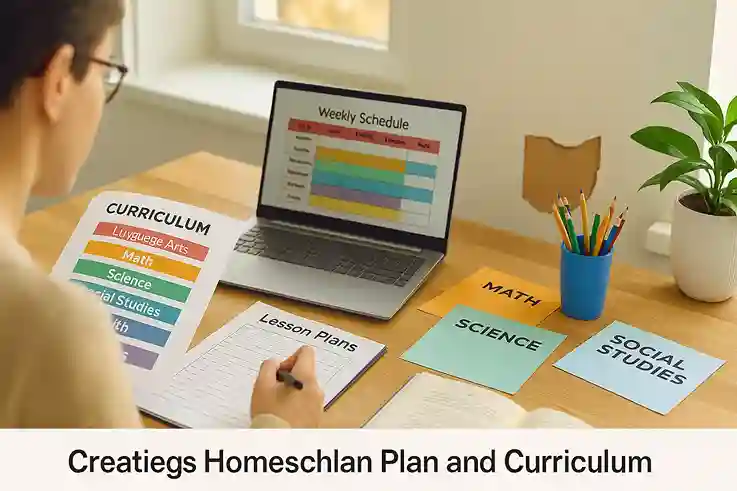
Ohio expects all homeschool plans to include a broad range of subjects that build a complete education. Typical areas of study include:
- Language Arts: Reading, writing, grammar, and communication skills
- Mathematics: Arithmetic, geometry, and problem-solving
- Science: Biology, earth science, chemistry, or nature study
- Social Studies: History, geography, and civics
- Health: Personal wellness, nutrition, and safety
- Fine Arts: Art, music, or creative expression
You can go beyond these basics by adding electives such as coding, foreign languages, or life skills. The goal is to create a program that fits both educational standards and your child’s personal growth.
Resources to Support Your Homeschool Plan
Parents homeschooling in Ohio can draw from many valuable resources. Local libraries offer free materials, reading lists, and quiet study areas. Online programs provide video lessons, quizzes, and progress tracking. Homeschool co-ops give families a chance to share teaching responsibilities and connect children with peers. Museums, community centers, and local workshops also provide educational enrichment outside the home.
Mixing different tools—books, technology, and hands-on experiences—keeps learning engaging and well-rounded. A well-organized plan sets the foundation for success. Once your plan is ready, you can begin tracking progress and watch your child’s confidence grow as they thrive through homeschooling in Ohio.
Keep Attendance and Learning Records
Keeping accurate attendance and learning records is a vital part of homeschooling in Ohio. The state expects parents to provide at least 900 hours of instruction each school year. This requirement helps ensure that your child receives a well-rounded education while maintaining flexibility in how and when learning happens.
Understand Ohio’s Instruction Requirement
Ohio law allows families to structure their school year in any way that fits their schedule. You can spread the 900 hours across traditional semesters, year-round learning, or even shorter daily sessions. What matters most is consistency. These hours can include direct lessons, field trips, reading, projects, and educational outings. Learning doesn’t always need to take place at a desk—real-world experiences count, too.
Use Simple Tools to Track Progress
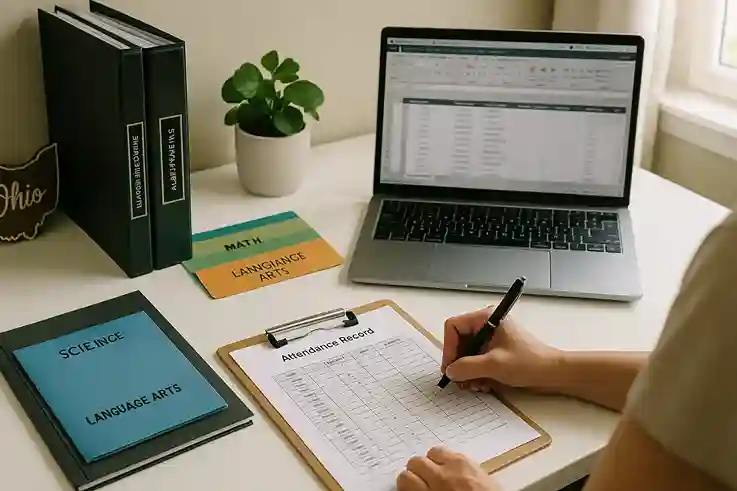
Tracking attendance and instruction hours can be simple with the right tools. Many families use homeschool planners, digital apps, or spreadsheets to record daily lessons and activities. Write down subjects covered, time spent, and any key milestones your child reaches. Apps like Trello, Google Sheets, or homeschool-specific platforms make recordkeeping organized and efficient.
Some parents prefer paper planners because they’re easy to reference during reviews or assessments. Choose whichever method keeps you consistent and comfortable. The goal is to have clear documentation that reflects your child’s learning journey.
Why Consistent Documentation Matters
Keeping detailed records isn’t just about meeting legal requirements—it helps you measure growth and celebrate progress. These notes and logs also make it easier to complete Ohio’s annual assessment at the end of each school year. When records are neat and up to date, the assessment process becomes smooth and stress-free.
Solid documentation also helps identify what’s working well and what needs adjustment in your homeschool plan.
Complete the Annual Assessment for Homeschooling in Ohio
Completing the annual assessment is an important part of homeschooling in Ohio, as it helps confirm your child’s educational progress each year. This step also demonstrates that your homeschool program continues to meet Ohio’s legal standards while giving you valuable insight into how your child is growing academically.
Understand Ohio’s Two Main Assessment Options
Ohio provides families with two simple choices for the annual homeschool assessment. You can select either a standardized test or a written narrative prepared by a certified teacher.
1. Standardized Test:
Many families choose this option because it offers a clear, measurable evaluation of academic progress. You may administer a nationally normed test at home, through a local testing center, or online. These results help show how your child compares to students of the same grade level.
2. Written Narrative:
Alternatively, you can request a licensed or certified Ohio teacher to review your child’s work and prepare a short narrative summary. This document should confirm that the child has made appropriate progress for their age and grade level.

When and How to Submit Your Results
Typically, parents submit the assessment results by the time they file their next Notice of Intent for the upcoming school year. Most districts accept mailed or emailed copies, while others may require physical submission. To avoid delays, confirm your local district’s preferred method well before the deadline.
Example: A Family Narrative Review
For example, the Johnson family in Columbus chose the narrative option. They gathered samples of their daughter’s writing, math work, and science projects from throughout the year. A certified teacher reviewed the materials, met briefly with the student, and wrote a short report confirming steady academic progress. This personal approach gave the family encouragement and confidence to continue their homeschooling journey.
After completing your assessment, you’re ready to renew for the next year.
Renew Your Homeschool Each Year in Ohio
Renewing your homeschool each year is a simple but essential part of homeschooling in Ohio. Every new school year, parents must file an updated Notice of Intent to Homeschool with their local school district superintendent. This renewal confirms that you plan to continue home education and that your child remains in compliance with Ohio’s homeschooling laws.
Understand the Annual Renewal Process
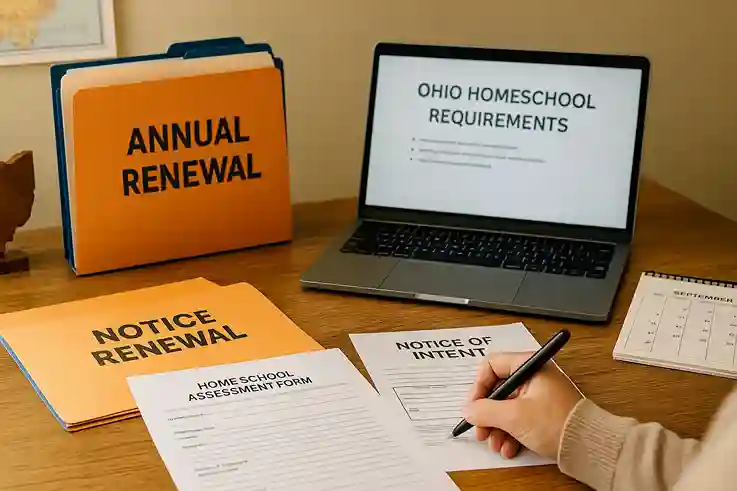
Each year, before classes begin, submit your new Notice of Intent. The process is nearly identical to your first filing. Include your name and address, your child’s name and age, an outline of your subjects, and your assurance of at least 900 hours of instruction. You’ll also attach the results or narrative from your previous year’s assessment to demonstrate academic progress.
Although the paperwork is brief, submitting it early is important. Doing so keeps your records current and avoids unnecessary follow-ups from your district.
Make Renewal Easier Every Year
Over time, the renewal process can become routine. To simplify your yearly submission:
- Reuse your homeschool plan: Update it with any new goals or materials rather than starting from scratch.
- Keep digital records: Store your Notice of Intent, curriculum outlines, and assessments on your computer or cloud drive for quick access.
- Track learning milestones: Organized notes make next year’s assessment much easier to complete.
Many parents also find it helpful to set a calendar reminder for mid-summer to begin preparing their renewal documents. That way, everything is ready well before the school year begins.
Renewing your homeschool in Ohio doesn’t have to be stressful. With good organization and steady planning, it becomes a simple yearly routine that reflects your child’s continued growth. With renewal handled, you can explore more support options and enjoy another successful year of homeschooling in Ohio.
Find Homeschool Support in Ohio
Building a strong support network can make homeschooling in Ohio easier, more enjoyable, and deeply rewarding. While teaching at home gives you independence, connecting with other homeschool families helps you share ideas, find encouragement, and create meaningful learning opportunities beyond the home. Thankfully, Ohio offers a wide range of co-ops, local support groups, and community events to help families thrive together.
Join Local Homeschool Co-ops and Support Groups
Homeschool co-ops are small groups of families who meet regularly to share teaching responsibilities and resources. These gatherings often include group lessons, science labs, field trips, or creative arts projects. In addition, co-ops allow parents to collaborate, exchange materials, and build lasting friendships.
Ohio has many regional and city-based homeschool groups where families connect both online and in person. Platforms like Facebook and local community boards list dozens of active groups in cities such as Columbus, Cleveland, and Cincinnati. Participating in one can provide both guidance and a sense of belonging.

Explore Community Learning Opportunities
Ohio’s public resources also support homeschool education in exciting ways. Families often visit libraries, museums, and educational parks for enrichment. Libraries host free reading programs and workshops, while museums offer homeschool days with interactive exhibits. In addition, state and metro parks provide nature programs and science classes that meet educational goals through real-world exploration.
These experiences make learning vibrant and hands-on, reinforcing the flexibility that defines homeschooling in Ohio.
Statewide Homeschool Organizations
Several statewide associations offer guidance, legal updates, and networking opportunities. Examples include:
- Christian Home Educators of Ohio (CHEO) – Provides resources, legal support, and statewide events.
- Ohio Home Educators Network (OHEN) – Focuses on secular support and community connection.
- Home School Legal Defense Association (HSLDA) – Offers legal information and national advocacy for homeschool families.
Each organization provides valuable insights into Ohio’s homeschool laws, event listings, and family resources throughout the year.
Common Mistakes to Avoid for New Families in Homeschooling in Ohio
Starting homeschooling in Ohio can feel exciting yet overwhelming, especially during the first year. While most families adjust quickly, a few common mistakes can make the process harder than it needs to be. Recognizing them early helps you build confidence and find your rhythm faster. Remember, every homeschooling journey is unique, and each challenge offers a valuable lesson.
Missing the Filing Deadline
One of the most frequent mistakes new families make is missing the filing deadline for the Notice of Intent. Submitting your form late can cause unnecessary stress or confusion with your local district. Mark your calendar early, and aim to file before the school year begins to stay organized and compliant.
Overloading the Schedule
It’s easy to plan too much at first. Many parents try to replicate a full school day at home, which can lead to burnout. Instead, focus on balance. Include structured lessons but also allow time for creative play, reading, and rest. Flexibility is one of the biggest strengths of homeschooling in Ohio—use it to your advantage.
Ignoring Social Opportunities
Some families worry about socialization, yet Ohio offers plenty of ways to connect. Homeschool co-ops, library programs, and community classes all provide social and group learning experiences. Building friendships and sharing experiences can boost motivation for both parents and children.
Neglecting Recordkeeping
Without consistent recordkeeping, preparing for annual assessments can become stressful. Use a planner, app, or simple spreadsheet to track hours, subjects, and progress. Keeping records up to date saves time and builds confidence during reviews.
Every homeschool family learns through experience, and small mistakes often lead to big improvements. Stay flexible, stay patient, and enjoy the journey—homeschooling in Ohio is as much about growth as it is about learning.
Frequently Asked Questions
Conclusion: Starting Homeschooling in Ohio
Beginning your journey with homeschooling in Ohio opens the door to flexibility, growth, and meaningful family learning. From filing your Notice of Intent to designing a personalized curriculum, each step helps you build a strong foundation for your child’s education. Ohio’s homeschool laws give families both freedom and structure—enough guidance to stay compliant and enough space to teach in a way that truly fits your child’s needs.
Through this process, you’ve learned how to plan lessons, track attendance, and complete yearly assessments with confidence. You’ve also discovered valuable resources like homeschool co-ops, support networks, and statewide organizations that make the experience even richer. With a little organization and steady commitment, homeschooling soon becomes a natural rhythm rather than a challenge.
Every family learns along the way. Some days will feel effortless, while others may require patience and creativity. But with time, you’ll find what works best for your home, your schedule, and your child’s unique learning style.
So, as you move forward, trust yourself and enjoy the freedom that homeschooling in Ohio brings. You’re not just teaching academics—you’re nurturing curiosity, independence, and confidence that will last a lifetime.
Have you recently started homeschooling in Ohio?
Share your experiences, tips, or questions in the comments below. Your story might inspire another family just beginning their journey!

Ellie Clark is a passionate blogger with a specialty in education, where she shares insights on learning methods, study strategies, and ways to make knowledge more accessible. With a background in teaching and a love for lifelong learning, she brings clarity and creativity to her writing, helping readers of all ages unlock their potential. While education remains her core focus, Ellie also writes on a variety of other topics, including lifestyle, travel, and personal development, giving her blog a well-rounded appeal.
When she’s not writing, Ellie enjoys reading, exploring new cultures, and spending time in nature. Her approachable style and thoughtful advice make her a trusted voice for readers seeking both guidance and inspiration.