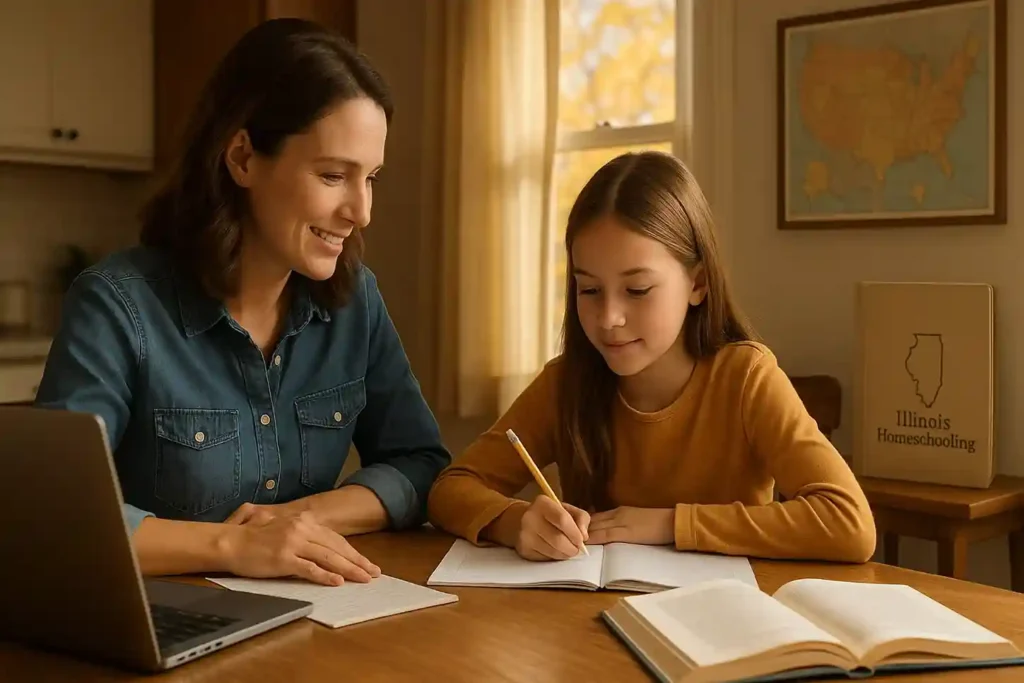
Homeschooling in Illinois gives parents the freedom to educate their children at home while following flexible state guidelines. Unlike many states, Illinois treats homeschooling as a form of private education. That means parents can design their own learning plans, select preferred teaching materials, and set a pace that fits their child’s needs. The state does not require registration, standardized testing, or official curriculum approval, offering families a wide range of educational choices.
However, parents are still responsible for ensuring their instruction covers key subjects like language arts, math, science, and social studies. This freedom makes homeschooling both empowering and slightly overwhelming for new families. With the right guidance and structure, parents can create a rewarding home learning environment that supports academic growth and personal development. This guide walks you through every essential step to start homeschooling in Illinois with confidence and clarity.
Homeschooling in Illinois Laws and Requirements
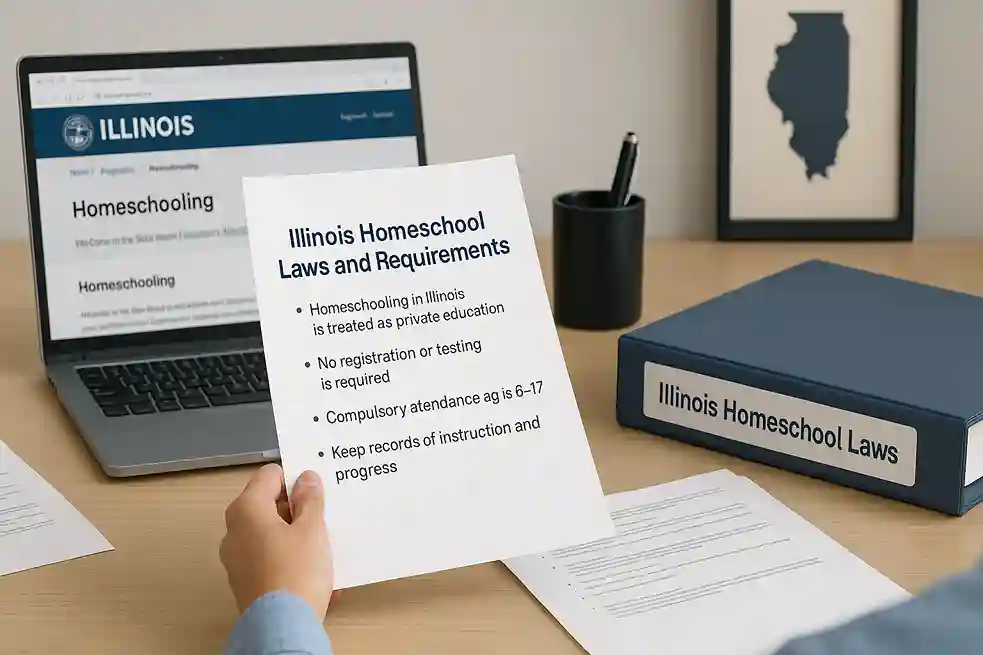
Homeschooling in Illinois falls under the category of private education, giving parents full authority to manage their child’s learning without heavy state oversight. The Illinois State Board of Education recognizes homeschools as private schools, allowing families to tailor lessons around their child’s needs, values, and interests. This flexibility means parents act as both teachers and administrators, ensuring instruction meets educational standards but without needing formal approval or supervision.
Unlike many other states, Illinois does not require parents to register their homeschool, seek state approval, or submit official reports. There are also no mandatory standardized tests for homeschoolers, which gives families the freedom to choose their own assessment methods. This makes Illinois one of the most homeschool-friendly states in the country.
However, parents must still meet the state’s compulsory attendance law, which applies to children ages 6 through 17. Education must be conducted in the English language and include core subjects such as language arts, math, science, social studies, and fine arts. Though not mandated, maintaining thorough records is highly recommended. Attendance logs, portfolios, or samples of completed work can help demonstrate compliance and document educational progress. These records also become valuable if a child transitions back to public school or applies for college later.
In short, homeschooling in Illinois offers remarkable independence but relies on the parent’s commitment to providing consistent, well-rounded instruction. Keeping good records ensures accountability while preserving the educational freedom Illinois families value most.
“Homeschooling isn’t about bringing school home; it’s about creating a world where learning never stops and curiosity leads the way.”
How to Start Homeschooling in Illinois
Beginning homeschooling in Illinois is straightforward, but understanding the process helps you stay organized and confident. Illinois offers families remarkable freedom, yet it’s important to follow a few key steps to start legally and build a solid educational foundation for your child.
Step 1: Know Your Legal Rights
In Illinois, homeschooling is treated as private education. Parents have full authority to manage their child’s instruction at home. You don’t need to register your homeschool or seek approval from the Illinois State Board of Education. Still, it’s wise to understand that your instruction must be in English and cover core subjects—language arts, math, science, social studies, fine arts, and physical development. Knowing these basics ensures your homeschool complies with state laws from day one.
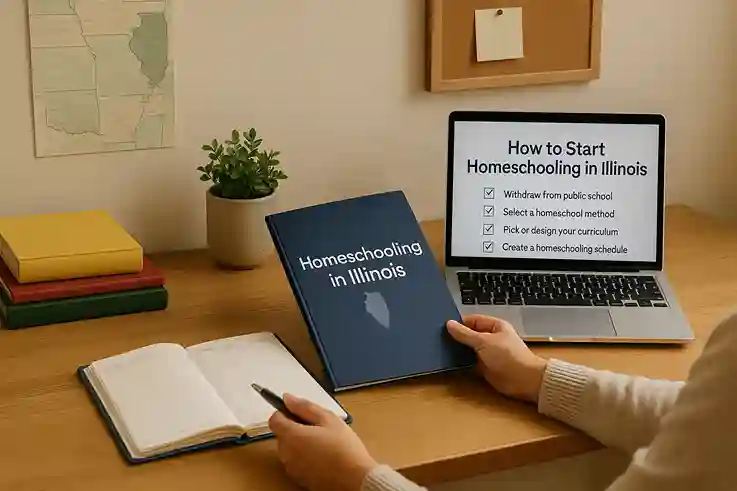
Step 2: Withdraw from Your Public School
If your child is currently enrolled in a public school, you’ll need to officially withdraw before homeschooling begins. Start by sending a simple written notice or email to the school principal or district office. This helps prevent any misunderstandings about truancy or attendance. You don’t have to give detailed reasons for your decision—just a clear statement of intent to homeschool.
Sample Withdrawal Letter:
Dear [Principal’s Name],
I am writing to inform you that I will be withdrawing my child, [Child’s Full Name], from [School Name] as of [Date]. Our family has chosen to homeschool in accordance with Illinois law. Please update your records accordingly.
Sincerely,
[Your Name]
Keep a copy for your records in case you need it later for verification.
Step 3: Choose a Homeschooling Method
Next, select a teaching approach that fits your child’s learning style. Illinois gives families freedom to choose any method, from structured textbook learning to project-based or online programs. Popular approaches include:
- Traditional or Classical: Follows a set curriculum similar to public schools.
- Charlotte Mason or Unit Studies: Focuses on hands-on, literature-rich learning.
- Unschooling: Lets children learn through real-world exploration and personal interests.
Explore a few styles before committing. Many parents mix methods to create a balanced learning experience.
Step 4: Pick or Design Your Curriculum
You can purchase a ready-made curriculum or design your own. Many Illinois homeschool families combine online resources, library materials, and local classes. When choosing, make sure core subjects are included, but also allow time for art, nature study, and life skills.
Step 5: Keep Basic Records
Although Illinois doesn’t require official reporting, keeping attendance logs, work samples, or lesson plans helps track progress. These records are valuable if you ever re-enroll your child in public school or apply for college later.
Starting homeschooling in Illinois can feel big at first, but each step builds confidence. With a clear plan, you’ll soon find that home education offers both freedom and fulfillment.
Curriculum Planning for Illinois Homeschoolers
Creating a homeschool curriculum in Illinois is both exciting and empowering. Because homeschooling in Illinois is recognized as private education, parents have the freedom to design lessons that reflect their child’s needs and interests. Still, to meet state expectations, instruction should cover the essential subjects that form the foundation of a complete education.

Required Subjects for Illinois Homeschoolers
Illinois law requires every homeschooled child to receive instruction in core areas. These include language arts, mathematics, biological and physical science, social studies, fine arts, and physical development. These subjects ensure your child gains balanced skills across reading, writing, problem-solving, and creative expression. Teaching them in English is also mandatory. However, how you teach them—whether through books, videos, or fieldwork—is entirely up to you. This flexibility allows each family to adapt learning styles to match the student’s pace and personality.
Choosing Curriculum Resources
When you begin curriculum planning, it helps to mix both online and local resources. Online programs offer structured lessons, progress tracking, and multimedia content that can make complex topics easier to understand. Meanwhile, local libraries, museums, and community centers often provide free or affordable educational materials. Many Illinois families also participate in co-ops—groups where parents share teaching responsibilities or coordinate classes together. This combination keeps learning fresh and social.
Parents can explore various subjects through unit studies, themed projects, or interactive lessons. For instance, a history unit on early America could include reading historical fiction, visiting a museum, and completing a creative writing project about life in the 1700s.
Blending Textbook, Digital, and Experiential Learning
A strong homeschool curriculum often blends three styles: textbook learning for structure, digital tools for engagement, and experiential learning for real-world application. Textbooks give clear direction and measurable progress. Digital tools like educational apps and videos make abstract ideas easier to grasp. Experiential learning—such as nature walks, experiments, or local volunteering—helps children connect theory to practice.
This balanced approach supports different learning styles and prevents monotony. A child might practice math through workbook exercises one day, then apply those same skills by budgeting for a family project the next. That variety not only strengthens understanding but also builds confidence and curiosity.
Recordkeeping and Assessment Tips
Recordkeeping is a key part of homeschooling in Illinois, even though the state does not require families to submit official reports or testing results. Keeping organized records helps you stay consistent, document progress, and build a strong academic history for your child. These records also become valuable when applying for college, scholarships, or future jobs.
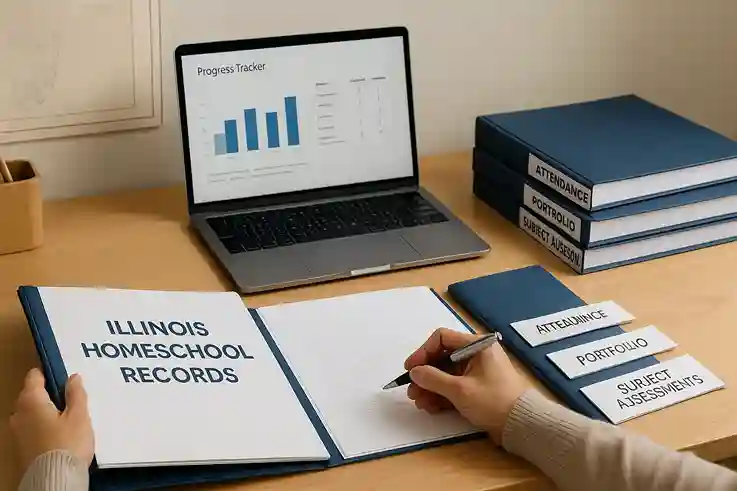
Keep Attendance Logs and Work Samples
Start by maintaining simple attendance records showing the days your child receives instruction. This can be a printed calendar, spreadsheet, or planner with checkmarks for each school day. Consistent attendance tracking shows commitment and structure, especially if you ever need to demonstrate compliance with Illinois’ compulsory attendance law.
Alongside attendance, save samples of your child’s work. Include writing assignments, math worksheets, science experiments, art projects, and any creative work that shows growth over time. Label them by subject and date for easy reference. Over months, this collection becomes a meaningful record of academic development and effort.
How Records Support Future Opportunities
Good recordkeeping benefits your child beyond homeschooling. When it’s time to apply for college or a job, clear documentation helps confirm the quality of their education. Colleges often ask for transcripts, reading lists, or portfolios that highlight achievements and learning depth. Keeping organized records now makes creating those materials easier later.
Employers also appreciate homeschool transcripts or skill summaries that show initiative and discipline. Detailed records reflect responsibility and help your child stand out in competitive applications.
Use Informal Assessment Methods
In Illinois, parents can choose how to measure academic progress. Instead of standardized tests, many families use informal evaluations like portfolios, progress reviews, or goal-setting check-ins. A portfolio is a curated collection of work showing your child’s learning journey—completed assignments, photos of projects, and short reflections.
Progress reviews involve discussing strengths and challenges together, setting goals, and adjusting lessons based on progress. This approach helps students take ownership of their education while reducing pressure.
For some families, creating a short end-of-semester report summarizing what was learned in each subject provides structure and closure.
Keeping records doesn’t need to be complicated. A binder, digital folder, or yearly portfolio is enough to track growth and preserve proof of quality education. Organized documentation builds confidence, ensures accountability, and celebrates every step of your homeschooling journey in Illinois.
Homeschool Support and Co-ops in Illinois
Homeschooling in Illinois offers parents freedom, but it also benefits greatly from community support. Connecting with other homeschool families can make the journey smoother, more social, and far more enjoyable. Co-ops, local groups, and statewide organizations give parents and students the chance to share homeschooling resources, exchange ideas, and participate in enriching activities together.
The Role of Homeschool Co-ops and Communities
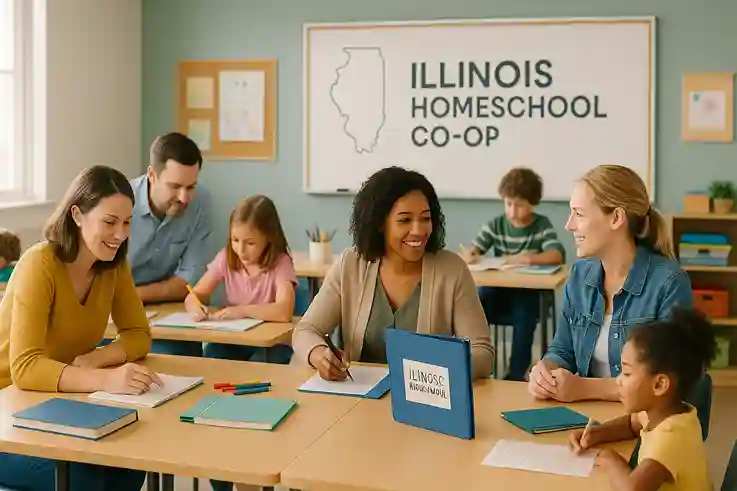
A homeschool co-op (short for cooperative) is a group of families who come together to share teaching duties and organize joint learning experiences. These groups often meet weekly or biweekly, providing classes, social opportunities, and extracurricular activities that may be harder to organize alone. Parents volunteer to teach based on their strengths—one might lead a science lab, another might teach art, while another handles writing workshops.
Local homeschool communities also play a huge role in keeping families connected. They provide guidance, share curriculum ideas, and offer encouragement to new parents starting out. Beyond academics, these groups build friendships for both parents and children, making homeschooling in Illinois feel more collaborative and less isolating.
Examples of Illinois Homeschool Support Options
Illinois has several well-established homeschool organizations that serve families statewide.
- Illinois Christian Home Educators (ICHE): A faith-based organization offering annual conventions, family camps, and legal information for homeschool parents.
- Secular Homeschool Groups: Non-religious networks such as Chicago Area Homeschoolers and Northern Illinois Homeschoolers provide inclusive communities for families seeking diverse educational approaches.
- Hybrid and Learning Centers: Some families choose hybrid schools—part-time programs combining home study with group instruction in subjects like science or foreign languages.
These options help families find the level of structure or independence that fits their lifestyle.
Field Trips and Enrichment Opportunities
One of the greatest perks of homeschooling in Illinois is the flexibility to explore hands-on learning beyond the home. Many co-ops and support groups organize field trips to museums, nature centers, and historical sites. Children can also join enrichment programs such as art classes, robotics clubs, or music workshops offered by local libraries or community centers.
These shared experiences help children develop teamwork, confidence, and curiosity while strengthening friendships. Parents, in turn, gain a sense of connection and shared purpose. Joining a homeschool group or co-op not only enriches academic life but also builds a supportive network that sustains families through every stage of their homeschooling journey.
Transitioning Back to Public or Private School
Re-enrolling a homeschooled child in a public or private school in Illinois requires thoughtful preparation. While homeschooling in Illinois offers freedom and flexibility, returning to a traditional classroom setting involves meeting certain school policies and demonstrating academic progress. Knowing what to expect helps make the transition smooth for both you and your child.
How to Re-enroll a Homeschooled Child
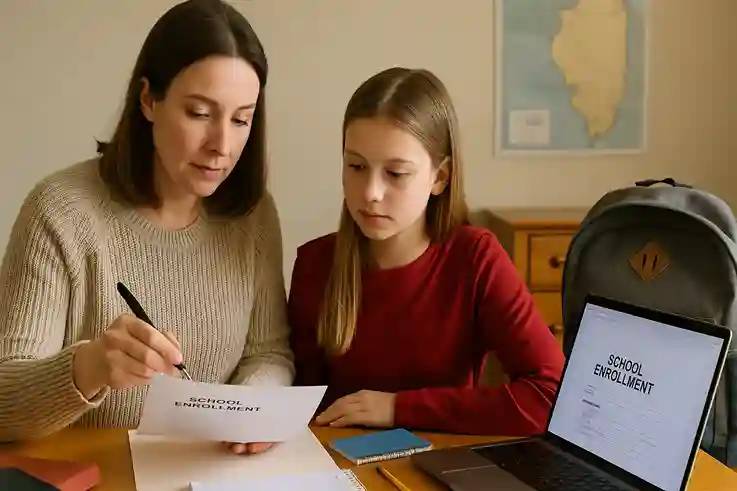
To start, contact your local school district or the private school’s admissions office. Inform them that you plan to enroll your child and ask about their specific re-entry procedures. Each district or private school sets its own rules for placement, credit transfer, and documentation.
You’ll typically need to provide basic records—such as attendance logs, work samples, or a homeschool transcript—that summarize what your child studied. If your child has been homeschooled for several years, include summaries by subject to show learning continuity. Some schools might ask for standardized test results or teacher evaluations, though this is not a statewide requirement.
Be prepared for a short waiting period while the school reviews your materials and decides on grade placement. In most cases, placement depends on age, academic progress, and available records.
Transcript and Placement Test Requirements
Public and private schools in Illinois often use placement tests to assess a returning student’s knowledge in core subjects like math, reading, and writing. These help determine the most suitable grade level. For high school students, a homeschool transcript becomes especially important since schools must decide how to apply earned credits toward graduation.
When preparing a transcript, list each subject, brief course descriptions, and grades earned. Include any extracurricular activities, community work, or independent projects that demonstrate skills and character growth. This approach helps your child’s new school understand the full scope of their learning.
Tips for a Smooth Adjustment
Returning to a structured classroom can be a big change after the freedom of homeschooling. To ease the transition:
- Discuss the change openly so your child feels prepared.
- Review subjects that will be tested for placement.
- Encourage your child to ask questions and connect with teachers early.
- Keep communication open with school staff during the adjustment period.
A positive attitude, solid records, and a clear understanding of the process can make re-enrollment in Illinois schools stress-free and successful.
Extracurricular and Social Opportunities
Homeschooling in Illinois doesn’t mean learning happens only at home. In fact, one of the best parts of home education is the flexibility to explore extracurricular and social opportunities that fit your child’s passions and strengths. These activities not only build friendships but also encourage teamwork, creativity, and confidence.
Sports, Art, and Volunteering Options
Many homeschooled students in Illinois participate in local sports leagues, art classes, and community programs. Because homeschooling allows flexible scheduling, children can train or practice during less busy hours. They can join youth soccer, gymnastics, dance, or martial arts programs through community centers or private clubs.
For creative expression, local art studios and music schools often welcome homeschoolers for weekday sessions. Theater groups, photography workshops, and art exhibits provide social interaction while helping kids develop talent.
Volunteering is another powerful option. Children can serve at animal shelters, food pantries, libraries, or nursing homes. These experiences teach empathy and leadership while connecting them to their communities. Plus, volunteer work often strengthens college and scholarship applications later on.
Dual Enrollment and Academic Enrichment
Illinois homeschoolers can also access dual enrollment programs through community colleges. These programs allow high school students to earn both high school and college credits at once. As a result, students experience structured learning, explore future majors, and save time toward a degree.
Additionally, public libraries and museums frequently host STEM workshops, book clubs, and science fairs that keep learning active and social. Because of their flexibility, homeschoolers can easily attend such programs during the day, when smaller group sizes allow for richer participation.
Local Programs and Youth Groups
Beyond academics, community connection matters deeply. Park districts across Illinois offer outdoor classes, sports leagues, and seasonal camps specifically designed for youth. These programs help children meet peers and stay active throughout the year. Churches, 4-H clubs, and scouting organizations also provide community-based gatherings where kids can learn teamwork, communication, and problem-solving skills.
Transition words such as furthermore, in addition, and as a result highlight how these activities work together to create a balanced lifestyle. For example, a homeschooled student might spend mornings studying, then attend a science club in the afternoon, and volunteer on weekends. This combination keeps learning dynamic and life well-rounded.
By exploring sports, art, volunteering, or dual enrollment, homeschoolers in Illinois stay socially connected and academically strong. The right mix of activities turns education into a complete, fulfilling experience that supports both intellectual and personal growth.
FAQ About Homeschooling in Illinois
Disclaimer
The information in this guide about homeschooling in Illinois is provided for general educational purposes only and should not be taken as legal advice. Homeschool laws and regulations may change, so always verify current requirements with the Illinois State Board of Education or your local school district before making decisions.
Final Thoughts for New Homeschool Parents
Homeschooling in Illinois opens the door to an education built around your family’s values, pace, and creativity. The state’s flexible laws give parents remarkable freedom to choose how and what their children learn. Still, success in homeschooling comes from structure, consistency, and connection—not from strict rules.
By keeping solid records, choosing balanced curricula, and joining supportive communities or co-ops, you create a strong foundation for long-term success. Remember that learning doesn’t have to stay within books or screens. It can happen on nature walks, during art projects, or through volunteer work that builds compassion and confidence.
Transitioning into homeschooling might feel overwhelming at first, but every small step—creating lesson plans, logging attendance, exploring local programs—builds momentum. Over time, you’ll see your child’s growth not just in academics but also in curiosity, independence, and problem-solving.
Ultimately, homeschooling in Illinois is not about following someone else’s model. It’s about crafting an education that fits your family’s rhythm and helps your child thrive. Keep exploring, stay patient, and celebrate every achievement, big or small.
Your homeschool journey is not just about teaching; it’s about growing and discovering together.
Have questions or experiences to share? Drop them in the comments below! Your insights could help other new parents navigating the same path.
Together, we can build a stronger, more supportive homeschooling community in Illinois.

Ellie Clark is a passionate blogger with a specialty in education, where she shares insights on learning methods, study strategies, and ways to make knowledge more accessible. With a background in teaching and a love for lifelong learning, she brings clarity and creativity to her writing, helping readers of all ages unlock their potential. While education remains her core focus, Ellie also writes on a variety of other topics, including lifestyle, travel, and personal development, giving her blog a well-rounded appeal.
When she’s not writing, Ellie enjoys reading, exploring new cultures, and spending time in nature. Her approachable style and thoughtful advice make her a trusted voice for readers seeking both guidance and inspiration.