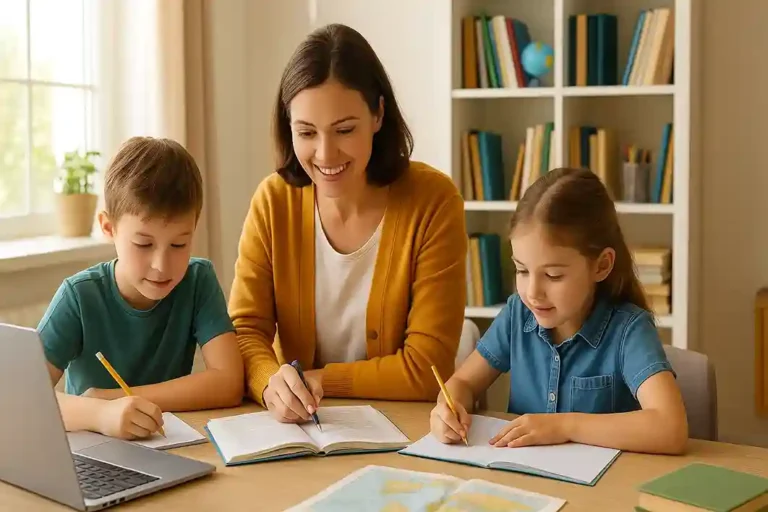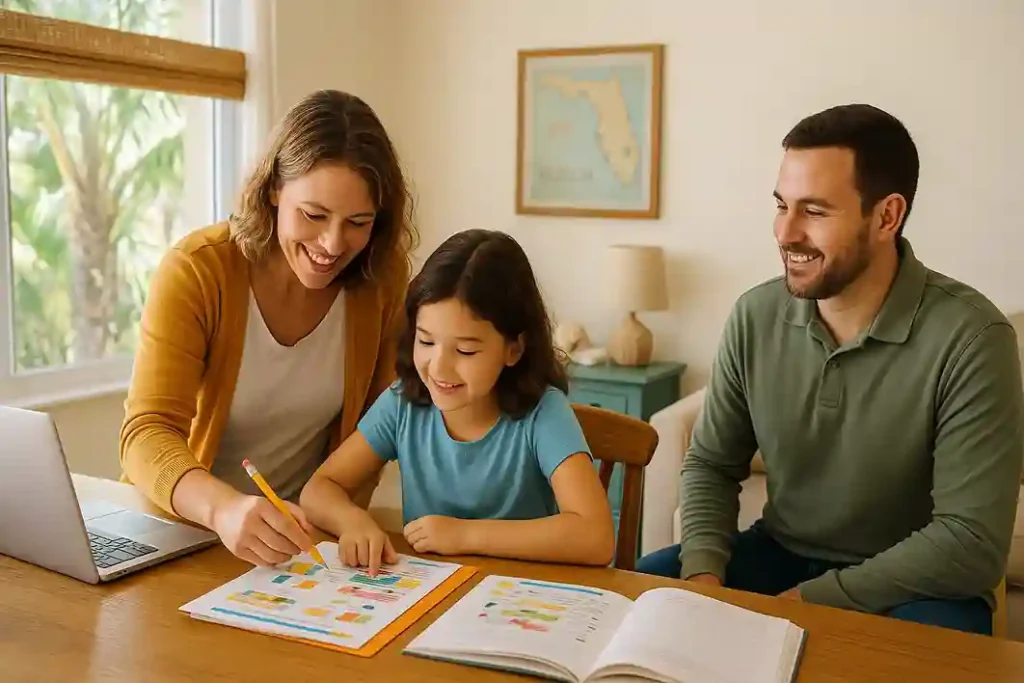
Homeschooling in Florida means parents teach their children at home instead of sending them to school. Families follow simple state rules while choosing lessons that fit their child’s needs. Many parents across Florida now prefer this path because it offers freedom, safety, and personal attention. Children can learn at their own pace and explore subjects that truly interest them. Parents also like having more control over what their kids study and how they learn. Homeschooling gives families more time together and less stress from large classes or strict testing.
It also opens space for hands-on projects, outdoor learning, and community activities. With so many flexible tools available online, it’s easier than ever to start. More families every year are turning to this approach for a calm and balanced education. With more parents exploring flexible learning, understanding homeschooling in Florida becomes essential.
“Homeschooling empowers families to guide learning with freedom, purpose, and love.”
Know the Homeschooling in Florida Law
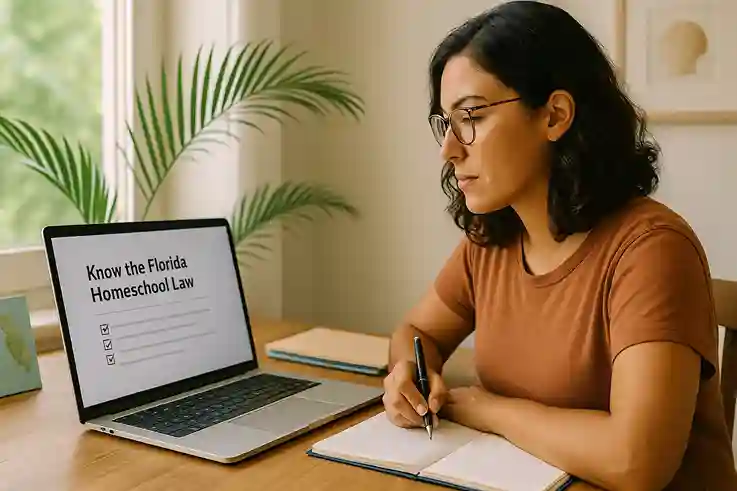
Understanding the rules for homeschooling in Florida is the first step toward a smooth start. The state’s law, Florida Statute 1002.41, clearly outlines what families must do to begin and maintain a home education program. Parents act as both teacher and administrator, making sure their child receives a quality education that fits state standards.
The main requirement is to notify the local district superintendent of your intent to homeschool. This written notice includes your child’s full name, date of birth, home address, and the parent’s signature. It must be filed within 30 days of starting your program. Once accepted, parents can begin teaching immediately—there’s no waiting period or approval needed.
A home education program in Florida simply means that the parent takes full responsibility for direct instruction, record-keeping, and evaluation. There are no set curriculum requirements or specific teaching credentials. This freedom allows families to build lessons that suit each child’s goals and abilities.
Florida is considered one of the most homeschool-friendly states in the country. The law protects parental rights, offering flexibility and minimal government interference. Families can even design learning plans that include travel, volunteering, or online courses.
Tip: To stay organized, create a visual timeline showing each legal step—from filing your notice of intent to completing your yearly evaluation. This helps keep track of key dates and ensures full compliance with Florida’s homeschool regulations while keeping the process simple and stress-free.
Step 1: File a Notice of Intent
Starting homeschooling in Florida begins with a simple but important step—filing the Notice of Intent to Establish a Home Education Program. This document tells your local school district that you plan to teach your child at home under Florida Statute 1002.41. Parents must submit the notice within 30 days of beginning their homeschool program.
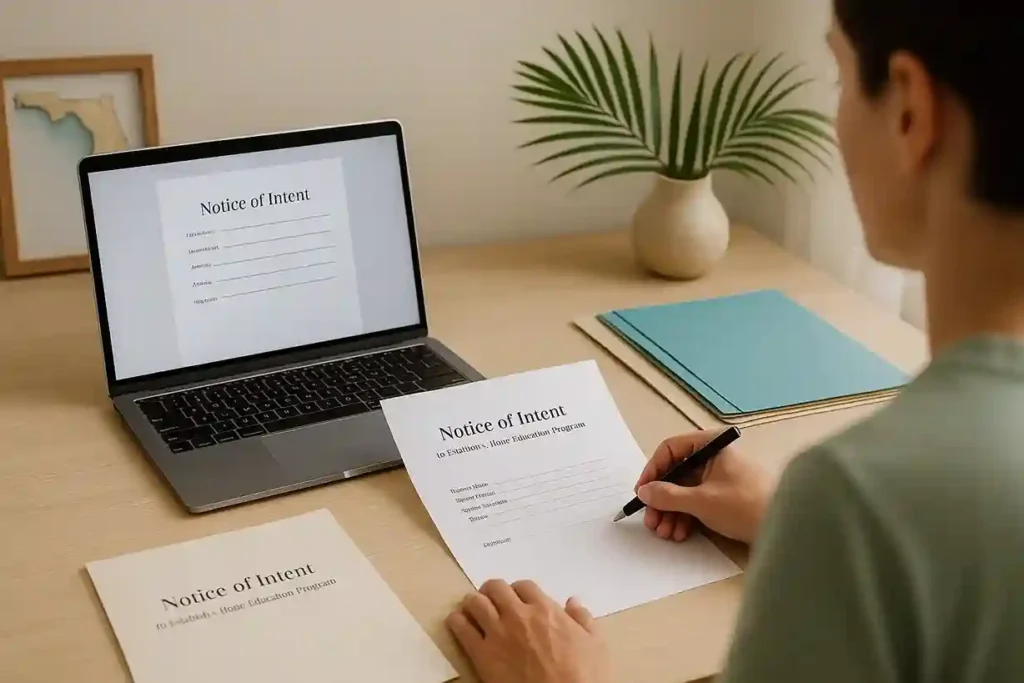
The notice should include your child’s full name, date of birth, and home address. Be sure to sign it as the parent or guardian responsible for the program. While there’s no official statewide form, most districts provide a sample notice on their website. You can submit it by mail, email, or in person to your district’s superintendent’s office. Always keep a copy for your records in case you need proof of registration later.
Once your notice is received, the district will acknowledge it, and your home education program is officially recognized. You don’t need approval to start teaching—Florida law gives parents full control once the notice is filed.
Keep this process organized by marking the submission date and district contact information in your homeschool folder. It helps ensure smooth communication with local officials if questions arise. After filing your notice, you can begin building your homeschool structure.
Step 2: Choose a Homeschool Curriculum
Florida gives homeschooling families complete freedom when it comes to choosing a curriculum. The state does not approve or require any specific program, which allows parents to design lessons that fit their child’s unique learning style, pace, and interests. This flexibility makes homeschooling in Florida both creative and personal.
Families can choose from a wide variety of curriculum types. Many prefer online programs because they provide structured lessons, automatic grading, and interactive learning tools. Others lean toward the classical approach, focusing on reading, writing, history, and logic through traditional materials. Some families follow a secular curriculum, emphasizing science and critical thinking without religious elements, while others prefer faith-based programs that align with their personal beliefs. A mixed or eclectic approach is also common, combining online learning with textbooks, hands-on projects, and field trips.
When selecting your curriculum, think about your child’s interests, goals, and learning methods. Younger students may thrive with visual lessons and frequent breaks, while older students often prefer independent study with structured assignments.
To make homeschooling successful, build a balanced daily schedule that blends academics, creativity, and physical activity. Include time for reading, outdoor learning, and social interaction through co-ops or community programs. This structure helps children stay motivated while giving parents an organized framework for progress. Once your curriculum is in place, documenting your child’s progress is the next key step.
For more details about Florida’s homeschool laws and curriculum flexibility, visit the official Florida Senate Statute 1002.41 page.
Step 3: Maintain a Portfolio of Records
Florida law requires every homeschooling parent to keep a portfolio of records as part of their home education program. This portfolio serves as both a learning record and proof of compliance with state regulations. It helps track progress, organize lessons, and provide documentation if ever requested by the school district.
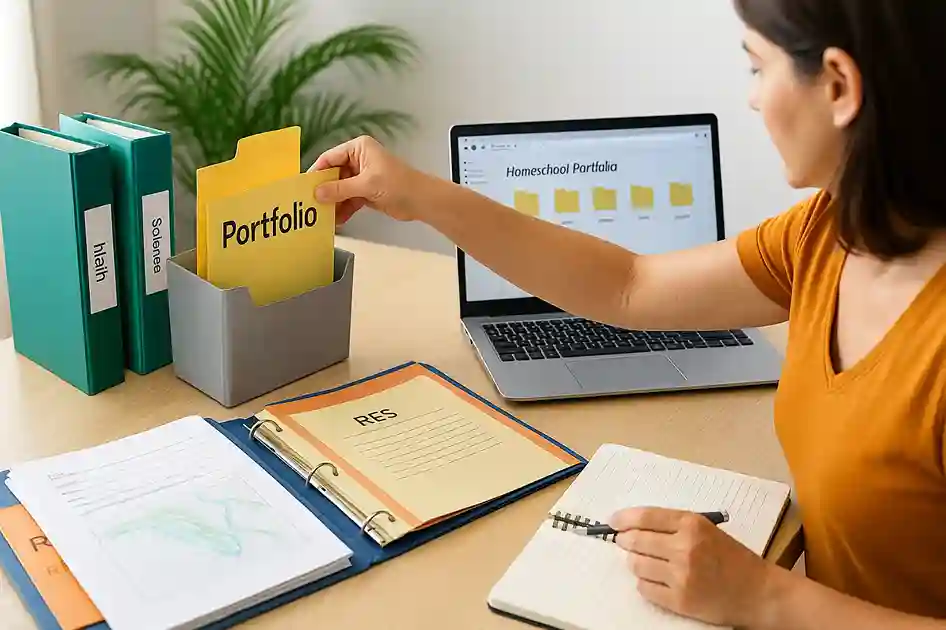
Your portfolio must include three main parts: a log of educational activities, samples of the student’s work, and any evaluation results. The log should briefly describe daily or weekly lessons, resources used, and subjects covered. Work samples can include worksheets, essays, artwork, science projects, or online assignments that show your child’s growth over time. If you use outside tutors or programs, their reports can also be added to your file.
Parents must keep the portfolio for at least two years. During that time, the district superintendent has the right to review it with a 15-day written notice. This review doesn’t judge your teaching style—it simply checks that a structured education program exists. Keeping your materials well-organized will make this process simple and stress-free.
A binder, digital folder, or cloud storage system can help keep records tidy. Many families find it helpful to review the portfolio monthly to stay current. Good record-keeping also makes annual evaluations smoother and can even assist with college applications later.
In addition to your records, an annual evaluation ensures your program meets educational standards.
For official details about maintaining homeschool records, visit the Florida Statute 1002.41 – Home Education Programs page.
Step 4: Complete the Annual Evaluation
Every homeschooling family in Florida must complete one annual evaluation to confirm their child is making educational progress. The state gives parents several ways to meet this requirement, allowing flexibility to choose what best fits their child’s needs.
Here are the five approved evaluation options:
- A Florida-certified teacher reviews the student’s portfolio and discusses the child’s progress.
- The student takes a nationally norm-referenced achievement test administered by a certified teacher.
- The student participates in a state assessment used by the local school district.
- A licensed psychologist conducts an academic evaluation.
- Any other valid assessment method that both the parent and district superintendent agree upon.
The completed evaluation must be submitted to your district superintendent each year, no later than the anniversary of your original Notice of Intent filing date. This ensures your home education program remains in compliance with Florida’s homeschool law.
If a student’s progress is found below expectations, the parent will be notified in writing. Families then have one year to provide additional instruction and submit a new evaluation to show improvement.
Most districts accept emailed or mailed reports from evaluators. To stay on track, mark your evaluation date in a planner or digital calendar.
Pro Tip: Keep a yearly reminder calendar for evaluation deadlines—it helps you stay organized and prevents missed submissions.
Here’s an official link to the Florida statute governing annual evaluations in homeschooling Florida Statute 1002.41 – Home Education Programs
Step 5: Withdrawing or Re-Enrolling in Public School
When your homeschooling journey comes to an end, you must officially terminate your home education program with your local school district. To do this, submit a Notice of Termination in writing to the district superintendent within 30 days of ending your homeschool program. This step formally closes your child’s homeschool record and keeps you in compliance with Florida Statute 1002.41.
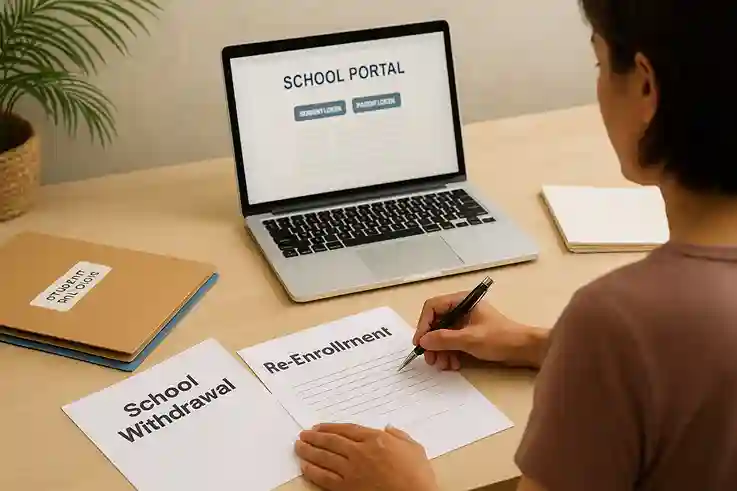
If your child is returning to a public or private school, contact the school’s administration office for enrollment requirements. Each district has its own procedures, but most will ask for documentation of your homeschooling, such as your child’s portfolio or annual evaluation reports. This helps schools determine appropriate grade placement or credit transfer, especially for middle and high school students.
Private schools may review your homeschool materials differently. Some will conduct placement testing, while others may request a portfolio review or previous test scores. Having well-organized homeschool records makes this process smoother and ensures your child receives proper placement.
If your child is applying to high school or college, it’s a good idea to prepare a homeschool transcript summarizing courses, grades, and activities. Many online templates can help you format this clearly.
Completing these administrative steps marks a major milestone in your child’s education. Remember, these transitions can take time—patience and preparation make it easier for everyone involved.
While paperwork matters, community support often makes the biggest difference.
Florida Homeschool Support Networks
Building strong connections can make homeschooling in Florida easier and more rewarding. Families who join Florida homeschool support networks gain access to valuable resources, friendships, and guidance throughout their journey. Across the state, many organizations help parents stay informed, find encouragement, and share experiences with others walking the same path.
One of the largest statewide groups is the Florida Parent Educators Association (FPEA). It offers workshops, conventions, and up-to-date legal information about homeschooling in Florida. Membership also connects families with regional representatives who organize events and answer questions about curriculum, record-keeping, and compliance.
Local homeschool co-ops are another great option. These small, community-based groups often meet weekly for group classes, field trips, or science fairs. They provide social and academic enrichment while allowing children to learn alongside peers in a relaxed setting. Some co-ops even invite guest teachers for art, history, or language programs, giving families a break from solo instruction.
Social media also plays a big role in supporting homeschooling in Florida. Many parents join Facebook groups or online forums to exchange tips, curriculum reviews, and local activity ideas. In-person meetups and park days help children build friendships while parents share advice and encouragement.
By engaging with active Florida homeschool support networks, families gain the confidence and community they need to thrive. The sense of belonging and shared purpose turns homeschooling in Florida into a truly connected learning experience.
“Homeschooling is not about teaching lessons; it’s about creating a life where learning never stops.”
FAQ About Homeschooling in Florida
Disclaimer
The information in this guide is provided for general educational purposes only and should not be interpreted as legal advice. Homeschooling laws and district procedures in Florida may change over time. Families are encouraged to verify current requirements directly with the Florida Department of Education or their local school district before making any decisions regarding home education programs.
Conclusion About Homeschooling in Florida
Homeschooling in Florida opens the door to flexibility, creativity, and family-centered learning. With clear state laws, supportive networks, and countless curriculum options, parents can design an education that truly fits their child’s needs. From filing your Notice of Intent to completing yearly evaluations, each step strengthens your confidence and independence as an educator.
Beyond academics, homeschooling in Florida encourages exploration—whether that means studying marine life on the Gulf Coast, visiting historic sites, or joining local co-ops for hands-on experiences. The journey may begin with paperwork, but it soon grows into something deeply personal and rewarding.
Remember, you’re not alone. Florida offers one of the most welcoming homeschool environments in the country, backed by strong parent communities and accessible resources. With the right planning and support, homeschooling in Florida can help your child thrive both academically and personally—building not just knowledge, but a lifelong love of learning.
If you’ve already started homeschooling in Florida, share your experience or favorite resources in the comments below.
Your insight could inspire and help another family take their first confident step toward a more flexible and fulfilling education.

Ellie Clark is a passionate blogger with a specialty in education, where she shares insights on learning methods, study strategies, and ways to make knowledge more accessible. With a background in teaching and a love for lifelong learning, she brings clarity and creativity to her writing, helping readers of all ages unlock their potential. While education remains her core focus, Ellie also writes on a variety of other topics, including lifestyle, travel, and personal development, giving her blog a well-rounded appeal.
When she’s not writing, Ellie enjoys reading, exploring new cultures, and spending time in nature. Her approachable style and thoughtful advice make her a trusted voice for readers seeking both guidance and inspiration.