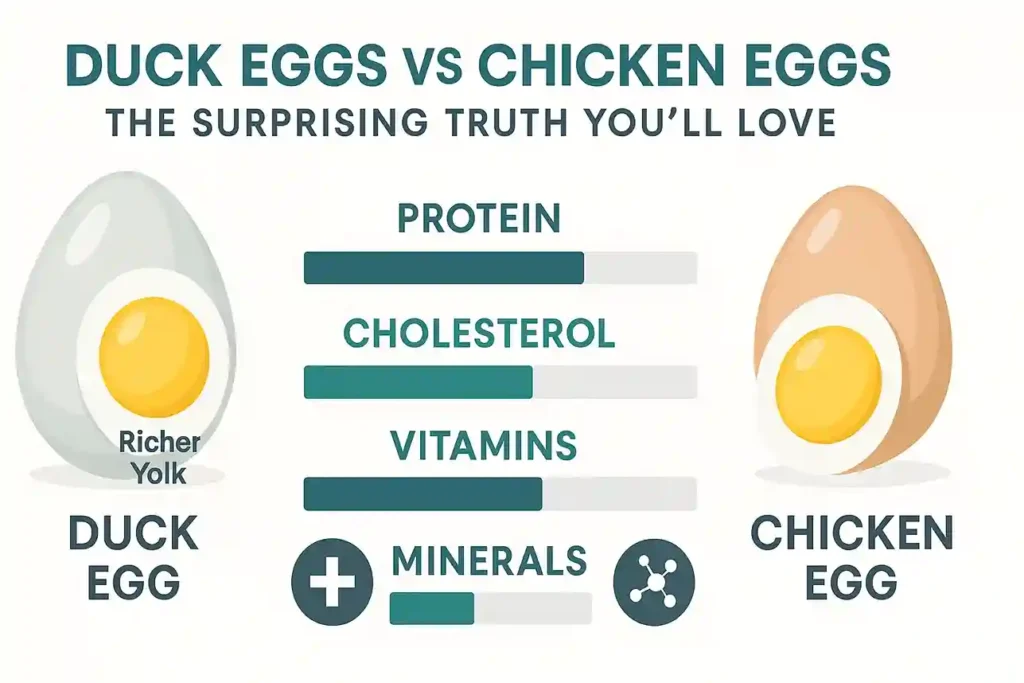
Duck Eggs vs Chicken Eggs spark curiosity among food lovers and nutrition enthusiasts alike. At first glance, they seem similar—oval, smooth, and rich in protein. Yet beneath the shell, duck eggs hold hidden qualities that often surprise even seasoned eaters. Their yolks appear deeper in color and creamier in taste, giving every dish a richer texture. Chicken eggs, however, remain the everyday staple—light, balanced, and familiar on every American breakfast table. Both eggs deliver solid nutrition, offering essential vitamins, minerals, and high-quality protein. Still, subtle variations in fat, flavor, and nutrient density can change how your body and taste buds respond.
Understanding these differences helps you choose wisely for your health goals and culinary needs. As we look closer, the nutritional face-off between these two breakfast favorites reveals a story worth cracking open—one that might change what ends up in your next omelet.
Nutrition Face-Off: Duck Eggs vs Chicken Eggs
When it comes to nutrition, Duck Eggs vs Chicken Eggs reveal striking contrasts beneath their shells. Duck eggs pack more calories, protein, and fat per gram, making them richer and more satisfying for many eaters. A single duck egg typically contains around 130 calories, while a large chicken egg averages about 70. The difference lies in density—duck eggs are larger, with thicker yolks that carry concentrated nutrients.
Protein levels also favor duck eggs, delivering roughly 9 grams compared to a chicken egg’s 6 grams. This extra protein supports muscle repair and satiety. Fat content is nearly double, giving duck eggs a creamier texture and deeper flavor. However, moderation becomes crucial because higher fat also means more cholesterol.
Vitamin and mineral content further tilts the scale. Duck eggs boast higher levels of vitamin B12, selenium, and iron—nutrients essential for energy metabolism and immune strength. Chicken eggs still provide balance, offering slightly less fat-soluble vitamins but fewer calories.
Overall, duck eggs serve as nutrient powerhouses but should be eaten mindfully. Their richness nourishes deeply, yet smaller portions help maintain dietary balance.
| Nutrient (per egg) | Duck Egg | Chicken Egg |
|---|---|---|
| Calories | 130 | 70 |
| Protein | 9 g | 6 g |
| Fat | 9.5 g | 5 g |
| Vitamin B12 | 168% DV | 46% DV |
| Selenium | 55% DV | 27% DV |
| Iron | 20% DV | 9% DV |
Both eggs nourish the body, but the key lies in portion control and purpose—dense energy or everyday balance.
Nutritional data referenced from the USDA FoodData Central, a U.S. government database for verified food composition information.
Taste and Texture: Which Egg Wins the Flavor Game?

When comparing Duck Eggs vs Chicken Eggs, one of the most noticeable differences lies in their taste and texture. Both types of eggs hold their own culinary charm, but the contrast between richness and lightness makes this comparison especially fascinating.
Duck Eggs: Rich, Creamy, and Luxurious
Duck eggs immediately stand out with their larger size and thicker yolk. The yolk’s deep golden hue hints at its concentrated fat and nutrient content, giving duck eggs a rich, velvety taste. The flavor feels creamy and buttery, often described as more intense than chicken eggs. This richness adds depth to recipes—whether you’re making quiche, custard, or homemade pasta. Because duck eggs have more fat and protein per gram, they create a denser texture that coats the tongue and enhances the overall mouthfeel.
When fried, the yolk maintains its bold flavor, while the white cooks to a firm, tender consistency. Bakers particularly love duck eggs because the added fat and albumen structure produce baked goods that are both taller and fluffier. Cakes rise higher, and pastries turn softer yet more stable, maintaining their texture for longer periods.
Chicken Eggs: Light, Familiar, and Versatile
Chicken eggs, on the other hand, carry a mild, familiar flavor that most people recognize instantly. Their taste is neutral, making them a versatile foundation in nearly every recipe—from breakfast scrambles to soufflés. The yolk, lighter in color and consistency, contributes a balanced flavor without overpowering other ingredients. This neutrality allows spices, herbs, and fillings to shine.
In terms of texture, chicken eggs deliver softer, lighter omelets and airy baked goods. Their lower fat content creates a delicate structure ideal for recipes where subtlety matters. While duck eggs can dominate a dish, chicken eggs complement it, maintaining balance and approachability.
Cooking Outcomes: Texture Defines Flavor
The higher fat and protein in duck eggs mean they yield fluffier cakes, creamier custards, and denser omelets with a more substantial bite. Chicken eggs remain the go-to choice for light batters and simple, everyday meals. Both types perform beautifully, but each shapes the final dish differently—duck eggs enrich, while chicken eggs refine.
However, taste isn’t the only difference worth noting. Beyond flavor and texture, their nutritional profiles, health effects, and cooking roles tell an even deeper story about which egg best fits your plate and your goals.
Cooking and Baking: Performance in the Kitchen
In the ongoing debate of Duck Eggs vs Chicken Eggs, their performance in the kitchen often determines which one earns a chef’s loyalty. While both eggs cook beautifully, duck eggs offer qualities that make them a secret weapon in professional and home baking alike.

Why Chefs Favor Duck Eggs in Baking
Chefs often prefer duck eggs for baking because of their richer composition. The higher fat content in the yolk adds a luxurious texture to baked goods, while the increased protein in the whites enhances structure and lift. Cakes made with duck eggs rise higher, brownies turn fudgier, and pastries achieve a tender crumb that stays moist longer. Their thicker shells also slow down moisture loss, allowing duck eggs to retain freshness for extended periods—a subtle but valuable advantage in baking precision.
Emulsification, Volume, and Moisture Retention
Duck eggs excel in emulsification, binding ingredients like butter and sugar into smooth, stable batters. The extra fat contributes to a silkier texture and fuller flavor, while the protein structure traps air more effectively during mixing. This combination produces superior volume and moisture retention, essential for creating rich custards, soft cookies, and delicate pastries. Because the albumen (egg white) is more concentrated, duck eggs create tighter protein networks that improve elasticity and stability in dough and batter alike.
However, this same richness can become overwhelming in delicate recipes. Light sponge cakes, soufflés, or angel food cakes can lose their subtle character when made with duck eggs, as their robust flavor and density dominate.
Substitution Tips and Ratios
When adapting recipes, remember the golden rule: 1 duck egg ≈ 1.5 chicken eggs. For example, if a recipe calls for three chicken eggs, use two duck eggs instead. Adjust liquid slightly downward if batters feel too thick. This ensures balance between richness and texture while maintaining intended consistency.
Duck eggs perform powerfully in baking, yet moderation and adaptation remain key. Their flavor and density can transform recipes, but balance ensures harmony on the plate. However, health considerations matter just as much, and understanding their nutritional impact helps determine how often they belong in your kitchen.
Health Benefits and Risks: The Balanced Truth
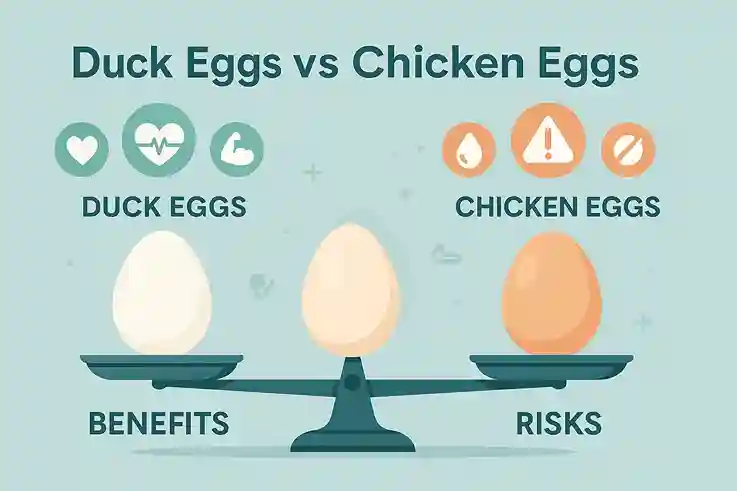
When exploring Duck Eggs vs Chicken Eggs, the discussion naturally extends beyond flavor and cooking performance into the realm of health. Both eggs offer remarkable nourishment, yet duck eggs stand out for their dense nutrient profile and high-quality protein. Still, their richness comes with considerations worth understanding before making them a regular part of your diet.
Nutritional Benefits: Protein and Essential Nutrients
Duck eggs serve as a concentrated source of complete protein, supporting muscle recovery and growth. Each egg provides roughly 9 grams of protein, making it ideal for active individuals or those on high-protein diets. They also contain beneficial omega-3 fatty acids, which help reduce inflammation and support heart and brain function.
In addition, duck eggs deliver higher amounts of vitamin B12, selenium, and vitamin D compared to chicken eggs. These nutrients aid energy metabolism, strengthen immunity, and maintain healthy bones. Their iron content contributes to better oxygen circulation, helping prevent fatigue and anemia. For people seeking nutrient density, duck eggs provide more value per bite.
Potential Health Concerns: Cholesterol and Sensitivities
However, duck eggs come with a higher cholesterol load, often exceeding twice that of a chicken egg. For most healthy adults, occasional consumption is fine, but those managing heart conditions or high cholesterol should practice moderation. Because of their richness, portion control becomes vital to balance calorie intake—each duck egg averages 130 calories versus about 70 in a chicken egg.
Some people with egg allergies may react more strongly to duck eggs due to differences in albumen proteins. As always, testing tolerance gradually and consulting a healthcare professional is wise.
Food safety also matters—duck eggs should be fully cooked before eating to prevent bacterial contamination, particularly for children, pregnant women, and older adults. Avoid raw or undercooked preparations unless pasteurized.
Moderation and Practical Balance
The key to reaping benefits without risk lies in moderation. Enjoying duck eggs once or twice a week can provide variety without overwhelming your cholesterol or calorie goals. Their nutrient richness complements a balanced diet when paired with fruits, vegetables, and whole grains.
However, availability and cost also influence your choice, especially in the U.S., where duck eggs remain a specialty product found mainly in select markets and farms.
Sustainability and Farming Practices

In the debate of Duck Eggs vs Chicken Eggs, sustainability and farming methods play an important role in shaping consumer choice. While both ducks and chickens can be raised responsibly, their environmental impact and welfare conditions differ depending on the scale and style of production.
Environmental Footprint: Ducks vs Chickens
Duck farming often leaves a smaller environmental footprint when managed on a small scale. Ducks thrive in wetter environments, feeding naturally on insects, snails, and weeds—reducing the need for processed feed or pesticides. Their manure enriches soil with nitrogen, supporting healthier plant growth in integrated farm systems. Chickens, on the other hand, require more controlled environments, including dry coops, consistent feed supply, and strict waste management. Industrial chicken farms—particularly large-scale egg operations—tend to produce higher greenhouse gas emissions and concentrated waste runoff compared to smaller duck farms.
Because duck farming remains less industrialized in the U.S., the impact is often lower per bird, though less efficient per egg due to smaller flock sizes. Sustainable duck operations typically combine egg production with permaculture or pond-based systems, creating closed-loop cycles that reuse waste and water efficiently.
Ethical Sourcing and Free-Range Benefits
Ethical sourcing practices—such as free-range and pasture-based systems—benefit both ducks and chickens. Birds allowed to roam outdoors enjoy better welfare, more natural behaviors, and higher-quality diets. The result is not just improved animal health but also richer-tasting eggs with higher omega-3 and vitamin content. In the U.S., many small farms emphasize humane treatment, clean habitats, and low-stress environments as part of their mission. Choosing free-range or certified humane labels supports farms that prioritize both ethics and sustainability.
Supporting Local Ecosystems
Small-scale U.S. duck farms contribute meaningfully to local ecosystems. Ducks help control pests naturally, fertilize soil, and maintain biodiversity in wetland areas. Many regenerative farms integrate ducks into rotational grazing systems with other livestock to enhance ecological balance. Buying from these local producers supports community-based agriculture, reduces transport emissions, and encourages sustainable food systems.
Beyond ethics, many wonder which egg fits their diet best. To answer that, understanding how duck and chicken eggs align with individual nutrition goals can help shape a more balanced, health-conscious choice.
Which Egg Fits Your Diet?
Choosing between Duck Eggs vs Chicken Eggs often depends on your personal health goals and eating habits. Both eggs offer valuable nutrition, but their differences in calories, fat, and protein make each one better suited for specific dietary needs. Understanding where each shines can help you enjoy their benefits without overindulgence.
For High-Protein Diets: Choose Duck Eggs
If you’re focused on building muscle, maintaining strength, or following a high-protein plan, duck eggs fit naturally. Each duck egg contains about 9 grams of protein, compared to 6 grams in a large chicken egg. This extra protein supports post-workout recovery, increases satiety, and helps maintain lean body mass. The higher fat and nutrient density also make duck eggs ideal for those following low-carb or keto diets, where rich fats and complete proteins are desirable. However, keep portions modest, as their calories add up quickly.
For Low-Calorie or Heart-Healthy Diets: Choose Chicken Eggs
If your goal is weight management or heart health, chicken eggs provide a lighter option. They’re lower in calories and cholesterol yet still deliver essential amino acids and nutrients like choline and vitamin D. Chicken eggs also blend easily into various meal plans, from breakfast scrambles to salads, without adding excess fat. Their balanced nutrient profile supports a healthy diet without tipping over daily limits for calories or cholesterol.
For Baking Enthusiasts: Go with Duck Eggs
Bakers and chefs often favor duck eggs for their richer yolks and stronger whites. These qualities enhance the texture, moisture, and structure of baked goods. Cakes rise higher, cookies stay softer, and custards develop a silky depth unmatched by chicken eggs. The added fat creates a luxurious mouthfeel, ideal for desserts and specialty breads.
Balanced Advice: Moderation Wins Every Time
Ultimately, both duck and chicken eggs can fit beautifully into a balanced, healthy plan. Duck eggs offer more nutrients per bite, while chicken eggs provide everyday versatility with fewer calories. Both can fit a healthy plan in moderation, supporting different goals across various lifestyles. Whether you crave richness or simplicity, choosing thoughtfully helps you enjoy the best of both worlds—flavor and nutrition in perfect harmony.
FAQs About Duck Eggs vs Chicken Eggs
Conclusion on Duck Eggs vs Chicken Eggs
When comparing Duck Eggs vs Chicken Eggs, it’s clear that both bring something special to the table—nutritionally, culinarily, and even ethically. Duck eggs shine in nutrient density, packing more protein, healthy fats, and key vitamins like B12, D, and selenium into every bite. They deliver a rich, creamy flavor and superior baking performance, perfect for those who love full-bodied taste and texture. Chicken eggs, meanwhile, offer lighter nutrition, fewer calories, and greater accessibility, making them ideal for everyday meals and balanced diets.
From a health perspective, duck eggs deliver concentrated energy and nourishment but also carry higher cholesterol and calorie counts. That means moderation matters most. Enjoying them occasionally, alongside chicken eggs, can strike the right balance between indulgence and wellness. Choosing ethically sourced, pasture-raised eggs—whether duck or chicken—further enhances the nutritional and environmental value of your meals.
In terms of cost and availability, duck eggs are still a specialty product in the U.S., often found at farmers’ markets, small local farms, or online. Chicken eggs remain the more affordable and accessible staple. The decision ultimately depends on your goals: duck eggs for richness and variety, chicken eggs for convenience and everyday nutrition.
Both eggs nourish, both satisfy—and both deserve a place in your kitchen. So why not try both? Explore how each enhances your favorite dishes and share your experience with others.
Have you ever cooked with duck eggs? Tell us your thoughts or favorite recipe in the comments below!

Adi holds a B.Sc. in Hospitality Management from the Institute of Hotel Management, bringing both academic knowledge and real-world experience to the table. Passionate about food, flavor, and the stories behind every dish, Adi writes to make culinary concepts approachable for everyone. From exploring global cuisines to highlighting simple kitchen techniques, the goal is always the same—help readers enjoy food more deeply and cook with confidence.