
The call duck captures attention the moment you meet one. Small yet full of personality, these ducks charm new keepers with their gentle nature and cheerful voices. Their compact size makes them easy to handle, while their soft quacks fill backyards with life and warmth. Because of their friendly behavior, call ducks quickly become favorites on small farms, hobby homesteads, and even in suburban gardens.
Many beginners choose them first, not just for their beauty but also for their adaptability and playful spirit. They thrive in small spaces, bond closely with humans, and bring joy through simple daily routines. However, caring for them requires a clear understanding of their habits, environment, and health needs.
This guide offers straightforward steps to help new duck keepers provide the best care. From housing and feeding to breeding and hygiene, it covers everything needed to raise call ducks confidently and happily.
“Duck farming isn’t just about raising birds — it’s about nurturing calm, balance, and a rhythm of life that rewards patience and care.”
Understanding Call Ducks: Traits and Temperament
Call ducks trace their roots back to the Netherlands, where they were first bred as decoy ducks to lure wild flocks toward hunters. Their small size and loud, melodic calls made them ideal for this purpose. Over time, their charm, compact build, and friendly nature turned them from working birds into beloved pets and show companions. Today, they are among the most recognized miniature duck breeds worldwide. In the U.S., call ducks are admired not only for their heritage but also for their social behavior and adaptability, which make them perfect for modern backyard farms.

Key Characteristics of Call Ducks
These ducks are the smallest of all domesticated duck breeds, weighing just about one to two pounds. Their rounded bodies, short bills, and bright plumage make them especially appealing. They come in a variety of colors — from snowy white and blue fawn to dusky gray and silver. Despite their tiny frame, call ducks are strong flyers and often very alert to their surroundings. Their distinct, high-pitched calls are one of their most recognizable traits. Interestingly, females tend to be louder and more vocal than males, which helps them communicate within flocks and alert others to changes in their environment.
Their Gentle and Playful Nature
Call ducks are known for their calm and social temperament. They interact well with both humans and other ducks, often forming close bonds with their caretakers. Their curious, active nature makes them enjoyable to watch, especially when they bathe or forage in shallow water. While they are lively, they rarely show aggression, which makes them a good choice for families and small-scale farmers. Because of their size, they also require less space than larger breeds but still enjoy room to explore. With regular handling and care, they quickly become trusting and tame, often responding to familiar voices or routines.
Adaptability and Comparison with Other Breeds
Unlike larger ducks such as Pekins or Muscovies, call ducks adapt easily to smaller environments, including backyard ponds and hobby setups. Their modest feed needs and manageable maintenance make them ideal for first-time keepers. Though they lay fewer eggs than production breeds, their eggs are prized for quality rather than quantity. Compared with heavier ducks, call ducks eat less, stay cleaner, and are easier to manage during health checks or cleaning routines. Their charm lies not in production value but in companionship, personality, and the simple beauty they bring to any small farm or homestead.
Ideal Housing Setup for Call Ducks
Although call ducks are small, they still need enough space to move, forage, and rest. Each duck should have at least 10–15 square feet of outdoor space for comfortable movement. If you’re keeping a pair or small flock, design the pen with open ground for walking, shallow water for bathing, and a covered area for shelter. Compact yards or hobby farms can easily meet these needs with smart planning. Because call ducks love exploring, they appreciate open sections with natural grass, soft soil, or low plants. Avoid overcrowding — even with their size, tight spaces can cause stress and encourage fighting.

Shelter and Flooring Setup
Provide a small, sturdy shelter to protect them from rain, wind, and predators. A wooden or metal duck house raised slightly off the ground helps prevent dampness. Inside, use soft, absorbent bedding such as straw, hay, or pine shavings. Replace it regularly to maintain hygiene. The flooring should stay dry and non-slippery; wire mesh bases are not ideal because they can hurt their feet. A simple ramp can help them enter or exit the shelter easily, especially if the structure sits above ground level. Good airflow is essential, so include small vents or windows to reduce odor and moisture buildup.
Predator-Proof Enclosures
Call ducks are gentle and vulnerable, so secure fencing is a must. Use wire mesh or welded wire that’s small enough to block rats, snakes, or raccoons. Bury the mesh at least one foot deep to stop digging predators. The roof should also be covered, especially if you live in areas with owls or hawks. For easy cleaning, choose pens with wide gates or removable panels. This design allows quick waste removal and bedding changes, keeping the enclosure fresh.
Water and Shade Essentials
Even though call ducks are small, they thrive near water. A shallow pond, kiddie pool, or plastic tub gives them the joy of swimming and preening. Ensure water is clean, refreshed daily, and surrounded by non-slippery surfaces. Ducks need both wet and dry zones — bathing areas for health and dry spots for rest. Add shaded zones using natural trees or shade cloth to protect them from heat, especially in summer. Comfortable housing means balanced access to sunlight, shade, and water — the foundation for keeping call ducks healthy, calm, and happy year-round.
Feeding Call Ducks: Balanced Nutrition for Health
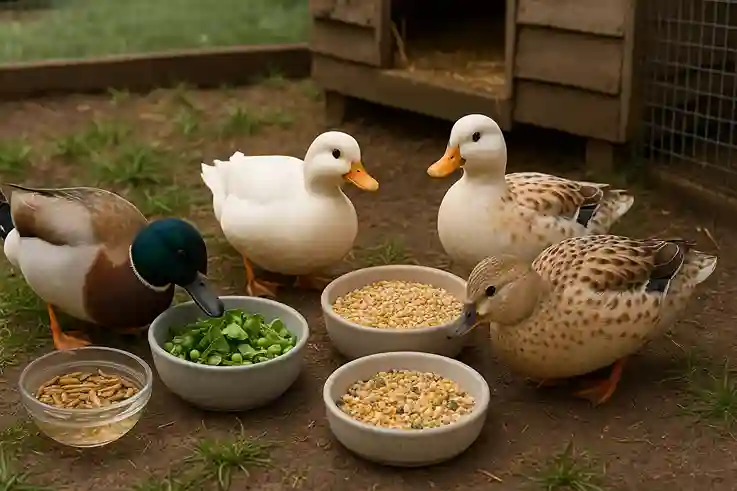
Feeding call ducks properly begins with selecting the right type of feed for each growth stage. Ducklings need a non-medicated starter crumble with about 18–20% protein. This helps them build strong bones, feathers, and immunity. After six weeks, you can gradually shift them to a grower feed, which provides balanced nutrition without excess protein that could harm their joints. Once they mature, a maintenance or layer feed works best, especially if females are laying eggs. Mix small amounts of whole grains like oats, barley, or cracked corn for energy, but keep grains to less than one-third of their total diet. Overfeeding grains can lead to obesity, so portion sizes matter.
Adding Fresh Greens and Forage
Call ducks enjoy foraging naturally, so include fresh greens and garden vegetables in their diet. Leafy vegetables such as spinach, lettuce, kale, and peas supply essential vitamins and minerals. You can also allow them to nibble on grass and clover if they free-range during the day. For safety, avoid onions, avocado, or processed foods. Their small bills make them efficient foragers, so providing soft greens keeps them active and engaged. Regular access to natural foods supports good digestion and encourages healthy preening habits.
Feeding Schedule by Age
Young ducklings eat small, frequent meals — ideally four to five times daily in their first few weeks. Once they reach six to eight weeks, reduce feeding to three times a day. Mature call ducks thrive on two main feedings — morning and evening. Always check that uneaten feed doesn’t sit overnight, as it can attract pests or grow mold. Adjust feed quantities according to flock activity levels and weather. During colder months, offer slightly more feed for warmth and energy. In warmer weather, lighter meals with added greens work better.
Clean Water and Supplements for Vitality
Clean water is vital for both digestion and hygiene. Call ducks need deep water sources to rinse their bills and clear their nostrils after eating. Replace drinking and bathing water daily to avoid bacteria buildup. You can also add apple cider vinegar (a teaspoon per quart) occasionally to support gut health. For brighter plumage and vitality, include natural supplements like brewer’s yeast for niacin and crushed oyster shell for calcium. These additions keep feathers glossy, bones strong, and eggshells firm. With consistent feeding routines, balanced nutrition, and fresh water, your call ducks will stay active, vibrant, and healthy through every season.
For credible guidance on proper feeding practices and water management, refer to the North Carolina State University Extension’s “Feeding Ducks – Poultry Extension” guide for expert-backed information.
Water and Bathing: Their Favorite Routine
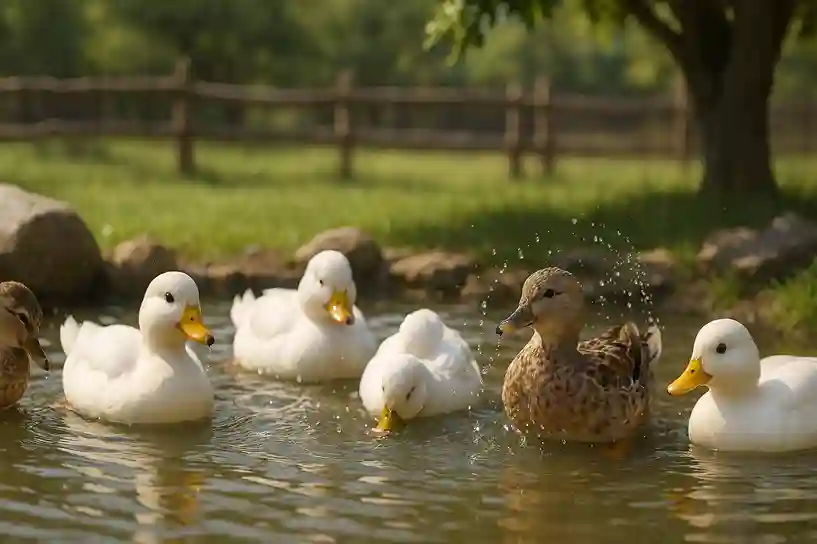
Water plays a central role in the daily lives of call ducks. Bathing helps them stay clean, regulate body temperature, and maintain healthy feathers. When they splash or dip, the action spreads natural oils from their preen glands across their feathers. This oiling keeps their plumage waterproof and flexible, which is essential for insulation and buoyancy. Without regular access to clean water, call ducks can develop dirty, matted feathers or even skin problems. Frequent bathing also keeps their eyes, nostrils, and bills free from dust and feed buildup. For these small yet active birds, water isn’t just for fun — it’s a key part of their physical and emotional well-being.
Best Options for Bathing: Ponds, Tubs, or Small Pools
Because call ducks are small, they don’t need large ponds. A simple kiddie pool, large tub, or shallow pond can give them all the space they need for swimming and preening. If possible, provide water that’s deep enough for them to float comfortably but shallow enough for easy entry and exit. Smooth, non-slippery edges prevent injuries, and small ramps can help them climb in or out safely. Many keepers prefer using portable tubs or small pools because they’re easier to clean and refill. Natural ponds also work well, but they require more monitoring to ensure the water stays clear and free from algae buildup.
Maintaining Cleanliness and Preventing Bacteria
Clean water is essential to protect your call ducks from infections. Ducks often eat and bathe in the same water, which means it can quickly become dirty. Replace the water daily — or more often if you notice cloudy or foamy buildup. Scrub containers or tubs at least once a week with mild, duck-safe cleaning solutions. Avoid harsh chemicals that can harm their skin or feathers. If you use a natural pond, consider adding plants like water lilies or duckweed to help filter impurities. Always ensure there’s a dry resting area near the water where ducks can preen after bathing.
Dry space prevents “wet feather,” a common condition caused by excessive moisture and poor oiling. With clean, safe, and accessible water, your call ducks will stay vibrant, glossy, and full of life year-round.
Breeding and Bonding Behavior
Call ducks are known for their affectionate and loyal nature, especially during the breeding season. They often form strong pair bonds, with one male and one female developing a close partnership. These bonds are built through gentle vocalizations, mutual preening, and synchronized movements around the pen or pond. Once paired, they tend to remain together, displaying deep attachment and trust. This behavior makes them a joy to observe and an ideal choice for small-scale or hobby breeders. Unlike some larger breeds, call ducks rarely show aggression toward one another if they have enough space and balanced male-to-female ratios. Keeping one drake for every two or three ducks helps maintain harmony and reduces stress in the flock.
Nesting and Egg-Laying Habits
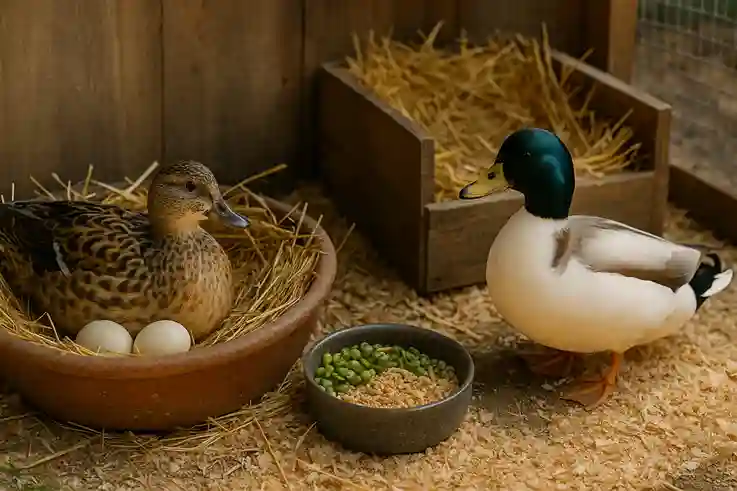
When breeding season begins—usually in spring—female call ducks start searching for quiet, sheltered spots to nest. They prefer soft, private areas lined with straw, hay, or dry grass. Providing wooden boxes or enclosed nesting spaces encourages healthy laying behavior. A typical clutch consists of 8–12 small white eggs, which the female lays gradually over several days. Once the full clutch is ready, she begins incubation, sitting consistently for about 26–28 days. During this time, she leaves the nest only briefly to eat, drink, and bathe.
Maintaining a calm environment during incubation is crucial, as stress or noise may cause her to abandon the nest. Temperature stability and dry bedding help increase hatch success. If using an incubator, replicate similar warmth (99–100°F) and humidity (around 55%) for best results.
Protective Males and Flock Behavior
Male call ducks—known as drakes—play an important role in protecting their mates. Although they don’t incubate eggs, they stay nearby, alert to any sign of threat. In confined flocks, drakes may act territorial during nesting season, guarding their partners with short chases or warning calls.
This behavior is natural and helps ensure the safety of the nesting female. However, overcrowding can intensify this instinct, leading to stress or minor scuffles. Maintaining balanced flock dynamics and offering separate breeding pens can minimize conflict. After hatching, ducklings follow their mother closely while the drake often watches over from a distance. This cooperative behavior strengthens flock bonds and creates a secure environment for raising young. With proper space, nesting care, and gentle observation, call ducks can breed successfully and display the affectionate family patterns that make them one of the most endearing duck breeds to keep.
Health and Hygiene: Preventing Common Problems
Healthy call ducks show energy, clear eyes, and smooth plumage. Regular observation helps you spot problems early before they spread. Spend a few minutes each day watching their movement, eating habits, and behavior. Any sign of limping, drooping wings, or dull feathers signals a possible issue. Clean living areas are just as important. Replace wet bedding promptly, as dampness breeds bacteria and mold.
Straw, hay, or pine shavings work best because they absorb moisture and stay soft underfoot. Avoid overcrowding since tight conditions increase stress and disease risk. Ventilate duck houses properly, but block strong drafts to maintain warmth. A tidy, dry shelter with good airflow prevents most health problems before they start.

Common Health Issues in Call Ducks
Two common issues often affect call ducks: bumblefoot and wet feather. Bumblefoot occurs when bacteria enter small cuts on the feet, usually caused by rough flooring or sharp stones. Early signs include swelling or limping. To prevent it, keep floors smooth, dry, and padded with fresh bedding. If infection begins, clean the area with warm water and mild antiseptic, then rest the bird on soft ground.
Wet feather happens when ducks lose the waterproofing on their plumage, often from dirty water or poor preening. Without proper oil distribution, feathers clump and lose insulation. You can help by cleaning water tubs regularly and ensuring ducks have access to dry resting zones for preening. A few days of clean water and gentle care usually restore feather health.
Natural Remedies and Veterinary Care
For minor issues, mild natural treatments work well. Apple cider vinegar (a teaspoon per quart of drinking water) supports gut health and boosts immunity. Adding crushed garlic to feed occasionally can help repel internal parasites naturally. Diatomaceous earth, sprinkled lightly in bedding, discourages mites and lice. However, avoid overuse since fine dust can irritate lungs
Despite these remedies, always seek a veterinarian if a duck shows persistent weakness, swelling, or discharge. Professional help ensures accurate diagnosis and safe treatment. Ducks hide illness well, so early action often makes the difference between recovery and loss.
Consistent hygiene, fresh water, and balanced nutrition form the best defense. With attention and gentle care, your call ducks will remain strong, vibrant, and disease-free through every season.
Beginner Mistakes to Avoid with Call Ducks
Many beginners make the mistake of keeping too many call ducks in small spaces. Even tiny ducks need room to move and relax. Overcrowding leads to stress, noise, and fighting. It also makes the area dirty faster, raising the risk of infection. Give each duck at least 10–15 square feet outdoors. Add enough space for walking, bathing, and resting. More room means calmer behavior and cleaner living conditions. Healthy ducks are happier and easier to manage when they have enough space.

Overfeeding or Poor Diet Choices
Because call ducks are small, they don’t need large quantities of feed. Beginners often overfeed them, thinking it’s an act of care. However, excess grains or high-calorie treats quickly cause obesity, which leads to joint strain and poor egg production. Stick to balanced rations — starter crumble for ducklings, grower feed for juveniles, and layer feed for adults. Offer greens, grains, and occasional natural supplements in moderation. Always provide clean, fresh water for digestion. Remember, a light, regular feeding schedule keeps them healthier than overindulgent portions.
Ignoring Hygiene and Clean Water
Neglecting hygiene is another serious mistake. Dirty pens, wet bedding, or stagnant water attract disease and pests. Ducks often bathe and drink from the same water source, so dirty water spreads bacteria fast. Change bathing water daily, scrub troughs weekly, and replace damp bedding often. Clean environments protect call ducks from conditions like wet feather and bumblefoot. Regular cleaning may seem tedious, but it’s the key to long-term health and odor-free surroundings.
Neglecting Predator Protection
Predators often strike at night, and small ducks are easy targets. Never leave call ducks in open pens after dark. Use strong fencing and cover the top of the run. Bury wire mesh at least one foot deep to block digging animals. Check for holes or loose edges weekly. A safe pen helps your ducks stay relaxed and confident.
Lack of Patience and Routine
Raising call ducks takes time, consistency, and gentle learning. Beginners may expect quick results, but ducks respond best to calm handling and steady routines. Observe daily, record habits, and adjust care slowly. Each duck behaves differently, and learning their signals builds trust. Patience, not haste, creates strong bonds and smooth management. As you grow more experienced, you’ll find that routine care — not shortcuts — shapes healthy, content, and long-lived call ducks.
Frequently Asked Questions About Call Ducks
Conclusion: Enjoy the Charm of Raising Call Ducks
Caring for call ducks is a peaceful and rewarding experience. These small, lively birds bring color, movement, and personality to any backyard or small farm. With the right care, they thrive easily, even in modest spaces. Clean water, balanced feed, and daily attention go a long way toward keeping them healthy. Their friendly nature and soft calls make them wonderful companions for both new and experienced keepers.
Raising call ducks also teaches patience and routine. You’ll learn how small habits — like refreshing water or adjusting feed — create lasting results. Watching them waddle, preen, and explore builds a deep connection to the rhythms of nature. Whether you keep a pair for joy or a small flock for breeding, they return your care with affection and charm.
Stay consistent, stay observant, and enjoy the journey. With time and love, your call ducks will flourish and fill your days with calm, cheerful energy.
Have you started your own call duck journey?
Share your experiences, housing tips, or favorite duck moments in the comments below.

Michael Reyes is a versatile blogger with a primary focus on farming and sustainable living. Growing up close to nature, he developed a deep interest in agriculture and enjoys sharing practical tips on backyard farming, modern cultivation techniques, and eco-friendly practices. While farming remains his specialty, Michael also writes on a wide range of topics, from lifestyle and travel to everyday inspiration, making his work relatable to a broad audience.
Outside of writing, Michael enjoys spending time outdoors, experimenting with new farming methods, and exploring different cultures through food and travel. His approachable voice and well-researched insights make his blogs both informative and engaging.