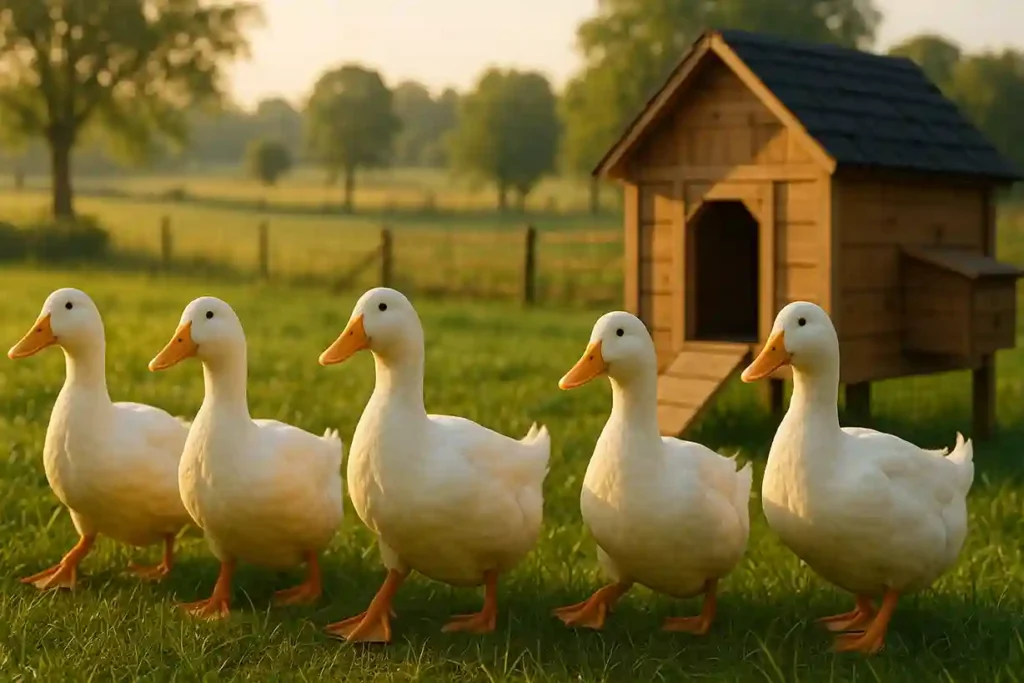
The pekin duck is one of America’s most popular domestic breeds. Farmers and backyard keepers love it for its calm nature and gentle behavior. This duck adapts well to both small spaces and large farms. It also grows fast and produces plenty of eggs and meat. That makes it an excellent choice for beginners.
In short, the pekin duck is friendly, productive, and easy to raise. Therefore, it helps new duck keepers learn quickly without much stress. For example, with proper food and clean housing, a young flock can start laying strong eggs in just a few months. This guide will show you how to set up their shelter, plan daily feeding, and maintain clean water. You will also learn simple ways to keep your ducks healthy and comfortable. Soon, you’ll be confident in raising a happy, thriving flock of pekin ducks.
“A calm pond and a gentle duck teach more about patience and care than any book ever could.”
Understanding the Pekin Duck Breed
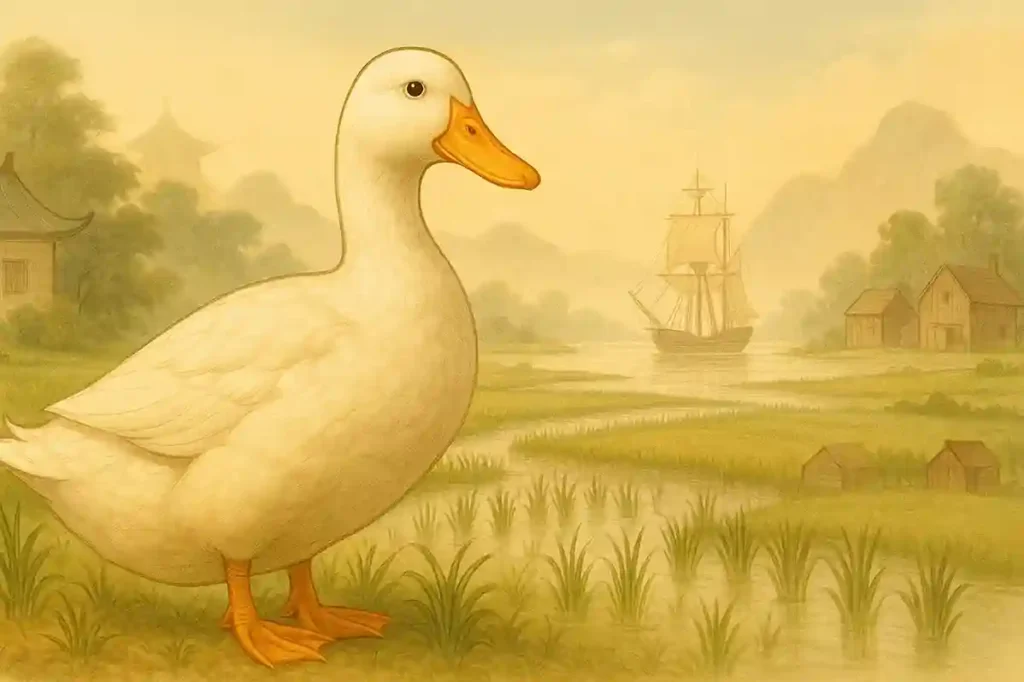
The pekin duck has a long and fascinating history that began in China more than 2,000 years ago. Traders brought this hardy bird to the United States in the 1870s, where it quickly became a favorite among farmers. Its ability to adapt to different climates and its high production made it the top commercial duck breed in the country. Today, the pekin duck remains the leading choice for both backyard keepers and large-scale producers.
Physically, the breed is easy to recognize. It has pure white feathers, a bright orange bill, and matching legs. Its body stands slightly upright, giving it a confident look. The bird’s calm expression and soft quacks also make it charming to observe.
Temperament plays a big role in why people love pekin ducks. They are friendly, quiet, and easy to handle, which makes them ideal for beginners. They rarely show aggression and get along well with other ducks and even humans. Therefore, they fit perfectly on small farms or homesteads where peace and productivity matter.
In short, the pekin duck is dependable, gentle, and efficient — the perfect balance for any duck keeper.
| Breed | Main Traits | Egg Production | Meat Quality | Temperament |
|---|---|---|---|---|
| Pekin Duck | White feathers, orange bill, upright stance | High | Excellent | Calm, friendly |
| Khaki Campbell | Brown feathers, slim body | Very high | Moderate | Active, alert |
| Muscovy | Dark feathers, red face caruncles | Moderate | Lean, flavorful | Quiet, independent |
Choosing the Right Environment for Pekin Ducks
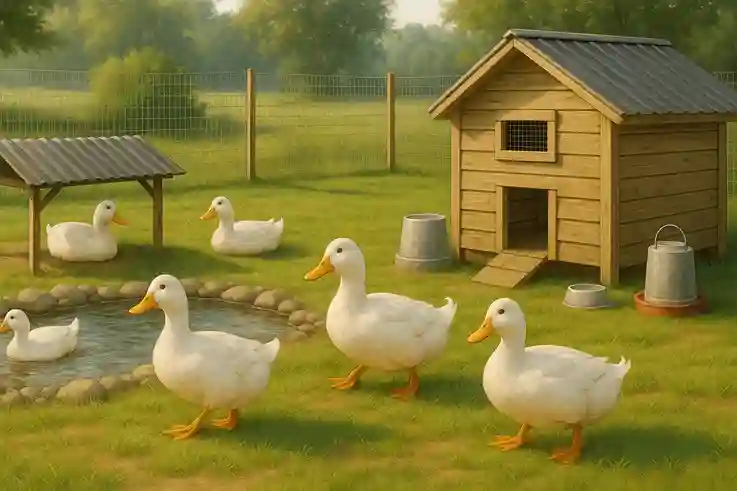
Creating the right environment for your pekin duck flock is essential for their comfort, growth, and health. These ducks adapt well to many climates, but they thrive best in areas with mild temperatures and good air circulation. However, they are sensitive to extreme heat and cold, so proper shelter and maintenance are vital. A clean, safe space ensures they grow strong and stay productive throughout the year.
Ideal Climate for Pekin Ducks
The pekin duck handles both warm and cool weather fairly well. Yet, sudden temperature changes can stress them. In colder regions, insulated housing keeps them warm during winter. Straw bedding and windproof walls help trap heat. In warmer areas, ventilation becomes more important. Moreover, shaded areas and cool water access prevent overheating. Always check that their living space remains between 55°F and 75°F whenever possible.
Shelter Setup and Space Requirements
A good shelter protects ducks from predators, harsh weather, and dampness. The ideal duck house should be well-ventilated but free from drafts. For instance, install vents near the roof to allow airflow without chilling the ducks. Each bird needs at least 4–6 square feet of floor space inside the shelter and about 10–15 square feet outdoors. Fencing keeps them secure while allowing freedom to roam.
Sunlight is equally important. Ducks need natural light to regulate egg laying and maintain health. Therefore, position the house where sunlight reaches during the day.
Flooring and Bedding Tips
Floor type directly affects hygiene and comfort. A slightly raised floor made of wood or concrete helps with drainage and keeps bedding dry. Cover it with clean straw, hay, or pine shavings. Replace wet bedding daily to prevent bacteria and odor buildup. Moreover, sloped floors or shallow channels near exits help drain spilled water efficiently.
Drainage and Cleanliness
Water management is crucial because pekin ducks splash frequently. Without proper drainage, the area can become muddy and unhygienic. Install gravel or sand around water sources to absorb moisture. For instance, using shallow trays under waterers can reduce spillage. A dry, clean floor keeps ducks healthier and minimizes disease risks.
Sunlight and Fresh Air
Access to fresh air and sunlight supports strong immunity and active behavior. Ducks that bask in the sun develop better plumage and stronger bones. However, ensure shaded areas are always available during midday heat. Balancing light, airflow, and shelter helps your pekin duck flock thrive naturally and stay healthy year-round.
Feeding Guide: What Pekin Ducks Eat
Feeding your pekin duck the right diet is one of the most important steps toward healthy growth and steady production. A balanced diet gives your ducks the nutrients they need to build strong bodies, lay quality eggs, and resist illness. Understanding what to feed them — and how much — helps avoid problems like overfeeding or nutrient deficiencies.
Balanced Diet for Ducklings
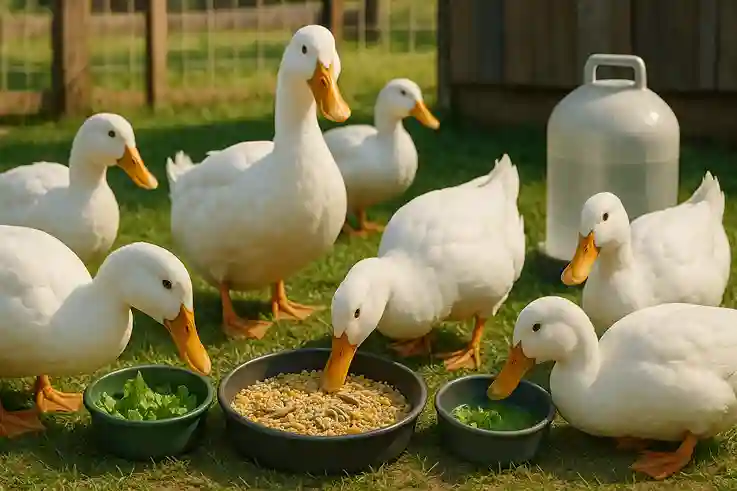
Ducklings grow fast, so they need a high-protein starter feed to support bone and feather development. Start with a duck starter crumble that contains about 20–22% protein for the first three weeks. Avoid medicated chick feed, as it can harm young ducks. For example, a small amount of chopped greens like lettuce or spinach can be introduced after two weeks, but always in moderation. Clean, fresh water must always be available for easy digestion.
As ducklings grow, gradually reduce protein levels to prevent leg issues. Around six weeks, switch to a grower feed with 16–18% protein.
Feeding Adult Pekin Ducks
Adult pekin ducks need a well-rounded diet of grains, greens, and insects or formulated pellets. Their daily feed should include:
- Whole grains such as wheat, oats, or cracked corn.
- Leafy greens like kale, clover, or lettuce.
- Protein from mealworms, small insects, or pellets.
Moreover, commercial duck feed ensures a complete nutrient balance and simplifies feeding. Scatter feed twice daily — morning and evening — to avoid waste. Fresh water is essential because ducks need to moisten their feed before swallowing.
Feed Frequency and Portion Control
Pekin ducks have large appetites, but overfeeding leads to obesity and reduced egg output. Offer about 6–7 ounces of feed per adult per day, adjusting for activity level and weather. For instance, active free-range ducks that forage naturally will need slightly less commercial feed.
Clean feeders regularly to prevent mold or contamination. Moreover, avoid feeding only one type of food, as variety keeps your ducks healthy and alert.
Feed Ratio Chart for Pekin Ducks
| Duck Stage | Protein % | Feed Type | Feed Amount (Per Day) | Notes |
|---|---|---|---|---|
| Ducklings (0–3 weeks) | 20–22% | Starter crumble | 3–4 oz | Add greens after 2 weeks |
| Growers (4–6 weeks) | 16–18% | Grower pellets | 4–5 oz | Ensure clean water always |
| Adults (7+ weeks) | 15–16% | Layer or all-purpose feed | 6–7 oz | Add grains, greens, and insects |
A steady, balanced feeding plan ensures your pekin duck flock stays active, healthy, and productive throughout every season.
Water Management and Swimming Access
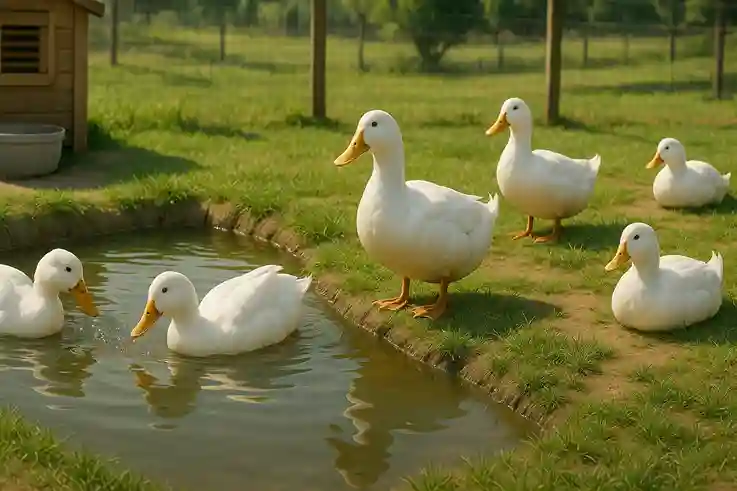
Water plays a vital role in the health and happiness of every pekin duck. These ducks love water not just for drinking but also for bathing, cleaning, and cooling their bodies. Regular access to clean water helps them maintain healthy feathers, good hygiene, and proper digestion. Moreover, it keeps their skin free from parasites and supports their natural behavior, which reduces stress and promotes better egg production.
Why Water Is Essential for Pekin Ducks
The pekin duck depends on water to stay clean and active. When ducks bathe, they spread natural oils through their feathers, creating a waterproof layer that protects them from cold and wet weather. Without water, their feathers lose shine, and skin problems can develop. Bathing also keeps their eyes, nostrils, and bills clean. Therefore, providing safe and consistent water access is crucial to overall health.
Safe Pond and Pool Options
Not every keeper has space for a pond, but pekin ducks can thrive with simple alternatives. A small backyard pond, kiddie pool, or shallow tub can provide enough space for splashing and cleaning. For instance, a kiddie pool works perfectly if cleaned often and placed in a shaded area. Use a non-slip base to prevent injuries and ensure easy entry and exit.
If you use a natural pond, keep the edges shallow to prevent accidents. Moreover, check for algae buildup or contamination from wild birds, as this can cause health problems.
Daily Water Changes and Cleanliness
Clean water is more important than deep water. Ducks drink and dip their bills frequently, which means debris and feed quickly dirty the water. Change water at least once a day and scrub containers weekly to prevent bacterial growth.
Place water sources slightly away from feeding areas to reduce contamination from spilled feed. For example, use a platform or small tray under water containers to collect splashes and keep bedding dry.
Preventing Contamination
To maintain hygiene, ensure water is free from chemicals and waste runoff. Rainwater collection or filtered tap water works best. Moreover, rotating between two containers helps manage cleaning more efficiently.
Clean, accessible water keeps pekin ducks active, healthy, and radiant. With the right setup, your ducks will always have a refreshing space to drink, swim, and stay content year-round.
Breeding and Egg Production
Raising pekin ducks for breeding and egg production can be both rewarding and straightforward. These ducks mature quickly, breed easily, and produce a reliable number of eggs each year. Understanding their natural behavior, nesting habits, and incubation needs helps ensure a steady supply of healthy ducklings and fresh eggs.
Maturity and Mating Behavior
The pekin duck reaches breeding maturity at about 5 to 6 months of age. Males, called drakes, often begin showing interest slightly earlier, while females start laying once their bodies are fully developed. Their courtship behavior includes gentle head-bobbing, tail-wagging, and quiet quacks. These actions help strengthen pair bonds and encourage mating.
Moreover, pekin ducks usually form stable pairs or small groups. One drake can successfully mate with about four to six females. Providing enough space and calm surroundings helps reduce stress and ensures successful fertilization.
Identifying Fertile Eggs and Encouraging Laying
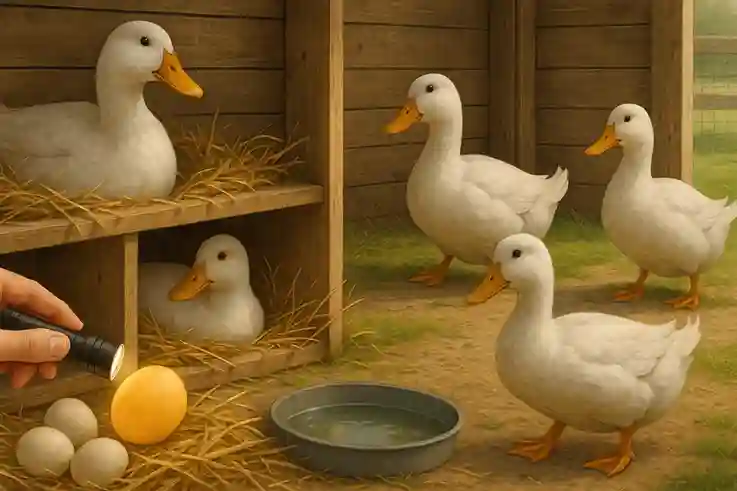
Healthy females lay 150 to 200 eggs per year, depending on diet and care. The eggs are large, white, and slightly heavier than chicken eggs. To identify fertile eggs, use candling — a simple process of shining light through the egg to check for early development. Fertile eggs show small veins or a dark spot inside within a few days after laying.
Encouraging consistent laying requires a balanced diet, clean water, and 14 to 16 hours of light each day. Moreover, keeping nesting boxes clean and lined with straw encourages hens to lay regularly in safe, comfortable spots.
Tips for Incubation
There are two main methods for hatching pekin duck eggs — natural incubation and artificial incubation.
- Natural Incubation: Some pekin females may sit on their eggs, though not all have strong brooding instincts. If a hen does brood, leave her in a quiet, dry spot with food and water nearby.
- Artificial Incubation: Most breeders prefer incubators. Set the temperature at 99.5°F with humidity around 55%, increasing to 65–70% in the final days. Turn the eggs three times daily until day 25, then stop turning for hatching.
Seasonal Laying Patterns
Pekin ducks usually lay most actively in spring and early summer when daylight increases. However, with proper lighting and nutrition, you can maintain steady egg production throughout the year. As daylight shortens in winter, laying may decrease, but adding a few extra hours of light daily often restores productivity.
In short, with the right environment, nutrition, and care, your pekin duck flock will reward you with abundant, healthy eggs and strong ducklings season after season.
Health and Disease Prevention in Pekin Duck
Keeping your pekin duck flock healthy starts with consistent care and attention. These ducks are generally hardy and adaptable, but they still face a few common health challenges that need early detection and prevention. A strong routine that includes clean water, a balanced diet, and regular health checks helps your ducks stay active, productive, and disease-free.

Common Health Issues in Pekin Ducks
Although pekin ducks are resilient, they can develop certain health problems if conditions are not well managed.
- Bumblefoot: This infection appears as a swollen, warm lump on the foot. It’s caused by rough surfaces, dirty bedding, or sharp objects. Prevent it by keeping flooring clean, dry, and smooth.
- Parasites: External parasites like lice and mites cause itching and feather loss, while internal worms can lead to weight loss or weakness. Regular cleaning, dust baths, and safe deworming keep infestations away.
- Vitamin Deficiencies: A poor diet can cause leg weakness, poor feather quality, and low egg production. Feed a mix rich in vitamins A, D, and E to prevent these issues. Moreover, adding greens and supplements improves overall health.
Daily and Weekly Health Checks
Frequent observation is key. Each day, watch how your ducks move, eat, and interact. Healthy pekin ducks walk easily, have clean eyes, and show smooth, shiny feathers. If one becomes isolated, lethargic, or refuses food, check immediately for illness.
Weekly checks should include examining the feet for cuts, cleaning the water area, and replacing soiled bedding. Moreover, weigh or observe your ducks’ body condition every few weeks to ensure they maintain proper growth and muscle tone.
Clean Water and Balanced Diet
Clean water is the first defense against disease. Ducks use water to clean their bills and eyes, so contamination quickly spreads bacteria. Therefore, replace water daily and clean containers thoroughly.
A balanced diet also strengthens the immune system. For instance, combining commercial feed with natural greens and insects provides essential nutrients that boost resistance to infections.
Quarantine for New Ducks
Always quarantine new or rescued ducks for at least two weeks before adding them to your flock. This isolation period prevents the spread of hidden illnesses or parasites. Keep them in a separate, clean area and observe for symptoms such as sneezing, feather loss, or fatigue.
Healthy pekin ducks are alert, active, and productive. With daily care, good hygiene, and balanced nutrition, you can build a strong, disease-free flock that thrives for years.
Behavior, Bonding, and Backyard Management
The pekin duck is gentle, social, and easy to manage. Its calm nature makes it perfect for small farms or suburban yards. Understanding how these ducks behave helps you build trust and keep them healthy. With the right care, they become affectionate, friendly, and even playful companions.
Social Habits and Interaction
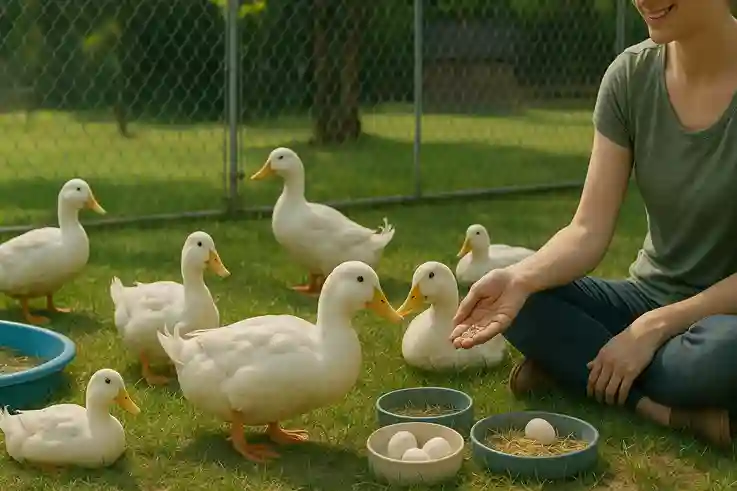
Pekin ducks love company. They bond strongly with their flock and dislike being alone. Always keep at least two together to prevent stress. When raised from ducklings, they grow used to people and enjoy gentle contact. They often follow their keepers around and respond to familiar voices.
These ducks communicate with soft quacks, head bobs, and tail wags. Males are usually quieter, while females quack more during feeding or excitement. For instance, a calm group will murmur quietly while foraging. Moreover, they mix well with calm animals like chickens or rabbits if each species has enough space. Avoid keeping them near aggressive birds.
Training and Building Trust
Training pekin ducks is simple with patience. Start by offering small treats such as peas, lettuce, or corn. Feed them by hand to build confidence. Over time, they learn your voice and routines. For example, they will come when called for food.
Always move slowly and speak softly to prevent fear. Ducks remember kindness. Therefore, consistent care helps them trust you and stay calm.
Managing Noise and Waste in Suburban Settings
Noise from pekin ducks is usually low. Females quack more, but good care keeps them quiet. A safe, clean space reduces stress and noise. Feeding them on time also prevents loud calling.
Waste control is vital in smaller spaces. Ducks make wet droppings, so clean the pen daily. Use dry bedding such as straw or shavings to absorb moisture. Moreover, composting waste creates useful fertilizer for gardens.
Use shallow water tubs instead of large ponds to reduce splashing. Keep their water area on gravel to avoid mud. Regular cleaning and dry bedding keep your yard neat and odor-free. In short, calm ducks and a clean setup make backyard pekin duck keeping easy and pleasant.
Beginner Pekin Duck Mistakes to Avoid
Raising pekin ducks is simple once you understand their needs, but beginners often overlook a few key points. Avoiding common mistakes keeps your flock healthy, happy, and productive. Small changes in care make a big difference in long-term success.
Overcrowding and Space Issues
One of the biggest mistakes is overcrowding. Pekin ducks need room to move, stretch, and stay dry. Crowded pens cause stress and lead to disease and feather damage. Always allow at least 4–6 square feet per duck indoors and 10–15 square feet outdoors. Moreover, proper space keeps the ground cleaner and easier to manage.
For example, ducks with enough room stay more active and show fewer aggressive behaviors. Therefore, start small and expand as you learn what works best.
Poor Hygiene and Dirty Water
Clean water and dry bedding are vital. Ducks splash often, and wet areas breed bacteria fast. Beginners sometimes leave standing water too long or forget to change it daily. This mistake leads to infections and unpleasant smells.
Replace water every day and scrub containers weekly. Keep feeders away from water tubs to prevent soggy feed. Moreover, dry flooring with fresh straw or shavings helps control odor and disease.
Ignoring Feed Balance
Another mistake is feeding only one type of food. Pekin ducks need a mix of grains, greens, and proteins to grow strong. Too many treats or just corn makes them overweight and unhealthy. Use quality duck feed as the base diet. Add vegetables and insects as supplements. For example, chopped kale or mealworms make excellent additions.
Lack of Predator Protection
Many new keepers underestimate predators. Ducks are easy targets for raccoons, dogs, and foxes. Always secure housing with sturdy wire mesh and locking doors. Close the pen at night and check for gaps regularly.
Moreover, motion lights or simple fencing help discourage unwanted visitors. Taking early steps prevents tragic losses later.
Skipping Regular Observation
Observation is one of the most powerful tools in duck care. Watch how your ducks eat, move, and behave each day. Early signs of illness often appear subtle — a limp, lost appetite, or isolation. Catching these signs early allows for quick treatment.
In short, raising pekin ducks successfully means staying clean, watchful, and patient. Start small, learn from your flock, and adjust as you go. Each day offers a lesson, and careful attention ensures your ducks thrive for years to come.
Frequently Asked Questions About Pekin Ducks
Conclusion: Raising Pekin Ducks with Confidence
Raising pekin ducks is a truly rewarding experience that blends learning, care, and joy. These ducks grow fast, adapt easily, and offer both companionship and productivity. With the right setup — clean housing, balanced feeding, fresh water, and safe space — they thrive in nearly any environment.
Moreover, pekin ducks teach valuable lessons about patience and consistency. Regular observation and gentle handling help you understand their behavior and build trust. For beginners, they are forgiving learners — resilient, calm, and friendly.
In short, success with pekin ducks comes from simple, steady routines rather than complicated systems. Start small, focus on quality care, and expand your flock as your confidence grows. Whether your goal is fresh eggs, meat, or simply the joy of keeping happy ducks, a well-managed flock will always reward your effort.
So step into the world of duck keeping with confidence — your pekin ducks will thank you with cheerful quacks, clean eggs, and endless satisfaction.
Are you planning to start your own pekin duck flock, or already caring for one?
Share your experiences, questions, or beginner tips in the comments below! Your insights can help other new duck keepers learn and grow with confidence.

Michael Reyes is a versatile blogger with a primary focus on farming and sustainable living. Growing up close to nature, he developed a deep interest in agriculture and enjoys sharing practical tips on backyard farming, modern cultivation techniques, and eco-friendly practices. While farming remains his specialty, Michael also writes on a wide range of topics, from lifestyle and travel to everyday inspiration, making his work relatable to a broad audience.
Outside of writing, Michael enjoys spending time outdoors, experimenting with new farming methods, and exploring different cultures through food and travel. His approachable voice and well-researched insights make his blogs both informative and engaging.