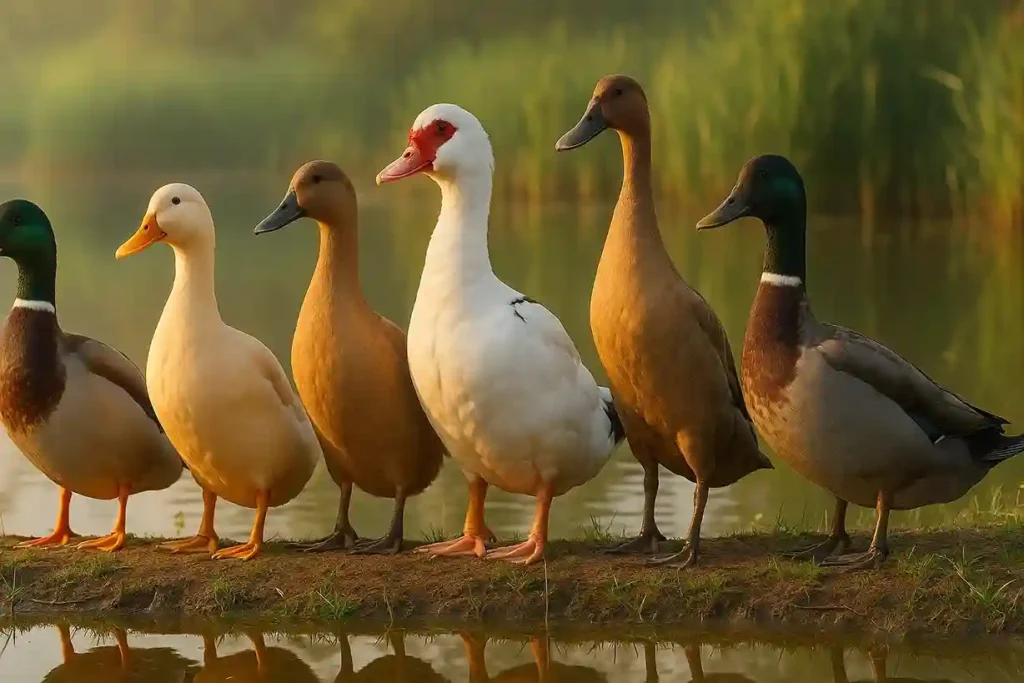
Understanding the different types of ducks helps farmers choose the right breeds for their goals. New and experienced farmers both benefit from knowing each breed’s traits. Ducks differ in looks, size, and purpose. Some are great layers, while others provide quality meat or serve as ornamental breeds.
This guide gives a clear, practical overview for every farmer. You’ll discover which breeds thrive in your climate and which have calmer temperaments. It also explains how adaptable each duck is to farm conditions. Moreover, you’ll find tips to match your flock with your farming goals.
With the right knowledge, you can build a productive and happy flock. So, let’s explore the most common types of ducks and see what makes each one unique.
“Raising the right types of ducks isn’t just about farming — it’s about understanding nature’s balance between care, purpose, and productivity.”
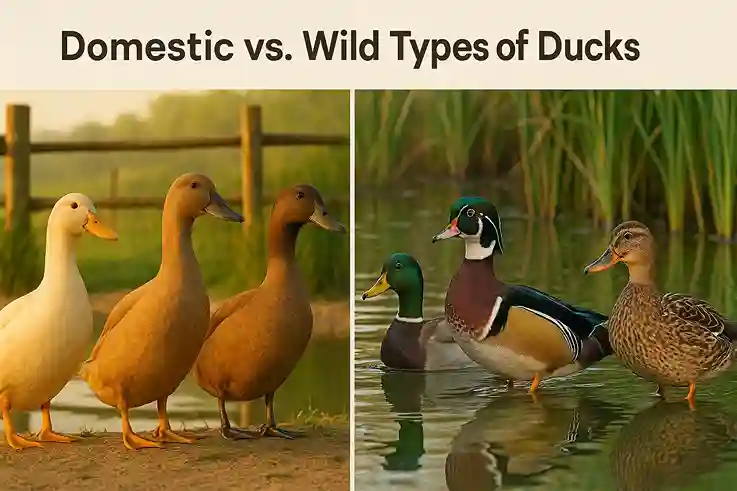
Domestic vs. Wild Types of Ducks
When learning about the different types of ducks, it’s important to know that all breeds fall into two broad groups — domestic and wild. Domestic ducks are raised by humans for eggs, meat, or ornamental purposes. Wild ducks, on the other hand, live freely in natural habitats like ponds, rivers, and wetlands. Although they may look similar, their behaviors, diets, and instincts differ greatly.
Domestic ducks have adapted to life around humans. They depend on farmers for food, shelter, and protection. Over generations, selective breeding has made them calmer, heavier, and more productive. In contrast, wild ducks rely on instinct for survival. They migrate seasonally, forage naturally, and remain wary of humans.
Why Domestic Ducks Suit Farms
Domestic breeds thrive in managed environments where care and consistency matter. Farmers raise them for practical uses — mainly egg production, meat, or pest control. These ducks grow faster, produce more eggs, and require less space to manage.
Popular domestic breeds include:
- Pekin Duck – Known for its rapid growth and tender meat. It’s calm, adaptable, and ideal for beginners.
- Muscovy Duck – Valued for its lean, flavorful meat and quiet temperament.
- Khaki Campbell – Famous for excellent egg production, often laying over 300 eggs a year.
Domestic ducks also integrate well into mixed farms. They can forage on insects, help control weeds, and provide natural fertilizer. With regular feeding and housing, they remain healthy and productive throughout the year. Furthermore, they rarely fly away, which makes them easy to manage.
Why Wild Ducks Stay Protected
Wild ducks live under natural conditions and play a vital role in ecosystem balance. Species like the Mallard and Wood Duck are common across North America. They migrate long distances, nesting in trees, reeds, or near water. Because they are part of natural wildlife populations, federal and state laws protect them.
Capturing or keeping wild ducks without permission is illegal. They belong to nature and contribute to wetland health through seed dispersal and insect control. Farmers can still support them ethically by preserving wetlands and creating safe habitats near their farms.
Knowing the difference between domestic and wild types of ducks helps farmers plan better. Domestic ducks serve practical farm needs, while wild species enrich the environment naturally. Understanding both ensures balance between productivity and conservation — an essential step toward responsible, sustainable duck farming.
Egg-Laying Ducks for Sustainable Farming
Among all types of ducks, some breeds excel at egg production and remain farmer favorites for sustainable farming. These ducks not only lay abundantly but also adapt well to different environments. Choosing the right egg-laying breed helps farmers maintain a steady supply without heavy feed costs or complex management.

Khaki Campbell – The Prolific Layer
The Khaki Campbell stands out as one of the most productive egg-laying ducks in the world. This breed can produce up to 300 eggs a year, making it ideal for small or large farms focused on sustainability. Calm and adaptable, these ducks thrive in both confined pens and free-range systems.
They prefer a balanced diet of grains, greens, and quality protein sources. Fresh water for drinking and bathing keeps them healthy and encourages regular laying. Their calm nature also reduces stress, which supports higher egg output throughout the year.
Indian Runner – The Active Forager
The Indian Runner is another exceptional breed known for its tall, upright posture and remarkable foraging ability. These ducks are light-bodied, energetic, and can lay 250 to 300 eggs per year. Their active nature makes them excellent for organic and pest-control farms, as they eagerly search for insects and snails.
Indian Runners benefit from access to open areas where they can graze and explore. A diet rich in vitamins, minerals, and clean water ensures strong shells and consistent laying. Because they rarely go broody, their focus stays on egg production.
Welsh Harlequin – The Gentle Producer
The Welsh Harlequin offers both beauty and productivity. Originating from Khaki Campbell lines, it produces around 250 eggs per year. Its gentle temperament makes it easy to handle, even for beginners. These ducks do well in mild climates and respond positively to regular feeding schedules.
They enjoy mixed grains, leafy greens, and natural forage. Clean nesting areas and adequate lighting encourage consistent laying. With proper care, Welsh Harlequins can maintain strong productivity for several seasons, offering sustainable returns for small farms.
Daily Care and Diet Essentials
Good nutrition is the key to strong egg production. Provide a balanced feed with 16–18% protein, clean water, and mineral-rich supplements. Offer shade during hot weather and dry bedding to prevent stress. Regular cleaning and predator protection also help maintain consistent laying cycles.
If you prefer meat production, consider these robust breeds next.
Meat-Producing Types of Ducks
When raising ducks for meat, choosing the right breed matters greatly. Among the many types of ducks, several stand out for their fast growth, efficient feed conversion, and flavorful meat. These breeds are well-suited for farmers who value both profitability and sustainability. Moreover, with the right environment and feeding plan, meat ducks can mature quickly and produce tender, market-ready meat.
Pekin Duck – Fast Growth and Tender Flavor
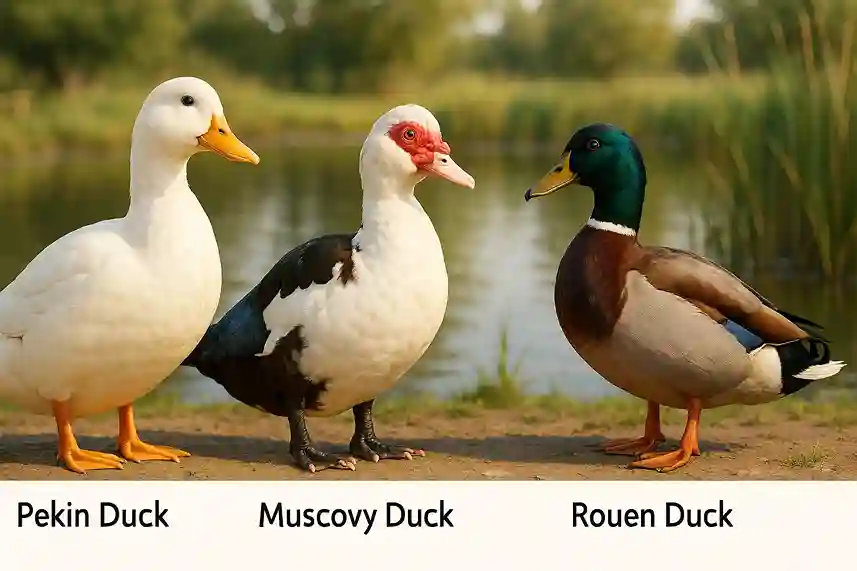
The Pekin Duck is the most popular meat-producing duck worldwide. This breed grows rapidly, often reaching market weight in just 7 to 9 weeks. Because of their efficient feed conversion, they turn grains and greens into high-quality meat faster than most other ducks. In addition, Pekins have mild, tender flesh that appeals to both local and commercial markets.
They adapt well to various climates, though they prefer dry, moderately warm conditions. With consistent feeding and clean housing, they stay healthy and productive. Furthermore, their calm nature and manageable size make them ideal for beginner farmers.
Muscovy Duck – Lean Meat with a Distinct Taste
The Muscovy Duck offers a leaner and richer meat compared to other breeds. Its texture resembles that of beef rather than typical duck meat. Because it grows more slowly, the Muscovy reaches harvest weight in about 11 to 12 weeks, yet it consumes less feed overall. This efficiency makes it a valuable choice for small farms seeking quality over speed.
Unlike most domestic breeds, Muscovies are quiet and prefer perching. They thrive in warm, open areas and require space to roam. With proper nutrition—such as high-protein pellets and natural forage—they develop firm muscles and a mild, savory flavor. Additionally, they resist many common duck diseases, making them hardy and reliable.
Rouen Duck – Large Body and Traditional Taste
The Rouen Duck is famous for its classic, full-bodied flavor. Heavier than the Pekin, it matures more slowly, usually within 12 to 14 weeks. However, the longer growth period results in rich-tasting meat and a well-marbled texture. Many farmers raise Rouens for local markets and specialty dishes.
Rouens do best in cooler climates and open pastures where they can forage naturally. They need moderate feeding but benefit from access to clean ponds or streams. Because of their large size, these ducks require more space but reward farmers with excellent meat quality. Furthermore, they are calm, docile, and easy to handle.
Choosing the Right Meat Breed
Each breed offers unique benefits. Pekins grow quickly and yield tender meat, while Muscovies provide leaner, flavorful cuts. Rouens deliver traditional taste with impressive body size. Therefore, farmers should match the breed to their climate, available feed, and market goals. With consistent care and balanced nutrition, these ducks can deliver dependable returns throughout the season.
Beyond meat and eggs, some breeds balance both uses—making them ideal for farmers seeking versatility and long-term sustainability.
Dual-Purpose Ducks for Balanced Farming
For small farms, dual-purpose ducks are a smart and efficient choice. These breeds provide both eggs and meat, helping farmers maintain balance without keeping separate flocks. Because they adapt easily to different conditions, they fit well into mixed or sustainable farm setups. Farmers who prefer versatility often choose these breeds to save time, space, and feed costs.
Dual-purpose ducks also simplify management. Instead of focusing on a single purpose, you can collect eggs and raise ducklings for meat when needed. Moreover, they usually have calm temperaments and strong foraging instincts. That means they thrive on open pastures, reducing feed expenses naturally.
Buff Orpington – Calm and Reliable
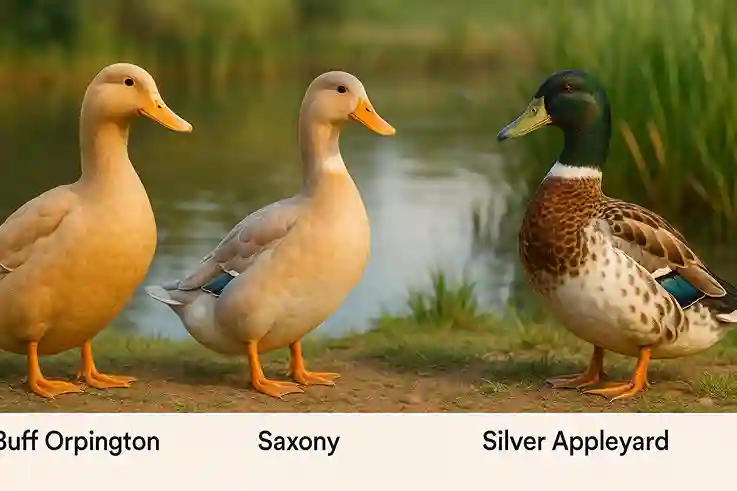
The Buff Orpington is gentle, social, and productive. It lays around 180 to 220 eggs per year while maintaining a good meat yield. Because of its calm personality, this breed suits beginners and family farms. Buff Orpingtons prefer mild climates and steady routines.
Farmers appreciate their friendly nature and ability to forage efficiently. With balanced feed and clean water, they stay healthy and consistent in both egg and meat output. In addition, their golden plumage makes them visually appealing around the farm.
Saxony – Attractive and Adaptable
The Saxony duck combines beauty with strong productivity. It produces about 200 eggs annually and reaches market weight in 8 to 10 weeks. This breed’s soft brown and silver feathers give it a striking look. Beyond its appearance, the Saxony adapts well to various weather conditions, making it reliable in most regions.
It forages actively, helping reduce insect populations and feed costs. Farmers value its calm temperament and easy handling. With a balanced diet and access to open water, the Saxony grows steadily while maintaining excellent health. Furthermore, it integrates smoothly into mixed flocks with other poultry.
Silver Appleyard – Productive and Show-Worthy
The Silver Appleyard is another top dual-purpose breed. It’s valued for both high egg production and rich, flavorful meat. Laying up to 250 eggs per year, it rivals many dedicated egg layers. Its strong build and striking plumage also make it a favorite for farm shows and exhibitions.
Silver Appleyards are hardy and thrive in both free-range and confined setups. They respond well to good nutrition, clean housing, and fresh water. Because they are active foragers, they help maintain clean pastures while lowering feed waste. Many farmers call them “the all-rounders” of duck farming.
Dual-purpose breeds bring balance and sustainability to small farms. They reduce costs, simplify care, and support diverse goals. By combining productivity with resilience, they create value beyond simple output.
Let’s also look at how ornamental breeds add value to your space.
Ornamental and Show Ducks
Among the many types of ducks, some are prized not for their productivity but for their beauty. These ornamental ducks bring color, charm, and elegance to farms, gardens, and aviaries. Farmers and hobbyists raise them for shows, breeding programs, and aesthetic appeal. Because they are visually stunning, they often become the centerpiece of small farms or homesteads.
Unlike production-focused ducks, ornamental breeds need more attention to comfort and care. Their role goes beyond farming — they add personality and serenity to outdoor spaces. With their vibrant colors and unique behaviors, these ducks attract visitors and make every farm more lively.

Call Duck – Compact and Cheerful
The Call Duck is one of the smallest types of ducks and among the most popular ornamental breeds. Known for its adorable size, playful behavior, and high-pitched voice, it charms both farmers and show enthusiasts. Call Ducks come in many colors, including white, gray, and pastel.
Because they are small, they require less feed and space but need secure enclosures. Clean water for bathing keeps their feathers bright and healthy. In addition, they thrive in pairs or small groups, making them easy to manage for beginners. Their cheerful nature and beauty make them perfect for display or family-friendly farms.
Mandarin Duck – Exotic and Captivating
The Mandarin Duck stands out among all types of ducks for its brilliant, multi-colored plumage. Males display orange, blue, and purple feathers, creating one of the most stunning sights in the bird world. Originating from East Asia, this duck symbolizes love and harmony in many cultures.
Mandarins prefer quiet ponds and shaded spaces. They need clean water, moderate temperatures, and protection from predators. Because of their exotic nature, they’re often kept in aviaries or ornamental ponds rather than production farms. Regular feeding and peaceful surroundings help maintain their vivid colors and gentle temperament.
Wood Duck – Native and Striking
The Wood Duck is a North American native admired for its iridescent green, chestnut, and white markings. It’s one of the most breathtaking types of ducks found in the wild. Farmers and conservationists often build nest boxes near ponds to encourage them to stay.
Wood Ducks are shy but adapt well to calm environments with plenty of water and natural shelter. They feed on grains, seeds, and aquatic plants. With proper care, they become a highlight of any ornamental setup while contributing to local biodiversity.
Housing and Space for Ornamental Ducks
Ornamental ducks need safe, spacious habitats. Each pair requires clean water for swimming and shaded areas for resting. Secure fencing protects them from predators, while dry, insulated shelters provide comfort during cold nights. Regular cleaning and balanced diets help maintain their stunning plumage year-round.
These breeds remind farmers that not all types of ducks exist for production. Some bring beauty, joy, and balance to rural life. Choosing the right type also depends on your local conditions.
Choosing the Right Duck Breed for Your Farm
When exploring different types of ducks, it’s essential to match the breed with your farming goals. Some ducks excel at laying eggs, while others are better suited for meat or pest control. A few even shine as ornamental additions, bringing beauty to your property. Defining your purpose early helps you choose wisely and avoid future challenges.
1. Climate Suitability
Climate plays a major role in raising healthy ducks. Warm-weather regions favor hardy breeds like the Muscovy or Khaki Campbell, which handle heat well. Cooler climates suit heavier ducks such as the Rouen or Silver Appleyard, which have dense plumage for insulation.
If your area experiences extreme weather, provide shade and water for cooling in summer and draft-free shelters during winter. Always research how each breed performs in your local conditions before expanding your flock.
2. Feed Availability and Cost
Feed availability directly affects sustainability and growth. Some types of ducks—like the Indian Runner or Saxony—are excellent foragers and rely less on commercial feed. These breeds thrive on insects, grasses, and garden scraps, which helps cut costs.
If feed prices are high in your region, choose active foragers. Supplement their diet with balanced pellets, grains, and greens to maintain health and egg quality. Access to clean water also improves digestion and productivity.
3. Farm Size and Space
Your available space determines which breeds you can raise successfully. Smaller farms or backyard setups benefit from compact, calm breeds like Call Ducks or Buff Orpingtons. Larger farms can handle bigger, heavier breeds such as Pekins or Rouens, which need more room to roam and forage.
Each duck requires access to water for swimming and clean shelter for resting. Overcrowding leads to stress and disease, so ensure enough space per bird—around 15 to 20 square feet for free-range systems.
4. Production Goals and Purpose
Your main goal defines your best breed choice.
- Egg Production: Choose prolific layers like Khaki Campbell or Welsh Harlequin.
- Meat Production: Pick fast-growing breeds like Pekin or Muscovy.
- Dual Purpose: Select balanced breeds such as Silver Appleyard or Saxony.
- Aesthetics or Hobby Farming: Opt for decorative breeds like Mandarin or Wood Ducks.
A clear purpose ensures better returns and easier management. Matching your goals with the right breed also supports sustainable and profitable farming.
Practical Tips for Beginners
Start small with two or three ducks before expanding. Observe how they adapt to your setup, feed, and climate. Keep shelters dry, provide fresh water daily, and maintain simple routines to reduce stress. Learn each duck’s behavior—it helps you spot illness early.
Also, connect with local farmers or online communities for guidance. Their experience can help you avoid common mistakes. Above all, stay consistent—healthy ducks thrive on regular care and attention.
Once you’ve chosen your ducks, proper care ensures their health and productivity.
Care and Management for All Types of Ducks
Proper housing is the foundation of good duck management. All types of ducks need dry, secure, and well-ventilated shelters. A clean coop keeps your flock healthy and reduces stress. Each duck should have enough room to move freely—about 4 to 6 square feet indoors and 15 to 20 square feet outdoors. Use straw or wood shavings as bedding, and change it regularly to prevent dampness.
Good airflow helps control odor and humidity. During summer, provide shade and fresh air. In colder months, insulate the coop to keep ducks warm without overheating. Avoid drafts, but make sure air still circulates. Always check for sharp edges or gaps that could injure your ducks or let predators in.

Water Access and Cleanliness
Ducks rely on water more than most farm birds. Every type needs access to clean, shallow water for drinking, cleaning, and maintaining their feathers. Because ducks dip their bills and splash often, refill their water containers daily. Stagnant or dirty water can cause infections, so keeping it clean is vital.
If you have a pond, make sure it’s fenced and free from harmful algae. Ducks also enjoy small pools or troughs where they can bathe and preen. Regular water access improves feather health and egg production while keeping ducks active and happy.
Balanced Nutrition and Feeding Routine
Feeding your ducks the right diet supports growth, egg quality, and overall health. Offer a balanced layer or grower feed that provides 16–18% protein, depending on age and purpose. Supplement with greens, grains, and insects to promote natural foraging.
All types of ducks benefit from grit, which aids digestion. Provide crushed oyster shells for laying females to boost calcium levels. Feed ducks twice daily—early morning and evening. Always remove leftovers to prevent spoilage and pests.
Health Monitoring and Biosecurity
Healthy ducks are active, alert, and have smooth feathers. Observe them daily for signs of illness such as drooping wings, sluggish movement, or poor appetite. Early detection allows quick treatment and prevents spread.
Maintain biosecurity by cleaning tools, feeders, and shelters often. Keep new birds separate for at least two weeks before mixing them with your main flock. Wash your hands and boots before and after handling ducks to reduce the risk of disease.
Predator Control and Safety
Predators like foxes, raccoons, and snakes can threaten your flock. Secure fencing and locked shelters at night are essential. Use wire mesh small enough to keep predators out. Motion lights or guard animals can add extra protection.
For outdoor areas, remove tall grass and debris where predators hide. Routine checks around enclosures help spot weak spots before trouble starts.
Seasonal Care and Nesting Tips
Ducks handle mild weather well, but extreme conditions need extra care. In winter, provide dry bedding, draft-free housing, and unfrozen water. In summer, ensure shade and cool water to prevent overheating.
During the laying season, offer quiet nesting boxes filled with straw or hay. One nest for every four ducks usually works well. Keep nests clean and dry to encourage consistent egg-laying.
With consistent care, your ducks will stay healthy, productive, and content through every season. Let’s address some questions new farmers often ask.
FAQs About Different Types of Ducks
For more detailed information on duck care, housing, and breed management, visit the Michigan State University “Raising Waterfowl” guide for expert, research-based advice.
Conclusion
Raising different types of ducks offers countless rewards for both new and experienced farmers. Each breed brings its own strengths—some excel at producing eggs, others provide rich meat, and a few simply add beauty and joy to the farm. By understanding their traits and needs, you can create a productive, balanced flock that supports your goals year-round.
Choosing the right breed starts with clear intentions. Think about your farm’s climate, space, and resources before making a decision. With proper care—clean shelters, fresh water, and a nutritious diet—your ducks will stay healthy, active, and reliable producers. Regular attention to hygiene, predator protection, and seasonal needs ensures long-term success.
Raising ducks is more than a farming task; it’s a connection to nature and self-reliance.
Whether you grow for eggs, meat, or beauty, these remarkable birds will reward your efforts every day.
Share your favorite duck breeds or farming experiences in the comments below!

Michael Reyes is a versatile blogger with a primary focus on farming and sustainable living. Growing up close to nature, he developed a deep interest in agriculture and enjoys sharing practical tips on backyard farming, modern cultivation techniques, and eco-friendly practices. While farming remains his specialty, Michael also writes on a wide range of topics, from lifestyle and travel to everyday inspiration, making his work relatable to a broad audience.
Outside of writing, Michael enjoys spending time outdoors, experimenting with new farming methods, and exploring different cultures through food and travel. His approachable voice and well-researched insights make his blogs both informative and engaging.