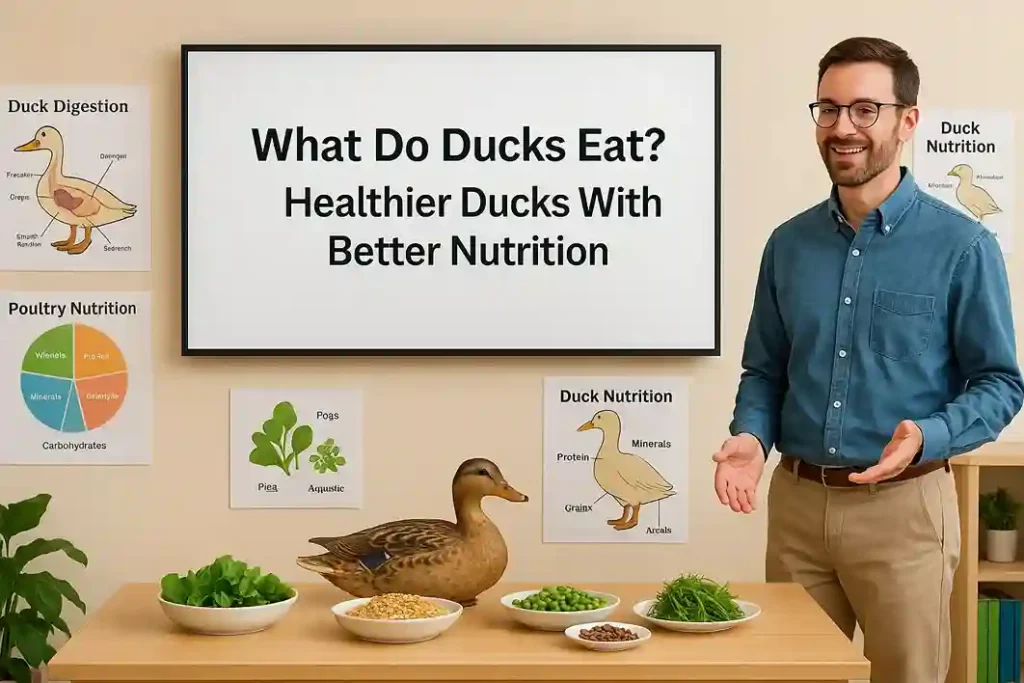
What do ducks eat plays a big role in their health and happiness. Their diet shapes how fast they grow, how strong their eggshells become, and how well they fight off illness. Ducks need a mix of grains, greens, insects, and clean water to stay active and healthy. Without proper nutrition, they can face weak bones, poor feather quality, or low energy.
A balanced diet supports more than survival—it helps ducks thrive. Healthy ducks are livelier, lay better eggs, and show brighter plumage. Whether you raise ducks for eggs, meat, or companionship, understanding what fuels them is key. This guide explains what ducks eat in nature and what to offer in your backyard. You’ll learn which foods are safe, which to avoid, and how to create a feeding plan that boosts overall health. With the right approach, your ducks will stay strong through every season.
“Healthy ducks begin with a healthy diet — every grain, green, and insect they eat builds their strength, vitality, and joy.”
What Do Ducks Eat: Understanding Duck Nutrition Basics
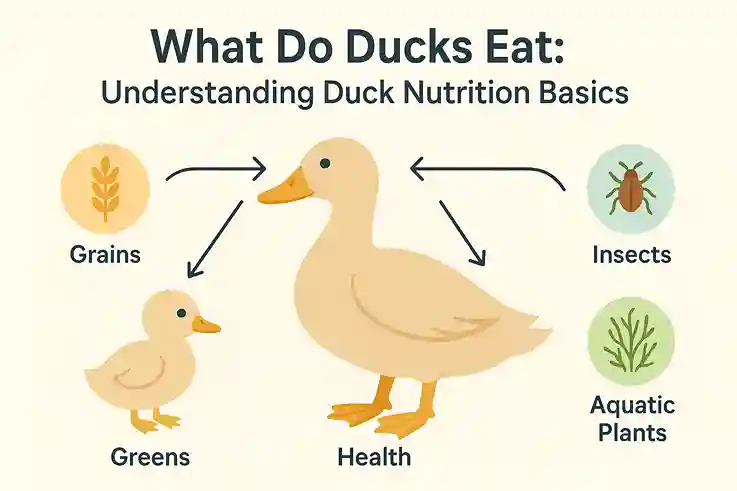
What do ducks eat depends on their natural instinct to forage for variety. Ducks are true omnivores, and they thrive on a balanced mix of grains, greens, insects, and even small aquatic life. In fact, this wide-ranging diet ensures they get the nutrients needed for growth, energy, and strong immunity. Moreover, when you raise ducks at home, providing a similar diet helps them stay healthy and active.
As ducks grow, their nutritional needs change. For instance, ducklings require high protein—around 20%—to support fast development and muscle strength. Meanwhile, juvenile ducks benefit from a steady blend of protein and carbohydrates for balanced growth. Later, adult ducks need slightly less protein but more energy-rich foods, especially during laying or molting seasons. Therefore, knowing what do ducks eat at each life stage can make a big difference in their health.
Protein builds muscles and feathers, while carbohydrates fuel swimming and foraging. Additionally, healthy fats boost nutrient absorption and improve feather quality. Vitamins A, D, and E further support vision, bone strength, and immunity. Likewise, minerals like calcium and phosphorus strengthen bones and form hard eggshells.
If ducks lack these nutrients, they may grow slowly or develop weak feathers. However, with balanced feeding, they remain energetic and productive. In short, understanding what do ducks eat—and providing the right mix at every stage—creates a vibrant, healthy flock that thrives year-round.
What Do Ducks Eat in the Wild?
Wild ducks live by nature’s rhythm, and what do ducks eat in the wild depends on the season, habitat, and available food sources. Because they are omnivores, their diet includes a broad range of grains, greens, insects, and aquatic creatures. This variety fuels their active lives and keeps them strong through migration and changing weather.
Foraging in Their Natural Habitat
Wild ducks spend much of their day foraging along ponds, lakes, and marshes. They use their bills to sift through mud and shallow water, searching for edible treasures. Typically, they eat aquatic plants, seeds, grasses, algae, and small creatures such as snails, worms, and tiny fish. Insects, larvae, and freshwater shrimp add protein to their diet, which helps them build muscle and feathers.
Interestingly, ducks often dive or dabble depending on their species. Dabbling ducks like mallards skim the surface for seeds and greens, while diving ducks plunge deeper for fish and underwater plants. Therefore, what ducks eat varies greatly, even among wild flocks sharing the same lake.

Seasonal Shifts in Natural Food Sources
The wild diet of ducks changes as the seasons turn. During spring and summer, lush vegetation, insects, and larvae are abundant, providing high-protein meals essential for breeding and feather growth. In contrast, autumn and winter bring scarcity. Ducks then rely more on grains, seeds, and leftover crops from harvested fields. These foods supply extra energy for warmth and migration.
Because of this constant shift, wild ducks adapt their foraging habits. They move between wetlands, rivers, and farmlands to find the nutrition they need. Thus, their natural flexibility keeps them resilient and strong all year long.
Wild Diet vs. Domestic Feeding
In comparison, domestic ducks depend on their caretakers for food. Most farm or backyard ducks eat commercial feed, which, although balanced, lacks the variety of the wild diet. While pellets provide nutrients, they can’t replicate the freshness or enrichment that comes from natural foraging.
That’s why it’s beneficial to mimic what ducks eat in the wild. Allowing farm ducks to graze on grass, nibble on weeds, or hunt small insects promotes better digestion and stronger immunity. Moreover, it prevents boredom and improves overall health. By combining natural foods with quality feed, you help domestic ducks live closer to their natural instincts—happier, more active, and healthier every day.
Safe and Healthy Foods for Pet or Farm Ducks
Knowing what do ducks eat safely helps keep your flock energetic, strong, and thriving. Ducks love variety, and their bodies respond best to fresh, natural foods that mimic their wild diet. By offering a balanced mix of grains, greens, proteins, and fruits, you can ensure they get all the nutrients they need while preventing health issues.
Nutritious Grains for Energy
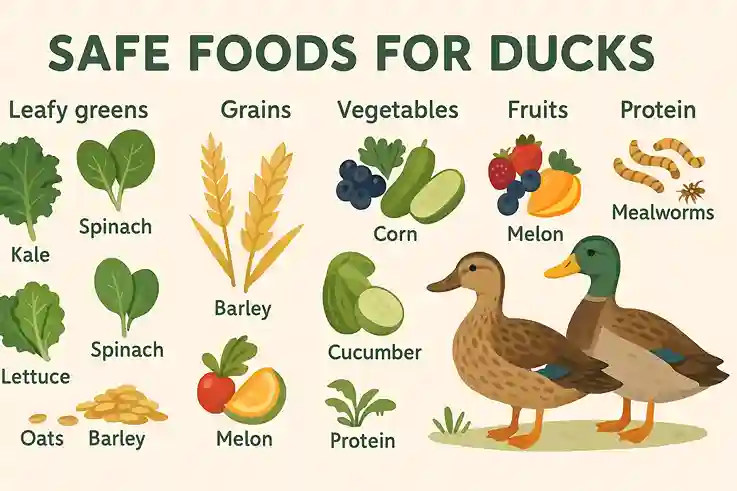
Grains form the foundation of a healthy duck diet. Oats, barley, and wheat supply steady energy for foraging, swimming, and daily activity. Whole or cracked corn can be given in moderation because it provides warmth and calories, especially in cold weather. However, too much corn can lead to excess fat, so balance it with other grains. Mixing different grains keeps meals interesting and nutritionally complete.
Fresh Vegetables and Greens
Ducks adore leafy greens, which contribute vitamins and minerals vital for overall health. Offer them lettuce, kale, spinach, and peas—either fresh or slightly chopped for easy eating. Greens also aid digestion and support shiny, strong feathers. Additionally, allowing ducks to graze freely on grass or weeds adds natural fiber to their diet, improving gut health and reducing boredom.
Protein for Growth and Strength
Protein is crucial for building muscle, feathers, and strong eggs. Offer mealworms, small insects, or even boiled eggs as occasional treats. These protein sources are highly digestible and promote healthy growth, especially for ducklings or during molting seasons. A mix of plant-based and animal proteins ensures balanced nutrition.
Fruits as Occasional Treats
Fruits can be tasty, vitamin-rich snacks when served sparingly. Ducks enjoy berries, melon, and seedless apples. Fruits add natural sweetness and hydration but should remain a small part of their diet. Too much sugar can upset their digestion.
Clean Water for Health and Digestion
Fresh, clean water is as essential as food. Ducks need it for swallowing, cleaning their bills, and maintaining healthy feathers. Always keep their water dishes deep enough for dipping their heads and changing it daily to prevent bacteria.
By combining grains, greens, proteins, fruits, and plenty of clean water, you’ll create a diet that reflects what ducks eat in nature—keeping them healthier, happier, and more active every day.
Foods You Should Never Feed Ducks
Knowing what do ducks eat safely also means understanding what they should never eat. Many well-meaning people feed ducks snacks that can actually harm them. Although ducks appear eager to eat almost anything, some foods cause serious health problems, even when given in small amounts.
Avoid Processed and Junk Foods
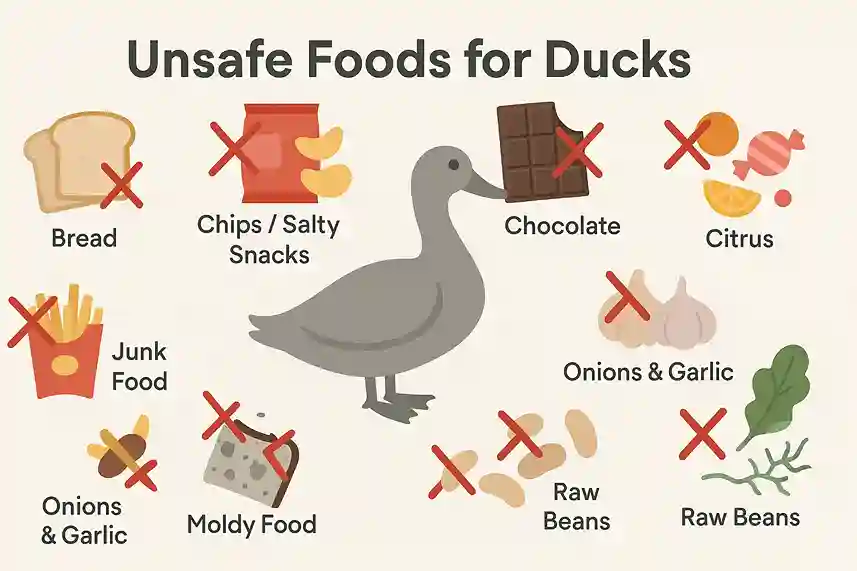
Bread, crackers, chips, and sugary snacks may seem harmless, yet they offer no nutritional value. These foods fill ducks quickly, preventing them from eating the grains, greens, and proteins they truly need. Over time, processed foods lead to malnutrition, weak bones, and sluggish behavior. In young ducks, they can even cause a condition called angel wing—a painful deformity that twists the wing joints and prevents flight.
Additionally, junk food encourages ducks to rely on handouts rather than foraging naturally. This habit disrupts their instinct to search for real food and can lead to overcrowding in public ponds. Therefore, skipping the bread is one of the best ways to protect their health.
Toxic Foods to Avoid Completely
Some foods are not just unhealthy—they’re toxic. Never feed ducks avocado, citrus, chocolate, onions, garlic, or raw beans. These items contain compounds that can damage their digestive or nervous systems. Even small portions may cause diarrhea, weakness, or sudden illness. Always keep such foods far from their feeding area to prevent accidental ingestion.
Safe Alternatives to Common “Park Foods”
If you want to feed ducks safely, choose healthy alternatives that resemble what ducks eat naturally. Offer plain oats, cracked corn, peas, or chopped lettuce instead of bread or chips. You can also scatter grains or vegetable bits on the ground or in shallow water to encourage natural foraging. These options not only keep ducks healthy but also support their instincts and improve digestion.
Feeding ducks the right way strengthens their bodies, preserves their environment, and helps every bird stay active and disease-free. Remember: what ducks eat determines how well they live—so keep their meals natural, simple, and safe.
Feeding Tips for Healthier Ducks
Understanding what do ducks eat is only part of good nutrition—how you feed them matters just as much. Balanced portions, clean feeding areas, and regular observation can make the difference between a healthy flock and one that struggles with diet-related issues. These feeding tips help ducks grow stronger, stay active, and live longer.
Portion Control and Feeding Frequency
Proper portioning keeps ducks fit and prevents overeating. Ducklings need frequent meals—four to six small feedings daily—because their bodies grow fast and require constant energy. Juvenile ducks can be fed three times a day, while adult ducks usually do best with two structured feedings: morning and evening.
Feed enough that ducks finish their meal in about 15 minutes. If food remains afterward, you’re likely giving too much. Overfeeding can lead to obesity, messy pens, and nutrient imbalance. On the other hand, underfeeding weakens their immune system and slows egg production. Therefore, observing their eating habits helps maintain ideal portion sizes.
Mixing Commercial Feed With Natural Foods
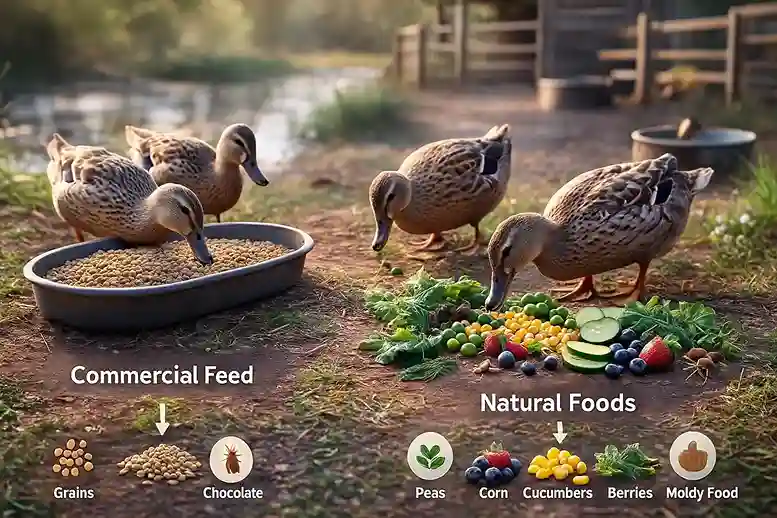
Commercial pellets supply essential nutrients, but ducks benefit most from a diet that mimics what ducks eat in the wild. Mix pellets with grains, leafy greens, and occasional protein sources such as mealworms. This combination encourages natural foraging behavior while ensuring balanced nutrition. You can scatter greens and grains across their area so ducks stay active while eating. Variety keeps them engaged and prevents dietary boredom.
Keep Feeding Areas Clean
Cleanliness protects ducks from bacteria and parasites. Always remove old or wet feed before refilling trays. Avoid feeding on muddy ground, and instead, use shallow dishes or raised feeders. Regular cleaning reduces mold and disease risk. Also, keep their water containers fresh and deep enough for easy dipping.
Watch for Health Clues
Healthy ducks show clear signs: bright eyes, active movement, and glossy feathers. Droppings also reveal a lot. Normal droppings are firm with white caps, while watery or discolored waste may signal poor diet or infection. If ducks seem lethargic or stop eating, adjust portions or check feed freshness.
By practicing mindful feeding and observing behavior, you’ll quickly learn what do ducks eat best. These habits lead to happier, more resilient ducks that thrive under your care.
Seasonal Feeding Adjustments
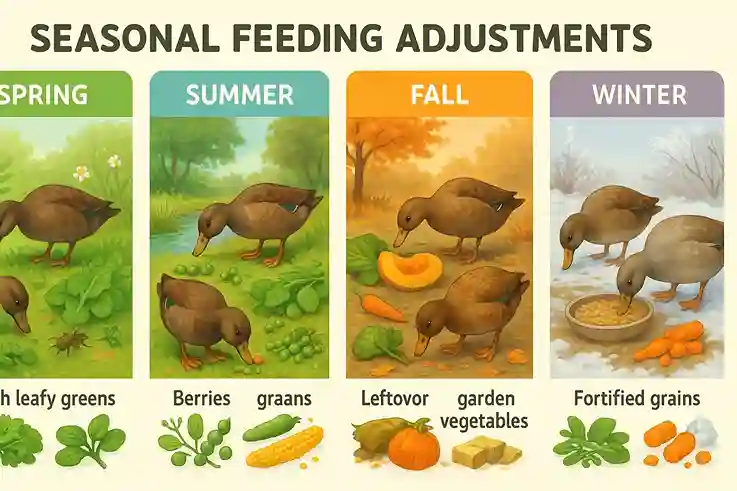
What do ducks eat changes naturally with the seasons, and adjusting their diet helps them stay strong year-round. Ducks experience different energy needs depending on temperature, daylight, and food availability. By tailoring their meals to the season, you support better health, consistent egg production, and steady growth.
Feeding Ducks in Winter
Cold weather increases a duck’s energy demands. Ducks burn more calories to stay warm, so their diet should include more energy-rich grains like cracked corn, oats, and barley. These grains provide extra warmth and stamina, especially for free-range ducks exposed to the cold. Adding a small amount of black oil sunflower seeds can also boost healthy fat intake for insulation and feather condition.
Because insects and greens become scarce, winter feeding relies mostly on stored grains, commercial pellets, and occasional kitchen vegetables. You can supplement with chopped cabbage or kale for vitamins and minerals. Moreover, always ensure feed stays dry and mold-free, since moisture causes spoilage in freezing conditions.
Feeding Ducks in Summer
During summer, ducks are more active and can forage easily. Their natural diet expands to include fresh greens, aquatic plants, insects, and snails. Therefore, lighter, more protein-rich foods work best. Offer peas, spinach, lettuce, or small portions of mealworms to match what ducks eat in the wild.
Avoid high-fat or dense grains during extreme heat, as they can cause sluggishness. Instead, focus on fresh vegetables and proteins that promote hydration and support molting. Scatter greens or floating feed on shallow water to encourage natural feeding habits while keeping them cool.
Hydration in Hot Weather
Water becomes crucial in summer. Ducks need constant access to clean, cool water for drinking and bathing. Warm or stagnant water can quickly lead to bacteria growth, so replace it often. Placing water containers in shaded areas helps maintain temperature. Additionally, shallow pools let ducks regulate body heat naturally.
By adapting what ducks eat through the seasons—more grains in winter and more greens in summer—you ensure balanced nutrition all year long. This thoughtful approach keeps your flock healthy, active, and thriving regardless of the weather.
Supplements and Grit for Better Digestion
Understanding what do ducks eat goes beyond grains and greens—proper digestion and nutrient absorption depend on vital supplements like grit, calcium, and niacin. Ducks don’t have teeth, so they rely on these elements to break down food and maintain strong bones, healthy feathers, and efficient metabolism. Including these small but powerful additions in their diet ensures lasting health and productivity.
The Role of Grit in Digestion
Grit acts as a natural grinder inside a duck’s gizzard. Since ducks swallow their food whole, grit—tiny stones or coarse sand—helps crush and digest grains, seeds, and other hard foods. Without grit, food remains undigested, leading to poor nutrient absorption and possible digestive blockages. Ducks that forage outdoors usually find enough grit naturally, but confined or pen-raised ducks need supplemental grit provided in small containers near their feeding area. It’s simple yet crucial for their digestive health.
Calcium for Strong Bones and Eggshells
Calcium plays an essential role, especially for egg-laying ducks. A calcium-rich diet ensures strong bones and prevents thin or misshapen eggshells. During peak laying seasons, ducks require extra calcium to support frequent egg production. Crushed oyster shell or limestone grit makes an excellent natural supplement. You can serve it in a separate dish, allowing ducks to consume it as needed. Regular calcium intake also helps prevent bone weakness in older birds.
Niacin for Growing Ducklings
Ducklings, in particular, need niacin (vitamin B3) for proper leg and joint development. Without enough niacin, they may develop leg deformities or walking difficulties. Commercial chick feed often lacks sufficient niacin for ducklings, so adding brewer’s yeast to their diet helps meet this need. Sprinkle one tablespoon per cup of feed for a safe boost.
By offering grit, calcium, and niacin-rich supplements, you strengthen digestion, bone health, and overall vitality. These simple additions align closely with what ducks eat in nature—helping every duck, from tiny ducklings to mature layers, grow healthy and thrive.
Creating a Balanced Feeding Routine
A well-planned feeding schedule helps maintain consistent nutrition and ensures ducks stay healthy throughout every stage of life. When you understand what do ducks eat and how their needs shift through the day, you can create a routine that supports steady growth, vibrant feathers, and strong immunity. Ducks thrive on consistency—feeding them at the same times daily builds trust and keeps their digestion regular.
Combining All Essential Elements
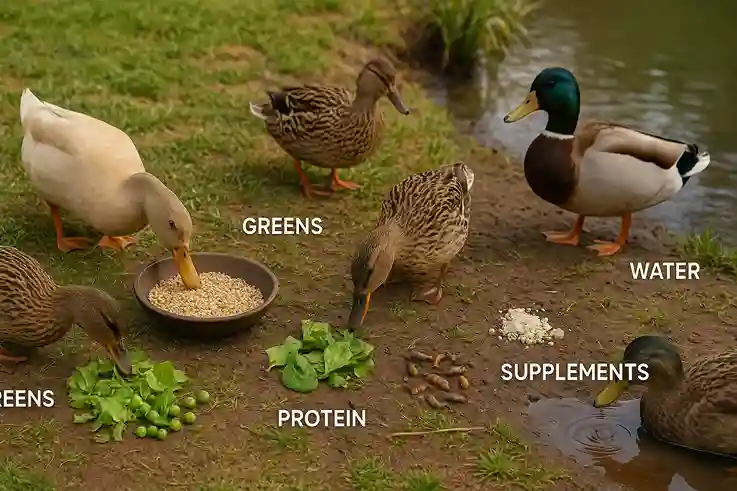
A balanced feeding plan blends grains, greens, protein, and clean water. Grains like oats, barley, and corn supply energy for movement and warmth. Fresh greens such as lettuce, spinach, and peas offer vitamins and fiber, improving digestion and feather shine. Protein from insects or mealworms builds muscle and supports molting. Supplements like grit, calcium, and brewer’s yeast enhance nutrient absorption and bone strength. Together, these elements mimic what ducks eat naturally, ensuring both physical health and behavioral enrichment.
Example Daily Feeding Schedule
Morning: Start with a grain mix of oats, wheat, and a small amount of corn. Add a sprinkle of grit nearby to aid digestion. This breakfast fuels activity and warmth through the morning.
Midday: Offer fresh greens—lettuce, kale, peas, or chopped vegetables. Allow ducks to graze freely if space allows. This helps hydration and adds minerals missing from dry feed.
Evening: Provide protein-rich foods such as mealworms, small insects, or a mix of pellets and greens. Ducks naturally feed more before dusk, storing energy for the night.
All Day: Keep clean, cool water available for drinking and bathing. Ducks need to dip their heads often to clean their nostrils and stay comfortable.
Consistency and Observation
Feed at consistent times every day. Ducks adapt quickly, becoming calmer and more predictable when they know when food arrives. Observe their behavior—active ducks with smooth feathers and bright eyes indicate good nutrition. Uneaten food or fatigue may suggest overfeeding or imbalance.
By following a steady routine that reflects what ducks eat in the wild, you’ll build a healthier, more content flock with stronger feathers, improved digestion, and reliable egg production
Common Feeding Mistakes to Avoid
Even experienced keepers sometimes overlook key details in a duck’s diet. Knowing what do ducks eat is vital, but understanding what not to do is just as important. Simple feeding mistakes can quietly affect health, egg quality, and growth. Avoiding these common errors will keep your ducks strong, active, and disease-free.
Overfeeding or Using Only One Type of Food
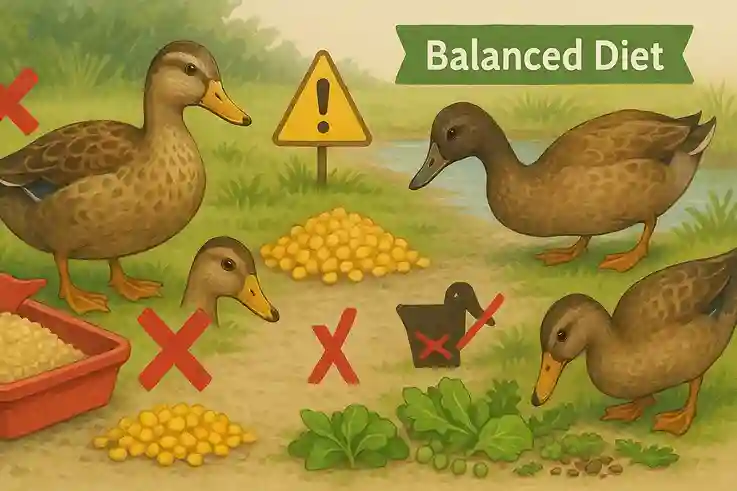
Ducks love to eat, but giving them too much can lead to obesity and nutrient imbalance. Overfeeding also causes messy pens and spoiled food. Likewise, feeding only one type of food—such as corn or pellets—limits nutrition. Ducks need a mix of grains, greens, and protein sources to stay healthy. Therefore, rotate their feed regularly to mimic what ducks eat in nature and ensure every nutrient is covered.
Ignoring the Water Supply
Clean, fresh water is just as essential as food. Ducks use water to swallow, digest, and keep their bills and eyes clean. Dirty or stagnant water invites bacteria, mold, and parasites that can make your flock sick. Always provide deep containers for dipping their heads and change the water daily. In warm weather, shaded water containers prevent overheating.
Forgetting Grit or Calcium for Layers
Without grit, ducks can’t properly digest grains or seeds. Likewise, laying ducks without enough calcium produce thin or misshapen eggshells. Keep small dishes of grit and crushed oyster shell nearby so ducks can take what they need naturally. This simple step supports healthy digestion and stronger bones.
Feeding Leftovers or Moldy Food
While ducks often eat kitchen scraps, not all leftovers are safe. Spoiled, salty, or moldy food can cause poisoning and digestive distress. Always check feed for freshness, and discard anything damp or discolored. Moldy feed can quickly lead to illness or even death.
By avoiding these mistakes and focusing on balanced, clean feeding, you’ll maintain the ideal conditions for strong, healthy birds. When you combine care, variety, and vigilance, your ducks will reflect the best results of thoughtful feeding—exactly what ducks eat to thrive.
For reliable, research-based information on duck feeding practices, visit the Feeding Ducks – Poultry Extension by North Carolina State University — a trusted U.S. resource detailing feed types, nutritional needs, and proper feeding equipment.
FAQs: What Do Ducks Eat and How to Feed Them Safely
Conclusion
Understanding what do ducks eat is the key to raising a strong, healthy, and happy flock. A balanced diet built from grains, greens, proteins, and clean water mirrors what ducks eat in the wild and supports their natural instincts. When you combine natural foods with quality feed, you ensure proper growth, vibrant feathers, and steady egg production all year long.
Equally important, avoiding harmful foods like bread, processed snacks, and toxic plants keeps ducks safe from malnutrition and illness. Clean feeding areas, constant access to fresh water, and supplements like grit and calcium further strengthen their digestion and bone health.
In the end, feeding ducks well isn’t just about nutrition—it’s about care, observation, and consistency. When you understand their needs and adjust their meals with the seasons, your ducks will reward you with energy, beauty, and contentment.
Healthy ducks begin with thoughtful feeding—every meal you offer shapes their strength, spirit, and joy.
Have your ducks shown unique food preferences or funny feeding behaviors?
Share your experiences, questions, or favorite duck-feeding tips in the comments below! Your insight might help another duck keeper build a healthier, happier flock.

Michael Reyes is a versatile blogger with a primary focus on farming and sustainable living. Growing up close to nature, he developed a deep interest in agriculture and enjoys sharing practical tips on backyard farming, modern cultivation techniques, and eco-friendly practices. While farming remains his specialty, Michael also writes on a wide range of topics, from lifestyle and travel to everyday inspiration, making his work relatable to a broad audience.
Outside of writing, Michael enjoys spending time outdoors, experimenting with new farming methods, and exploring different cultures through food and travel. His approachable voice and well-researched insights make his blogs both informative and engaging.