
How does homeschooling work in today’s America? Families across the nation are shifting toward flexible learning at home. Parents seek control. Children crave comfort. Together, they shape education around personal growth. According to the U.S. Department of Education, homeschooling enrollment has surged in recent years, nearly doubling since before 2020. The trend cuts across cities, suburbs, and rural communities alike. Families cite reasons ranging from safety to tailored instruction. Some want more time together; others value freedom from rigid schedules.
Meanwhile, more parents are rethinking traditional schooling as classrooms struggle to meet diverse learning needs. Technology now bridges the gap, making lessons interactive and adaptive. What once seemed unconventional is becoming mainstream. And the truth about modern homeschooling may surprise you — it’s not isolation, but innovation. Families aren’t withdrawing from learning; they’re redefining it, creating dynamic home classrooms that mirror the future of American education.
The Meaning of Homeschooling in the U.S.

Homeschooling means that parents take full responsibility for their child’s education outside traditional school walls. Lessons happen at home, in libraries, or even outdoors. Parents choose what and how their children learn. Parents teach. Children learn. Both grow together. The home becomes a flexible classroom where learning follows curiosity instead of a fixed schedule.
Unlike online schooling, homeschooling is not always tied to a formal program. In online schools, certified teachers deliver lessons remotely. Homeschooling, however, gives parents control over materials, methods, and pace. Private schooling also differs. It involves tuition, structured curriculums, and licensed educators. Homeschooling removes those boundaries, allowing families to design a learning path aligned with their child’s interests and values.
Every U.S. state governs homeschooling differently. Some states, like Texas, have minimal oversight. Others, such as New York, require notice, recordkeeping, and assessments. This variation ensures local flexibility but also demands awareness from parents.
Still, across the country, the purpose remains constant — empowering families to educate their children in ways that nurture individuality and self-discipline. In essence, homeschooling in America stands as both a legal choice and a lifestyle that values freedom, growth, and meaningful connection through learning.
“Homeschooling is not about bringing school home; it’s about making home a place where learning never stops.”
How Does Homeschooling Work in Practice?
How does homeschooling work in daily life for American families? It begins with rhythm, not routine. Parents design a learning environment that fits their child’s pace, curiosity, and abilities. The structure may look different from household to household, yet the goal stays the same — steady growth through freedom and connection.
Lesson Planning: Purpose Over Perfection
Parents plan lessons around goals, not grades. A week’s schedule may include reading, math, science, and creative time, but the timing remains flexible. Some families follow pre-set curricula, while others craft custom lessons from books, online tools, or field trips. Parents guide lessons. Children explore subjects. Progress builds gradually.

For example, a child learning fractions might bake cookies to understand measurement. Real-world application strengthens memory and comprehension. In contrast, traditional classrooms often limit hands-on learning. Homeschooling allows lessons to flow naturally into daily life, turning ordinary tasks into educational opportunities.
Assessment: Growth Beyond Grades
Testing rarely defines success in homeschooling. Parents track progress through observation, conversation, and projects. Portfolios replace report cards. Learning becomes visible through action — a well-written essay, a completed science project, or a confident discussion. As a result, students learn to evaluate their own improvement, not just chase grades.
This reflective approach builds accountability. Children learn responsibility for their own achievements, a skill often missing in rigid academic systems.
Flexibility: Learning Without Boundaries
Homeschooling thrives on flexibility. Lessons adjust to moods, interests, and even weather. If a child shows interest in astronomy, the family might visit a local observatory that week. Learning moves with life, not against it.
Different learning styles also find space here. Visual learners use diagrams and videos. Auditory learners absorb through discussion and storytelling. Kinesthetic learners move, build, and experiment. Each method reinforces understanding because teaching adapts to the learner — not the other way around.
Ultimately, homeschooling in practice feels personal yet purposeful. Parents guide, children lead, and together they create a cycle of continuous discovery. The home becomes more than a classroom — it becomes a living, breathing space where curiosity drives education and progress emerges from connection.
Legal Requirements by State
Homeschooling in the United States doesn’t follow one national rulebook. Each state creates its own laws, forming a diverse legal landscape for families. Some states welcome broad freedom; others require detailed documentation. Understanding local expectations helps parents stay compliant while maintaining flexibility in their child’s education.
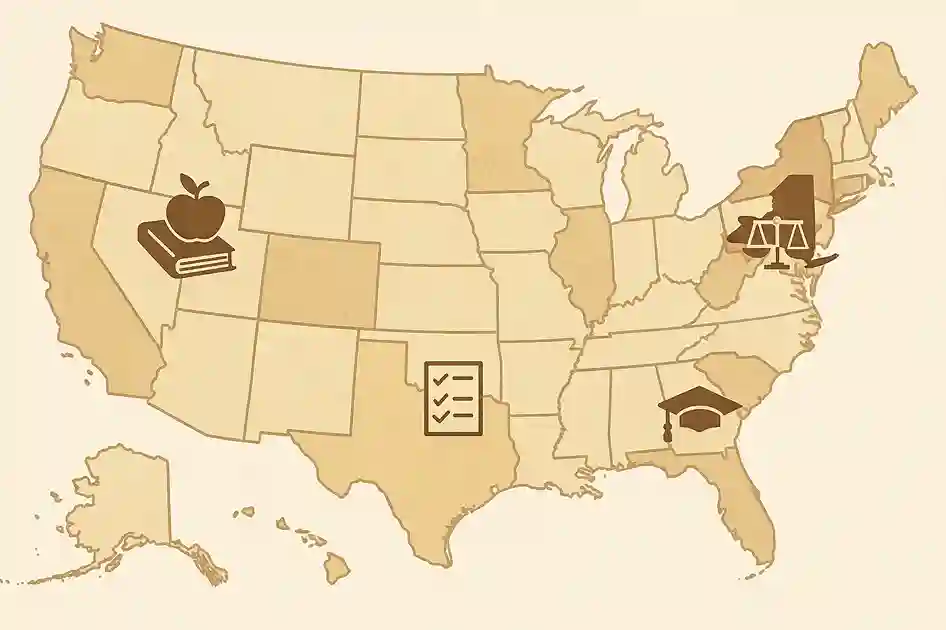
State-by-State Variation
In America, homeschooling laws differ widely. Law requires notice. Parent submits intent. School district approves. Yet how these steps unfold depends on location.
For instance, Texas represents one of the most homeschool-friendly states. Families there enjoy minimal oversight. Parents simply ensure lessons include reading, spelling, grammar, mathematics, and citizenship. No annual tests, no approval forms, and no mandatory reporting exist. The law trusts parents to educate responsibly.
In contrast, New York enforces strict regulations. Parents must submit an Individualized Home Instruction Plan (IHIP) and quarterly progress reports. Children also complete standardized assessments at certain grade levels. The system ensures academic accountability but adds paperwork and supervision.
Between these two extremes, many states find middle ground. For example, in Florida, parents file a notice of intent and maintain portfolios for evaluation. As a result, the balance between freedom and oversight shifts according to each region’s philosophy about education.
Understanding Compliance Steps
Most states expect at least three actions from parents:
- Notification: Families inform the local school district of their intent to homeschool.
- Curriculum Planning: Parents outline or select educational materials.
- Assessment or Recordkeeping: Some states require periodic evaluations, while others accept parental records.
Keeping documentation clear helps avoid disputes. In states with formal review systems, accurate records protect parents and validate the student’s academic progress.
Checking Reliable Sources
Because homeschooling laws evolve, families should always verify information through official state education departments or government websites. Each site explains reporting timelines, testing requirements, and available resources.
Tip: For official homeschooling guidance, visit the U.S. Department of Education at www.ed.gov.
Legal awareness ensures confidence. Compliance builds trust. Families who know the rules gain peace of mind — and more time to focus on what matters most: learning together at home.
Common Homeschooling Methods
Homeschooling in the U.S. is far from one-size-fits-all. Parents choose from several teaching methods, each offering distinct philosophies and learning rhythms. Some emphasize structure; others encourage freedom. Method guides teaching. Teaching shapes curiosity. The approach a family selects often depends on their child’s personality, pace, and long-term goals.
The Classical Method
Rooted in ancient Greek and Roman education, the Classical Method focuses on three stages: grammar, logic, and rhetoric. Younger students memorize facts and language foundations. Middle learners analyze, question, and connect information. Older students learn to express ideas clearly through speech and writing. This method values critical thinking and structured reasoning. Parents act as mentors guiding the student’s intellectual discipline.
The Charlotte Mason Approach
Developed by British educator Charlotte Mason, this method nurtures moral, intellectual, and artistic growth. Learning occurs through “living books,” nature walks, and narration rather than rote drills. Lessons are short and engaging. Children observe closely, write reflections, and form ideas through real experiences. The goal is to instill lifelong curiosity, not short-term memorization.
Unschooling
Unschooling challenges traditional education entirely. Children direct their own learning, following interests instead of a fixed curriculum. A child fascinated by space might spend weeks studying astronomy through documentaries, projects, and online communities. Parents provide resources, not rigid schedules. The focus stays on exploration and intrinsic motivation.
Montessori-Inspired Learning
Based on Dr. Maria Montessori’s principles, this approach values independence and hands-on learning. Children choose activities within a structured environment, building focus and responsibility. Learning tools encourage sensory discovery — touching, building, and experimenting. The teacher becomes a gentle guide rather than an instructor.
Blended Approaches for Modern Families
Similarly, families mix approaches to suit their children’s needs. One home might blend Classical structure with Charlotte Mason creativity. Another might combine Montessori independence with Unschooling freedom. The strength of homeschooling lies in this adaptability. Parents can shift styles as children grow, ensuring education always fits the learner — not the system.
Benefits and Challenges of Homeschooling
Understanding how does homeschooling work means recognizing that it offers both advantages and obstacles. Every family experiences unique results depending on effort, structure, and support. Benefit motivates. Challenge tests commitment. A balanced view helps parents prepare for success while staying realistic about the daily demands of home education.

The Benefits: Growth Through Freedom
Homeschooling’s greatest strength lies in personalized learning. Each lesson adapts to the child’s interests, pace, and abilities. As a result, children gain deeper understanding and stronger retention. Parents adjust methods instantly when something isn’t working. This flexibility ensures learning fits the student — not the system.
Furthermore, homeschooling promotes emotional safety. Children avoid unnecessary stress, bullying, or rigid competition. They learn in an environment built on trust and empathy. Family discussions replace classroom noise. Therefore, students feel heard, valued, and emotionally secure.
Another major benefit is a flexible pace. Children move faster in subjects they love and slower in areas needing attention. In addition, parents can plan lessons around real-life experiences — museum trips, volunteer work, or travel. Education becomes active, not confined to textbooks.
The Challenges: Effort Behind Independence
However, homeschooling also requires significant time and dedication. Parents act as both teachers and organizers. They plan lessons, grade work, and track progress daily. Consequently, this commitment can overwhelm families balancing work and household duties.
On the other hand, accurate recordkeeping is essential, especially in states with strict regulations. Parents must maintain attendance logs, test scores, and portfolios. Yet, this effort ensures accountability and protects educational credibility for college applications or future transitions.
Another challenge involves limited peer exposure. Homeschooled children may interact less frequently with age-based groups. Nonetheless, community activities, co-ops, and sports programs help bridge this gap. Parents who prioritize social opportunities usually find balanced results.
Ultimately, understanding how homeschooling works means seeing both sides clearly. The benefits empower families to design meaningful learning. The challenges demand patience and consistency. When approached with balance, homeschooling becomes not only education — but transformation.
How to Start Homeschooling in the U.S.
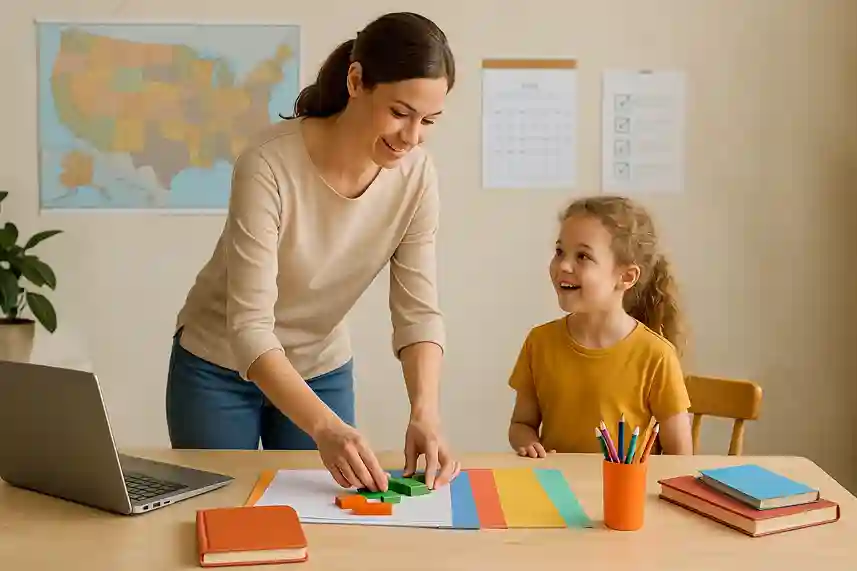
Starting homeschooling in America may feel overwhelming at first, but with structure and clarity, the process becomes empowering. Every journey begins with understanding how homeschooling works within your state’s legal and educational framework. Parent decides. Child begins. Learning starts now.
Research State Laws
Each state governs homeschooling differently, so the first step is learning your state’s specific requirements. For example, some states like Texas ask only for basic subjects, while others, such as New York, require detailed plans and progress reports. Therefore, always consult your state’s Department of Education website for official guidelines. In doing so, you ensure your homeschool operates legally and confidently from the start.
Choose a Curriculum
Once legal steps are clear, select a curriculum that matches your child’s interests and learning style. Moreover, many families blend materials — textbooks, online programs, and experiential learning — for variety and depth. As a result, students stay motivated and parents can adapt easily. The right curriculum should engage the mind, not just fill time.
Create a Daily Schedule
Homeschooling thrives on rhythm. Design a daily routine that balances academics, creativity, and rest. For instance, mornings may focus on reading and math, while afternoons encourage art, science, or outdoor exploration. In contrast to traditional schooling, home education allows flexible pacing and customized breaks.
Track Progress
Documentation is essential for evaluating growth and meeting state requirements. Maintain portfolios, journals, or digital records of assignments. Furthermore, review progress weekly to identify strengths and weaknesses. Consequently, students become active participants in their own learning, not passive receivers.
Connect with Homeschool Groups
Homeschooling doesn’t mean isolation. Join local co-ops, online forums, or regional support networks. Additionally, these communities offer resources, group classes, and social opportunities for children. In turn, parents share ideas and encouragement, strengthening their teaching confidence.
In summary, to begin homeschooling successfully, follow the laws, design structure, and stay connected. Each step builds independence and insight. Parent decides. Child begins. Learning starts now — and the journey grows stronger with every lesson.
How Does Homeschooling Work? – Frequently Asked Questions
Conclusion On How Does Homeschooling Work?
Ultimately, understanding how homeschooling works reveals more than just an alternative to traditional education — it’s a transformation in how families view learning. Parents guide with intention. Children grow with curiosity. Together, they create a flexible, meaningful rhythm that fits their lives. However, success depends on consistency, patience, and connection. Therefore, when families blend structure with freedom, home becomes a thriving classroom. The truth is simple yet powerful — homeschooling works because it adapts, empowers, and inspires. Learning doesn’t end at the school gate; it continues wherever curiosity leads.
What do you think about how homeschooling works in today’s America? Have you tried it, or are you considering the switch?
Share your thoughts, experiences, or questions in the comments below. Your perspective could inspire another family beginning their homeschooling journey.

Ellie Clark is a passionate blogger with a specialty in education, where she shares insights on learning methods, study strategies, and ways to make knowledge more accessible. With a background in teaching and a love for lifelong learning, she brings clarity and creativity to her writing, helping readers of all ages unlock their potential. While education remains her core focus, Ellie also writes on a variety of other topics, including lifestyle, travel, and personal development, giving her blog a well-rounded appeal.
When she’s not writing, Ellie enjoys reading, exploring new cultures, and spending time in nature. Her approachable style and thoughtful advice make her a trusted voice for readers seeking both guidance and inspiration.