
Turkey Eggs offers a surprising boost for anyone seeking variety and wellness. These eggs deliver dense nutrients that support energy, strength, and balance. Compared with chicken eggs, turkey eggs feel richer and taste creamier. Their yolks appear deeper, signaling higher vitamin and mineral content.
Chicken eggs dominate kitchens, yet turkey eggs quietly outshine them in nutrition and texture. Each egg carries more protein, more healthy fat, and a fuller flavor. Because turkeys lay fewer eggs, they remain rare on most store shelves. Still, more health-conscious eaters are now exploring this hidden gem.
Farmers’ markets and small farms have begun spotlighting turkey eggs as natural power foods. Nutrition experts note their superior density and satisfying taste. In short, turkey eggs blend tradition, nourishment, and novelty. Their growing demand shows one truth clearly: people are rediscovering real, wholesome nutrition through simple, authentic foods.
What Makes Turkey Eggs Different

Turkey eggs differ from chicken eggs in several striking ways. They are larger, averaging nearly 90 grams, while chicken eggs weigh about 60 grams. Their shells are thicker, speckled, and stronger, which helps them stay fresh longer. Moreover, this durability protects the yolk and preserves its natural richness.
The taste is richer and slightly earthy. The texture feels dense and creamy, giving every dish a smoother, more satisfying bite. Additionally, the higher yolk-to-white ratio creates a deeper flavor that stands out in baking and breakfast recipes.
Because of their size and structure, turkey eggs hold more nutrition per serving. They offer more protein, healthy fat, and essential vitamins than chicken eggs. Therefore, they fuel the body with lasting energy and balanced nourishment.
More importantly, their nutrition profile stands out for several reasons.
| Feature | Turkey Eggs | Chicken Eggs |
|---|---|---|
| Average Weight | ~90 g | ~60 g |
| Shell Thickness | Thick, speckled | Thin, smooth |
| Taste | Rich and creamy | Mild and light |
| Texture | Dense, custard-like | Fluffy, airy |
| Nutrient Density | Higher per egg | Moderate |
Turkey Egg Nutrition Breakdown
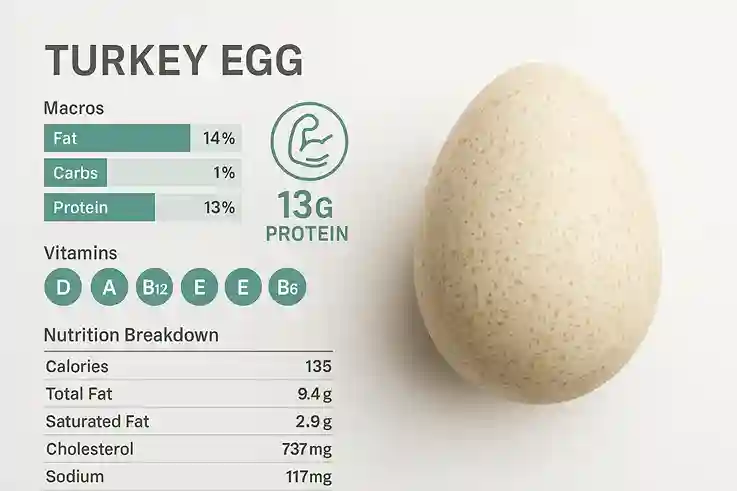
Turkey Eggs delivers more than flavor — it brings a powerhouse of health benefits in every bite. These eggs pack superior protein, rich vitamins, and essential minerals that support overall wellness. Compared with chicken eggs, they supply slightly more calories but deliver higher nutrient density. Each component in a turkey egg contributes directly to your body’s daily function and long-term vitality.
The Core Nutritional Facts
Turkey eggs are nutrient-rich and satisfy hunger efficiently. Their denser composition offers lasting energy and balanced nourishment. Moreover, the nutritional content supports muscles, brain, and immune function.
| Nutrient (per 100g) | Turkey Egg | Chicken Egg |
|---|---|---|
| Calories | 171 kcal | 155 kcal |
| Protein | 13.7 g | 12.6 g |
| Total Fat | 11.9 g | 10.6 g |
| Cholesterol | 933 mg | 373 mg |
| Vitamin B12 | 2.1 µg | 1.1 µg |
| Vitamin D | 1.7 µg | 2.0 µg |
| Iron | 3.2 mg | 1.8 mg |
| Selenium | 32 µg | 28 µg |
| Omega-3 Fatty Acids | 120 mg | 70 mg |
Protein Quality That Fuels Strength
Protein builds muscle. Turkey eggs supply complete amino acids essential for growth and repair. Additionally, they sustain energy levels throughout the day, helping the body recover after workouts or daily activities. Because of their high biological value, the protein in turkey eggs digests efficiently, ensuring maximum absorption.
Vitamins and Minerals That Power Wellness
Iron supports red blood cells. Vitamin D strengthens bones. Moreover, vitamin B12 aids nerve health and enhances metabolism. Selenium, an antioxidant mineral, defends cells from stress and supports immune response. These micronutrients work in synergy, making turkey eggs a nutrient-dense food that promotes balance and vitality.
Healthy Fats and Omega-3s for Heart and Mind
Turkey eggs contain healthy fats that help absorb fat-soluble vitamins. Additionally, omega-3 fatty acids improve heart rhythm, brain performance, and joint health. As a result, regular but moderate consumption supports cardiovascular wellness and cognitive function.
In summary, Turkey Eggs Nutrition delivers a compact blend of energy, protection, and renewal. Their superior nutrient profile makes them ideal for people who value natural, whole-food sources of nourishment. Therefore, whether scrambled or baked, each turkey egg offers strength, vitality, and a touch of wholesome satisfaction.
United States Department of Agriculture FoodData Central: “Egg, turkey, whole, fresh, raw”
Key Health Benefits of Turkey Eggs
Turkey Eggs offers a range of health advantages that go beyond taste. Each egg combines essential nutrients that help the body function smoothly and feel energized. Because of their dense composition, turkey eggs contribute to strength, recovery, and overall wellness. Moreover, their nutrient balance supports both physical and mental performance. Below are the key health benefits explained systematically.
Boosts Energy and Endurance
Turkey eggs provide high-quality protein and healthy fats that fuel the body. Protein builds muscle. Fat sustains energy between meals. Additionally, their natural amino acid profile supports cell repair and promotes steady metabolism. As a result, eating turkey eggs helps maintain consistent energy levels throughout the day. They work especially well for athletes, busy professionals, and active individuals needing lasting fuel.

Supports Immunity Naturally
Strong immunity starts with proper nourishment. Turkey eggs contain zinc, selenium, and vitamin A—three essential elements for immune defense. Zinc aids in healing and cell growth. Selenium acts as an antioxidant, protecting cells from damage. Moreover, vitamin A enhances the body’s ability to resist infections. Together, these nutrients form a powerful shield that keeps the immune system resilient.
Improves Brain Health and Focus
Choline and omega-3 fatty acids play crucial roles in brain development and function. Choline sharpens memory and concentration. Omega-3s strengthen neural connections and reduce inflammation. Additionally, these nutrients support mood stability and cognitive performance. Therefore, regular consumption of turkey eggs can contribute to sharper focus and improved mental clarity.
Promotes Skin Glow and Vitality
Healthy skin begins with nutrition. Turkey eggs supply vitamins A, D, and E, which protect and renew skin cells. Moreover, their proteins and minerals support collagen production, improving elasticity and tone. As a result, the skin appears smoother, hydrated, and naturally radiant. Nutrient synergy within turkey eggs helps combat dullness and premature aging, promoting a youthful, healthy look.
In essence, Turkey Eggs nurtures the body from the inside out. Their balanced composition enhances energy, immunity, brain power, and skin health. Therefore, adding them to your diet can lead to a stronger, brighter, and more vibrant life.
Comparing Turkey Eggs with Chicken Eggs
When it comes to Turkey Eggs, the differences from chicken eggs are both nutritional and sensory. Turkey eggs deliver a denser nutrient load and a richer, more satisfying flavor. Their higher protein, fat, and vitamin content make them an excellent choice for anyone seeking wholesome energy and lasting fullness. Moreover, they bring a creamy texture and deep taste that elevate everyday meals.
Nutritional Comparison at a Glance
The table below highlights how turkey eggs stack up against chicken eggs. Even small differences in these values create a notable impact on health and satiety.
| Nutrient (per 100g) | Turkey Eggs | Chicken Eggs |
|---|---|---|
| Calories | 171 kcal | 155 kcal |
| Protein | 13.7 g | 12.6 g |
| Total Fat | 11.9 g | 10.6 g |
| Cholesterol | 933 mg | 373 mg |
| Vitamin A | 280 IU | 270 IU |
| Vitamin B12 | 2.1 µg | 1.1 µg |
| Vitamin D | 1.7 µg | 2.0 µg |
| Iron | 3.2 mg | 1.8 mg |
| Selenium | 32 µg | 28 µg |
| Omega-3 Fatty Acids | 120 mg | 70 mg |
Flavor and Texture Differences
Turkey eggs feel creamier and taste richer due to their higher fat and yolk ratio. Additionally, their thicker shells preserve freshness, which enhances flavor. The texture is denser, making them ideal for baking and hearty breakfast dishes. In contrast, chicken eggs are lighter and fluffier, which suits everyday cooking and quick meals.
Moreover, the bold taste of turkey eggs pairs beautifully with fresh herbs, vegetables, or grains. This complexity adds depth to recipes while providing more nutritional satisfaction per bite
The Nutrient Edge
Because turkey eggs contain more protein, vitamins, and minerals, they keep hunger away longer. As a result, they provide steady energy and better nourishment. Therefore, people looking for nutrient-dense foods may find turkey eggs more fulfilling than their chicken counterparts.
Turkey eggs satisfy longer. They fuel better.
Who Should Eat Turkey Eggs (and Who Shouldn’t)
Turkey Eggs offers benefits for many, but not everyone should consume them freely. Their rich nutrient content makes them ideal for active individuals, while certain health conditions may require moderation. Maintaining balance ensures you gain the most value without overindulgence. Moreover, understanding who benefits most helps make smarter dietary choices.

Ideal for Active and Growing Individuals
Turkey eggs serve as an excellent source of complete protein. They contain all essential amino acids needed for muscle repair and growth. Therefore, athletes, gym-goers, and those on high-protein diets can benefit greatly. The combination of protein and healthy fats keeps energy levels stable throughout intense activity or long workdays.
Additionally, growing teens and young adults can rely on turkey eggs to support development. Their vitamins and minerals—especially iron, vitamin B12, and selenium—contribute to strong bones, steady energy, and healthy metabolism. As a result, including them a few times a week promotes sustainable strength and vitality.
Best for Balanced, Nutrient-Focused Diets
Turkey eggs fit well into balanced eating plans emphasizing whole, nutrient-dense foods. Moreover, their high satiety factor can help reduce unnecessary snacking. People aiming to manage weight naturally may find turkey eggs a valuable part of breakfast or lunch. However, moderation remains key, as even nutrient-rich foods can become excessive when overconsumed.
When to Exercise Caution
Although Turkey Eggs Nutrition provides immense benefits, some individuals should limit or avoid them. People with high cholesterol may need to consume them sparingly since turkey eggs contain nearly double the cholesterol of chicken eggs. Additionally, anyone with egg allergies should avoid them entirely. Symptoms such as rashes, swelling, or digestive discomfort signal allergic responses.
Moreover, pregnant women or individuals with weakened immune systems should ensure turkey eggs are fully cooked to avoid potential bacterial exposure.
In summary, turkey eggs are ideal for athletes, growing teens, and those seeking nutrient-rich meals. However, they require caution for people managing cholesterol or allergies. Balanced consumption allows you to enjoy their superior nutrition safely and effectively.
How to Add Turkey Eggs to Your Diet
Turkey Eggs fits easily into everyday meals once you know how to prepare them. Their rich texture and creamy taste make them perfect for both simple and creative dishes. Moreover, their versatility allows you to enjoy them at breakfast, lunch, or dinner while benefiting from superior nutrition.
Start with the Basics: Boiled or Scrambled
Boiling turkey eggs keeps nutrients intact and makes them easy to digest. Soft-boiled eggs taste creamy, while hard-boiled versions work well for salads or snacks. Scrambled turkey eggs, on the other hand, deliver a richer, smoother texture than chicken eggs. Additionally, adding herbs or sautéed vegetables enhances both taste and nutrition.
Dependency tip: Cook fully. Enjoy safely. Proper cooking eliminates harmful bacteria like Salmonella, ensuring each meal remains both healthy and satisfying.
Try Baking for a Hearty Twist
Turkey eggs perform beautifully in baked dishes. Because of their higher fat and yolk content, they add moisture and depth to quiches, muffins, or casseroles. Moreover, they create a golden finish and fuller flavor that complements whole grains and vegetables. For a quick, nutrient-rich lunch, try baking a turkey egg frittata with spinach, onions, and a sprinkle of cheese.
Blend Them Smartly in Smoothies
For those seeking an energy boost, lightly cooked turkey eggs can be added to smoothies. They provide protein and creaminess without overpowering flavor. Additionally, blending them with banana, oats, and almond butter creates a satisfying drink that sustains energy for hours.
Quick Recipe Idea: Turkey Egg Power Breakfast Bowl
Create a balanced meal with:
- 2 boiled turkey eggs (sliced)
- ½ cup quinoa or brown rice
- Fresh spinach, avocado slices, and cherry tomatoes
- A drizzle of olive oil and lemon juice
This bowl balances protein, healthy fats, and fiber. As a result, it fuels your morning with energy and focus.
In summary, eggs can be boiled, scrambled, baked, or blended to enrich your daily diet. Cook fully. Enjoy safely. When prepared thoughtfully, they transform simple meals into nourishing, flavor-packed experiences.
Frequently Asked Questions (FAQ)
Conclusion Rediscovering Health
In conclusion, Turkey Egg stands out as a powerful source of balanced nourishment and natural energy. Moreover, it brings together essential proteins, vitamins, and minerals that promote overall wellness and long-lasting vitality. Additionally, its rich, creamy flavor offers satisfaction beyond ordinary meals, turning simple recipes into wholesome experiences.
Furthermore, turkey egg provide higher nutrient density than chicken egg, giving your body more value in every bite. Therefore, they suit individuals seeking clean, protein-rich foods that support strength and recovery. Likewise, their dense yolks contribute vital elements like vitamin B12, selenium, and omega-3 fatty acids, all working together to sustain energy and cellular health.
As a result, regular but moderate inclusion of turkey egg in your diet can enhance brain focus, skin glow, and immune defense. Meanwhile, their hearty texture and full taste make them a joy to cook and eat daily. In addition, they offer an authentic farm-to-table experience that reminds us of the importance of natural, minimally processed foods.
However, mindful eating remains key, since their high cholesterol content requires balanced consumption. Still, when eaten wisely, turkey egg strengthen the connection between nutrition and well-being. Ultimately, their growing popularity reflects a collective return to real, nutrient-dense foods that nourish body and spirit.
In essence, turkey egg symbolize health, tradition, and satisfaction. Therefore, every bite reminds us that the simplest foods, when chosen thoughtfully, can powerfully transform the way we eat, live, and feel each day.
Have you ever tried a turkey egg? Share your thoughts or favorite way to enjoy them in the comments below!
Start today — cook thoughtfully, eat mindfully, and nourish naturally.