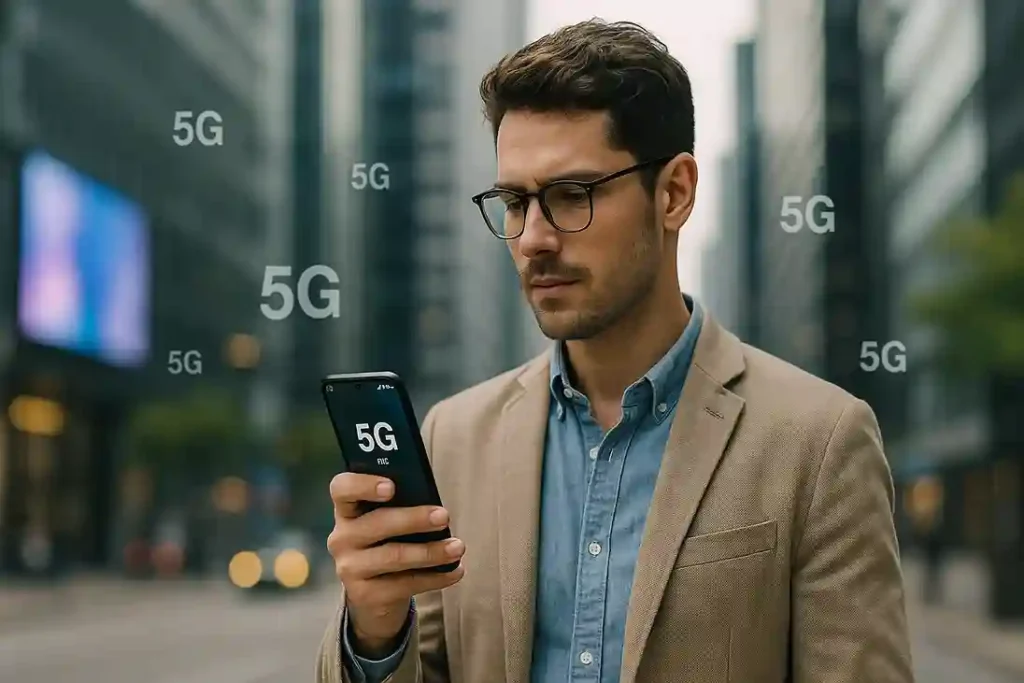
5G UC, short for Ultra Capacity, represents a major leap in mobile connectivity. It delivers higher data speeds, smoother performance, and stronger reliability than standard 5G or LTE. Many users notice their phones suddenly feeling faster — apps open instantly, videos buffer less, and downloads complete in seconds. This noticeable boost isn’t just about hardware; it’s the result of powerful network upgrades and improved spectrum efficiency. By combining mid-band frequencies with advanced signal management, 5G UC moves data more effectively across wider channels.
The outcome is a connection that feels immediate and stable, even in busy areas. As carriers expand coverage, these benefits become more consistent nationwide. In the following sections, you’ll discover how 5G UC achieves this speed, how it differs from regular 5G and LTE, and why it’s transforming the way everyday users experience their devices.
What “5G UC” Really Means
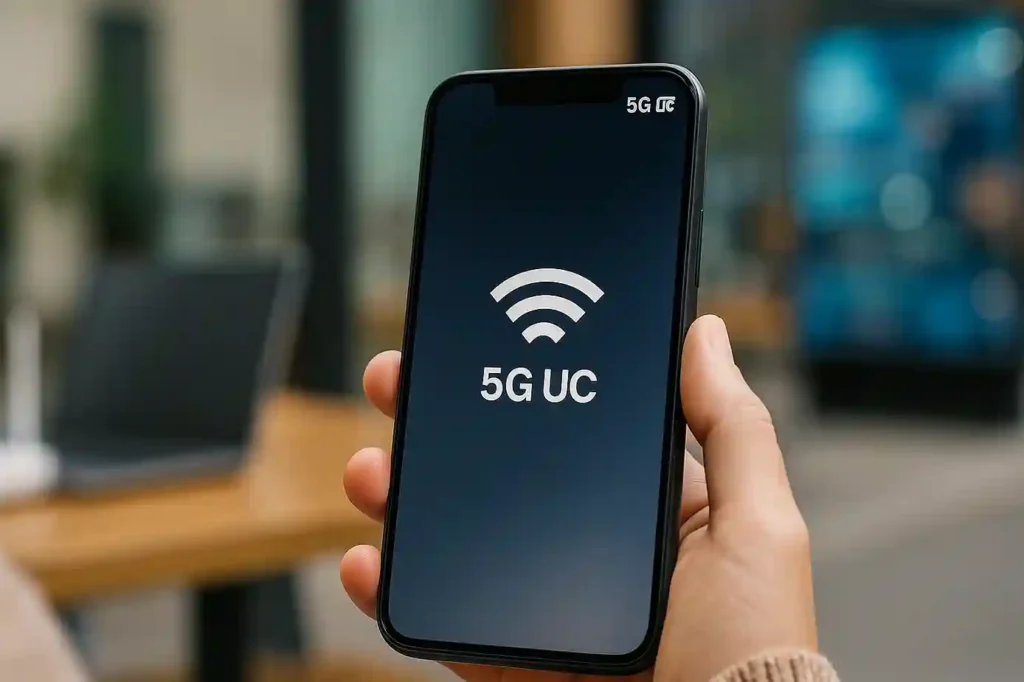
5G UC, or Ultra Capacity 5G, refers to the advanced segment of 5G networks designed to provide faster speeds and more stable connections than basic nationwide 5G. While “5G Nationwide” typically relies on low-band spectrum — offering broad coverage but modest speed improvements — 5G UC primarily uses mid-band frequencies. This mid-band range, usually between 2.5 GHz and 3.7 GHz, delivers the best balance between distance and data capacity. It can transmit far enough to cover large areas while still providing significantly higher throughput than low-band 5G.
In the U.S., major carriers such as T-Mobile and AT&T use the term “5G UC” to indicate when your device is connected to these higher-performance mid-band or, in some cases, high-band (mmWave) networks. When users see the “5G UC” icon on their screens, it means they are in an area with access to a faster, more capable 5G layer — not just the base-level coverage.
However, one of the biggest misconceptions about 5G UC is that it always represents mmWave, the ultra-high-frequency spectrum known for multi-gigabit speeds. In reality, most UC networks rely on mid-band, because it offers both reach and reliability. mmWave, though incredibly fast, has limited range and struggles with walls or obstacles. Mid-band UC overcomes those issues, ensuring strong and consistent performance both indoors and outdoors.
In essence, 5G UC bridges the gap between wide coverage and extreme speed — giving users the kind of performance that feels fast, stable, and dependable in everyday use.
“5G UC isn’t just about faster speeds — it’s about smarter spectrum use that makes every connection feel effortless, wherever you are.”
The Technology Behind 5G UC
A Powerful Mix of Frequencies
5G UC stands apart because it brings together multiple frequency ranges, primarily the C-band (3.7–3.98 GHz), 2.5 GHz, and other mid-band spectrums. Each frequency band has unique strengths. The 2.5 GHz range, for example, travels well over distance and penetrates buildings more effectively than higher frequencies. Meanwhile, the C-band delivers broader bandwidth, allowing more data to move simultaneously. When these frequencies combine, users experience faster speeds and steadier signals — even in crowded urban areas where older networks slow down. This blend ensures that 5G UC provides both reach and capacity, something neither low-band nor mmWave can achieve alone.

Carrier Aggregation: Strength in Numbers
Another essential feature of 5G UC is carrier aggregation, a technology that merges multiple frequency bands into one powerful signal. Instead of relying on a single band, your phone connects to several at once — much like combining multiple lanes on a highway into a superhighway. This method boosts overall capacity and stability, ensuring your connection remains strong even when the network is busy. Carrier aggregation also allows networks to balance loads efficiently, reducing drops and interruptions during peak hours.
Everyday Performance Gains
For users, the benefits are immediate and visible. Apps load faster, streaming services deliver crisp 4K quality with no buffering, and video calls stay clear and consistent, even while moving between towers. Large file transfers complete in seconds, and online games respond almost instantly. Beyond personal use, these improvements also power smart home devices, wearable tech, and connected cars that depend on steady low-latency connections.
5G UC doesn’t just increase speed; it enhances the entire user experience by combining technical precision with real-world reliability. The blend of spectrum layers, wider channels, and carrier aggregation works together to create a seamless connection that feels faster, stronger, and more responsive than ever before.
Why Your Phone Feels Faster Now
The speed you feel on your phone isn’t just a coincidence — it’s the outcome of several technical upgrades working in harmony. 5G UC networks are engineered to improve every layer of the connection process, turning milliseconds of latency into near-instant responses. These small gains add up, transforming how quickly apps open, pages load, and media streams play.
Lower Latency for Instant Response
The biggest reason your phone feels faster is lower latency. Latency measures how long data takes to travel between your phone and the network. On LTE, it often ranges from 50 to 70 milliseconds. On 5G UC, it can drop below 30 milliseconds. That difference means web pages open almost the moment you tap them. Cloud-based apps react instantly. In games, controls feel direct and lag nearly disappears, even in fast online matches.
Smoother Streaming and Browsing
5G UC also makes streaming and browsing smoother. Wider channels and carrier aggregation keep data flowing without congestion. Videos load fast and rarely buffer. Resolution stays high, even when the network is busy. You can stream 4K content, join live video calls, or download large files with consistent speed and clarity.
Handling More Users with Ease
5G UC networks manage more users at once without slowing down. Mid-band and C-band frequencies carry extra capacity that LTE cannot match. Advanced scheduling spreads data evenly across available resources. This means better performance in crowded areas such as stadiums, airports, and city centers.
Smarter Power Management While Moving
Mobility often weakens older networks. 5G UC fixes that with smarter power management and faster handoffs between towers. Your phone adjusts its signal efficiently to maintain speed while saving battery life. You stay connected while traveling without dropouts or long reconnect times.
In short, 5G UC feels faster because it truly is faster — not only in speed but also in response, stability, and energy use. Everything from browsing to gaming now feels instant and effortless.
Comparing 5G UC vs 5G vs LTE
5G UC represents the most capable layer of modern mobile networks. To understand how much faster and more efficient it is, it helps to compare it directly with standard 5G and LTE. Each network type uses different spectrum layers, which determine how far signals can travel and how fast they can move data.
Speed and Latency Comparison
| Network Type | Typical Speed Range | Average Latency | Spectrum Layer | Coverage Strength |
|---|---|---|---|---|
| LTE (4G) | 20–100 Mbps | 50–70 ms | Low-band (below 2 GHz) | Very wide, slower data rate |
| 5G (Standard) | 100–400 Mbps | 40–60 ms | Mix of low- and some mid-band | Broader coverage, moderate speed |
| 5G UC (Ultra Capacity) | 400 Mbps – 1 Gbps+ | Below 30 ms | Primarily mid-band (2.5–3.7 GHz) and selective high-band | Balanced coverage with ultra-fast data |
Understanding the Differences
LTE relies mostly on low-band spectrum, which travels long distances and penetrates walls easily. However, this band offers limited bandwidth, so speeds stay moderate even in ideal conditions.
Standard 5G improved on LTE by mixing low- and mid-band frequencies, giving users faster speeds and lower latency. Yet, its reach and performance still depend on local network capacity.
5G UC, on the other hand, focuses on mid-band and occasionally high-band (mmWave) frequencies. The mid-band range between 2.5 GHz and 3.7 GHz offers wide channels that move data faster while maintaining good range. The result is smoother video playback, responsive apps, and more consistent speeds during peak hours.
Why Latency Matters
Latency — the time data takes to travel between your device and the network — defines how “instant” your connection feels. LTE often has latency between 50 and 70 milliseconds, which can cause visible lag during gaming or video calls. 5G UC reduces this delay to below 30 milliseconds, creating real-time responsiveness. Actions such as scrolling, streaming, or gaming feel immediate because the network reacts almost instantly.
5G UC achieves this advantage through wider bandwidth, advanced antenna systems, and intelligent data scheduling. Together, these upgrades make it the most responsive and capable mobile technology available to consumers today — bridging the gap between speed, reliability, and reach.
5G UC in Everyday Scenarios
5G UC isn’t just a technical improvement — it delivers visible, everyday benefits that change how people use their devices. The faster speeds and lower latency make streaming, gaming, downloading, and productivity smoother and more reliable than ever. However, performance still depends on signal strength, local network capacity, and whether your device supports 5G UC frequencies.

Streaming Without Interruptions
With 5G UC, streaming becomes effortless. 4K videos play smoothly, and skipping ahead happens instantly without buffering delays. Even during busy hours, the connection remains stable because mid-band UC networks handle higher traffic efficiently. Live events and high-resolution streams maintain clarity and synchronization, providing a viewing experience closer to what you’d expect from home Wi-Fi.
Lag-Free Mobile Gaming
Gamers benefit the most from reduced latency. Cloud gaming platforms like Xbox Cloud or NVIDIA GeForce NOW rely on fast, steady connections. On LTE, delays between input and action can ruin gameplay. With 5G UC’s latency below 30 milliseconds, commands register almost instantly. This improvement allows real-time gameplay without lag, even in competitive environments or while traveling.
Faster Downloads and Sharing
Downloading an entire movie or large app update now takes seconds, not minutes. Uploading photos, videos, or documents to cloud storage feels just as quick. The wider bandwidth of 5G UC supports simultaneous data streams, so multiple apps can update or sync in the background without slowing your main task.
Productivity That Keeps Up With You
Work and multitasking feel seamless on 5G UC. File uploads finish quickly, video calls stay clear, and remote work apps sync instantly. Mobile professionals can join meetings, send large attachments, and stream presentations without drops or delays. This reliability makes 5G UC ideal for users who depend on their phones for business and collaboration.
Performance Factors to Remember
While 5G UC offers significant advantages, results vary by location, network congestion, and phone compatibility. Areas with strong mid-band coverage deliver the best speeds and lowest latency. Devices built for UC bands experience the full benefit, while older 5G models may see smaller gains.
In short, 5G UC brings fiber-like performance to mobile users, turning everyday tasks into fast, fluid experiences — from streaming and gaming to working and sharing on the go
The Role of 5G UC in Smart Devices
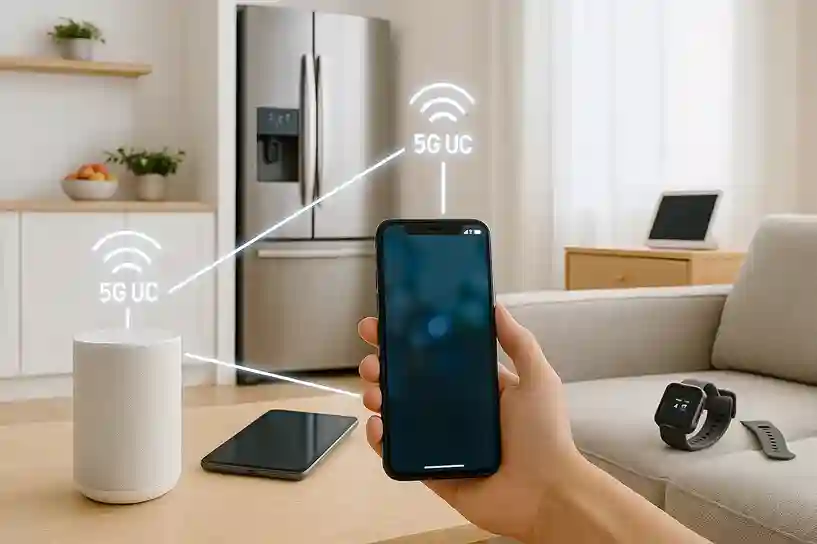
5G UC is transforming more than just smartphones — it’s strengthening the entire ecosystem of smart and connected devices. By improving speed, reliability, and response time, 5G UC creates a network that can support billions of devices working together in real time. This shift marks a critical step toward a truly connected lifestyle, where communication between your devices feels instant and seamless.
Powering the Internet of Things (IoT)
Smart devices — from fitness wearables to connected home systems — depend on fast, stable data links. 5G UC provides this foundation by delivering both speed and low latency. Smart thermostats adjust instantly when you change settings from your phone. Wearables sync health data to the cloud without delay. Even smart home cameras stream high-definition video with minimal lag.
In cars, 5G UC supports advanced driver-assistance systems and real-time navigation. Vehicles can exchange safety data with nearby infrastructure, improving both awareness and reaction times. Fleet operators benefit too, as they can track performance, fuel use, and routes in real time through the cloud.
Real-Time Cloud Syncing
One of the biggest strengths of 5G UC is its ability to handle real-time cloud communication. Devices connected through UC can send and receive large volumes of data almost instantly. For example, smart appliances can run diagnostics and upload data for remote updates. Laptops and tablets can back up documents, photos, or software automatically, without user intervention. This instant connectivity allows smart ecosystems to function continuously and efficiently, without noticeable delays or interruptions.
Part of a Broader 5G Ecosystem
5G UC doesn’t work in isolation — it enhances every type of connected device. Phones benefit from faster app syncing and smoother streaming. Tablets handle video calls, creative workflows, and online collaboration without lag. Laptops use UC’s stable connection to maintain secure, high-speed links for remote work. Together, these devices share information faster and respond more accurately, creating a unified experience across platforms.
In essence, 5G UC provides the connective fabric for the next generation of smart technology. It allows wearables, vehicles, and home devices to work together with the same speed and intelligence users already expect from their smartphones. As 5G UC expands nationwide, it will continue to shape a future where everything digital — from your watch to your car — stays perfectly in sync.
The Future of 5G UC and Beyond
The evolution of 5G UC is far from complete. Networks across the United States are expanding mid-band and mmWave coverage at a steady pace. Carriers are adding more base stations, optimizing tower density, and improving backhaul capacity to handle the growing demand for high-speed data. As these upgrades roll out, users can expect faster speeds, lower latency, and wider access to 5G UC in both cities and suburban areas.
Expanding Mid-Band and mmWave Networks
Mid-band remains the core of 5G UC because it balances speed and coverage. Its frequencies between 2.5 and 3.7 GHz provide the capacity needed for heavy data use without sacrificing signal strength. However, mmWave is also advancing. This high-frequency layer delivers multi-gigabit speeds over shorter distances. As small-cell deployments increase, mmWave will complement mid-band UC by powering dense environments such as stadiums, airports, and downtown business zones. Together, they form a multi-layered network capable of handling massive amounts of data traffic.
The Arrival of 5G-Advanced (Release 18)
The next major milestone is 5G-Advanced, known as Release 18. This upgrade builds on existing 5G UC foundations. It introduces smarter antenna systems, improved energy efficiency, and enhanced AI-driven network management. With these enhancements, 5G UC networks will offer even greater reliability and speed while consuming less power. It will also improve uplink capacity, making it easier for devices to send large amounts of data — a key factor for remote sensors, AR/VR headsets, and industrial automation.
Supporting AR, Smart Cities, and Autonomy
As 5G UC continues to mature, it will power the next generation of connected experiences. Augmented and virtual reality will benefit from its ultra-low latency, allowing real-time rendering and seamless cloud-based processing. Smart cities will rely on UC for infrastructure monitoring, traffic optimization, and emergency response coordination. Autonomous vehicles will use the same network layer to exchange sensor data instantly, improving safety and navigation accuracy.
Building the Foundation for What Comes Next
5G UC is more than a speed upgrade — it’s the backbone of future connectivity. Its mix of mid-band efficiency and scalable architecture prepares the ground for 6G and other next-generation standards. Every improvement made today strengthens the ecosystem for tomorrow’s technologies. As the network expands, users, businesses, and entire industries will benefit from faster, smarter, and more responsive communication — setting the stage for a world where connectivity feels as natural as breathing.
For readers who want a deeper technical overview of how carriers define and implement 5G UC, you can refer to official carrier resources that explain its real-world operation and network design.
Frequently Asked Questions (FAQ)
Conclusion: The Real Power Behind 5G UC
5G UC marks a major step forward in mobile connectivity. It blends the wide reach of low-band networks with the speed and capacity of mid-band and, in some cases, high-band frequencies. The result is a connection that feels faster, stronger, and more reliable in everyday use. Apps open instantly, video calls stay sharp, and downloads finish in seconds. For most users, this improvement happens quietly in the background — yet the difference is easy to feel.
As carriers continue expanding mid-band and mmWave coverage, 5G UC will become the new normal for mobile performance. It also lays the foundation for the next generation of connected experiences, from immersive AR and cloud gaming to smarter cities and vehicles that communicate in real time.
In short, 5G UC isn’t just about higher speeds; it’s about a more responsive, intelligent network that supports how people live and work today
Have you seen the 5G UC icon on your phone yet? Test your connection
Then share your experience in the comments below. How has 5G UC changed the way you use your phone? Your insights help others understand what real next-generation speed truly feels like.

Amina Pierce is a tech-savvy blogger with a specialty in electronics, where she shares practical insights on gadgets, innovations, and the latest trends shaping our digital world. With a strong interest in how technology impacts everyday life, she breaks down complex topics into clear, easy-to-understand articles for readers of all backgrounds. While electronics is her main focus, Amina also enjoys writing on a variety of other subjects, including lifestyle, travel, and personal growth, making her content both diverse and engaging.
Outside of blogging, Amina loves tinkering with new devices, exploring smart home solutions, and capturing her experiences through travel photography. Her blend of technical knowledge and approachable style makes her a trusted source of information and inspiration.