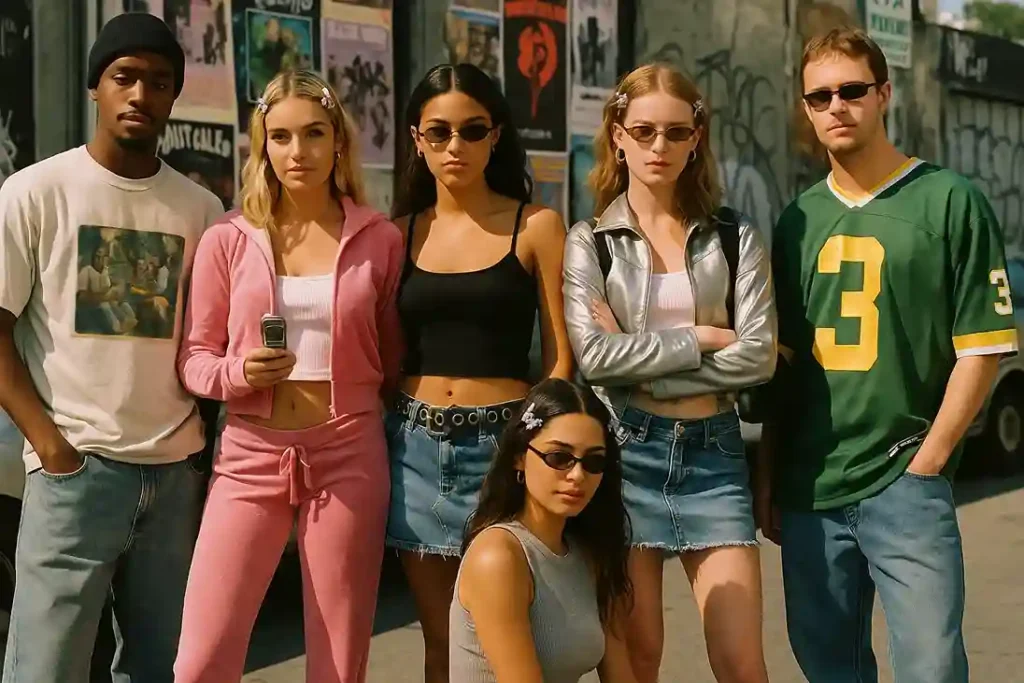
2000s fashion is making a comeback across the U.S., sparking a wave of nostalgia among millennials and Gen Z alike. This revival reaches deep into the era’s playful mix of optimism and rebellion, when style mirrored the energy of early digital life. Music videos, teen dramas, and celebrity streetwear shaped how people dressed — expressive, daring, and unapologetically bold.
The Y2K aesthetic captured the mood of a world newly connected by technology yet still hungry for individuality. Metallic fabrics, denim-on-denim outfits, and shimmering accessories became the language of confidence and experimentation. From velour tracksuits to butterfly hair clips, every detail told a story of change, youth, and pop-culture dominance. Today, designers reinterpret those same elements, blending nostalgia with modern minimalism. The result feels both familiar and fresh — proof that fashion cycles never truly end. Let’s rewind to the styles that shaped an unforgettable decade.
What Defined 2000s Fashion and the Y2K Look
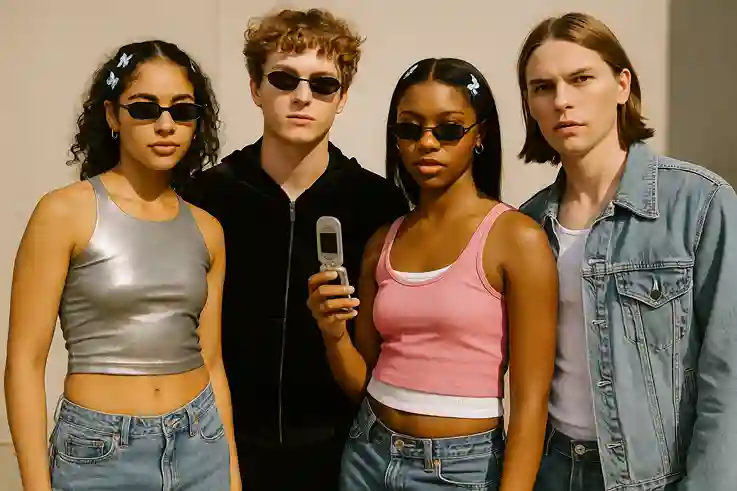
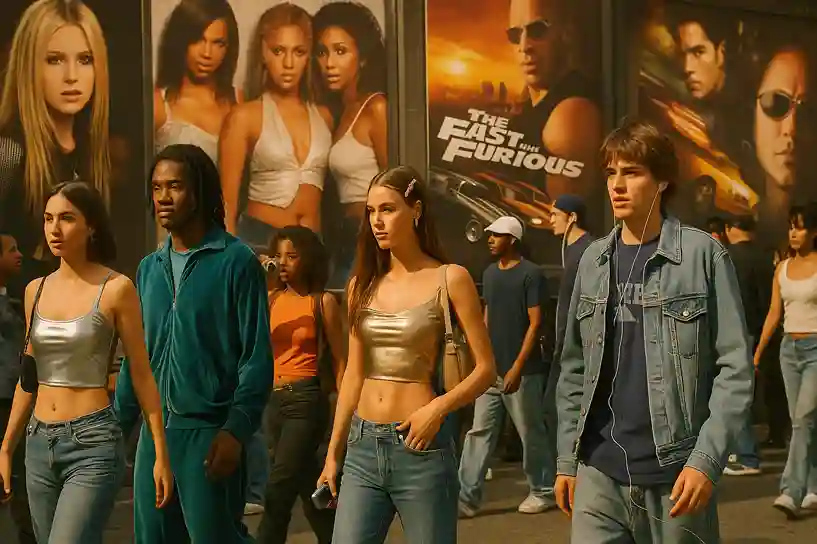
The early 2000s marked a cultural shift powered by optimism, technology, and pop culture’s growing influence. 2000s fashion reflected that futuristic energy — shiny, experimental, and full of personality. The rise of personal computers, flip phones, and the first wave of internet culture inspired clothes that looked as digital as the dreams behind them. Holographic fabrics shimmered like pixelated screens. Velour tracksuits offered comfort with a touch of celebrity glamour. Low-rise jeans, paired with crop tops and metallic belts, became statements of youthful confidence.
Celebrities played a central role in spreading this aesthetic. Britney Spears turned performance outfits into fashion blueprints. Paris Hilton made casual luxury iconic with her signature pink and rhinestone looks. Destiny’s Child redefined coordinated style with metallic and denim ensembles that sparkled onstage and off. Every magazine cover and music video carried that glossy Y2K dream — a blend of confidence, color, and tech-inspired creativity. The 2000s were about visibility and expression, not subtlety. Fashion became louder, shinier, and more individual than ever before. From screens to streets, Y2K style defined an era.
“Fashion doesn’t just return — it rewinds, remixes, and reminds us who we once dared to be.”
The Icons Who Set the Trends
In the early 2000s, fashion had faces — and those faces defined what the decade would wear. 2000s fashion didn’t emerge from quiet creativity; it burst from TV screens, music videos, and glossy magazines that shaped every teenager’s dream wardrobe. The Y2K era was ruled by American style icons who transformed ordinary outfits into cultural statements.
Jennifer Lopez: The Power of Glamour
Jennifer Lopez embodied the polished edge of early-2000s glamour. Her unforgettable green Versace dress at the 2000 Grammy Awards didn’t just stun—it reshaped how digital culture consumed fashion. That single outfit led to the creation of Google Images, proving how far celebrity influence could reach. Lopez’s blend of Bronx-born attitude and red-carpet elegance turned her into a symbol of confidence. Through sequins, velour jumpsuits, and hoop earrings, she showed that glamour could also feel real. Consequently, fashion became a language of power for women who wanted to be noticed.
Justin Timberlake: The Denim Rebel
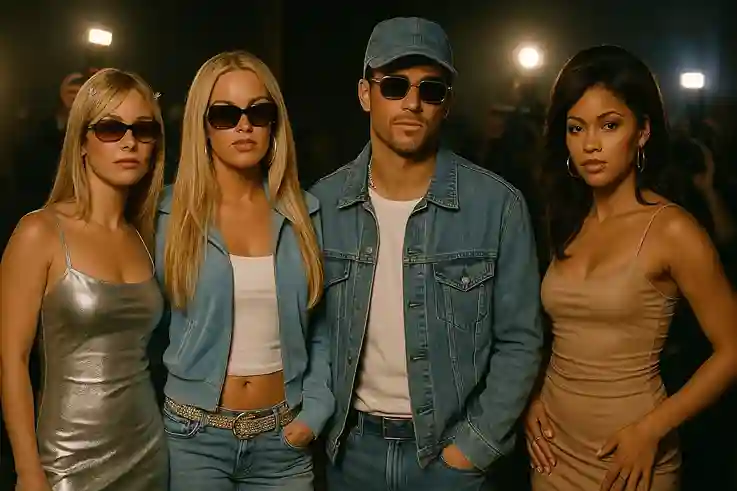
Meanwhile, Justin Timberlake helped define men’s fashion through fearless experimentation. His matching denim-on-denim moment with Britney Spears at the 2001 American Music Awards remains iconic — bold, slightly absurd, and completely unforgettable. He turned streetwear into pop culture, blending casual sneakers with sleek suits and metallic fabrics. Therefore, his looks bridged the gap between rebellion and refinement. Every appearance on MTV or TRL echoed a new idea: men could experiment too.
Lindsay Lohan: The Youthful Edge
Lindsay Lohan brought teen attitude and Hollywood luxury together. From flared jeans to mini handbags, her red-carpet appearances and paparazzi shots shaped youth fashion in America. Because she balanced playfulness with polish, every look felt reachable yet aspirational. Young fans copied her layered tanks, low-rise jeans, and oversized sunglasses — all symbols of effortless cool.
The Media That Amplified the Icons
MTV, paparazzi culture, and celebrity tabloids formed the fast-moving ecosystem that kept trends alive. The camera flash decided what was stylish; visibility equaled influence. “Trends followed icons. Icons followed attention.” That dependency created a feedback loop where exposure meant dominance. As magazines sold images faster than ideas, fashion itself became a form of storytelling through fame. And soon, everyone wanted the same shimmer.
Everyday Streetwear and Casual Trends in 2000s Fashion
Fashion in the early 2000s wasn’t just on red carpets or in music videos — it was in the streets, classrooms, and malls across America. 2000s fashion built its power through everyday wear, merging comfort with a dose of rebellion. The decade’s streetwear carried the same confidence as the pop icons who inspired it, but it also reflected real life — bold, layered, and unapologetically expressive.
Denim: The Everyday Uniform
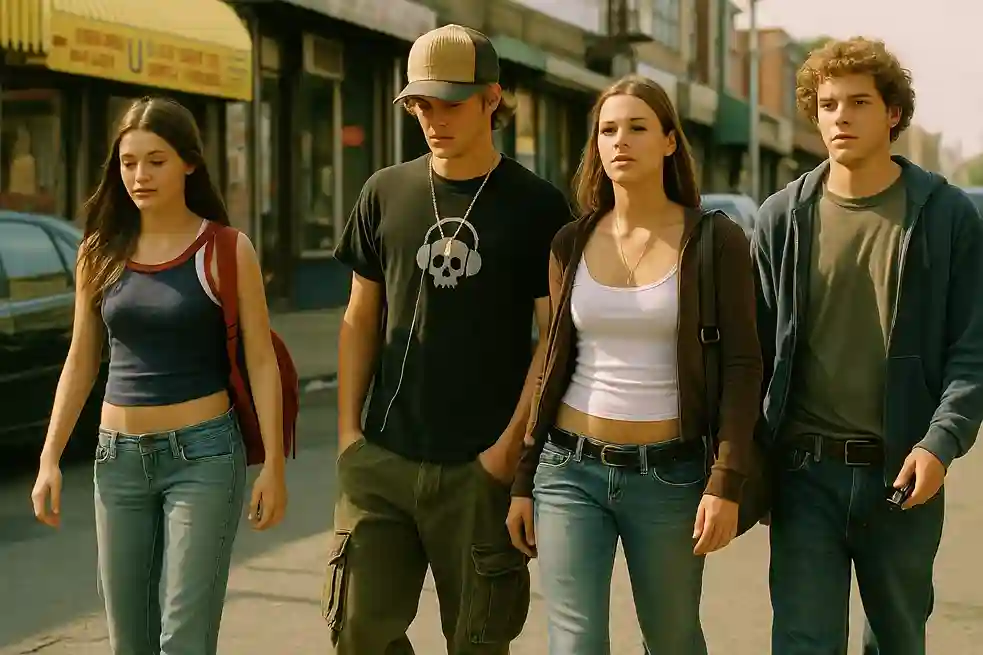
If one fabric defined the decade, it was denim. People wore it everywhere — light-washed, ripped, or crystallized. Bootcut jeans sat low on the hips, often paired with wide belts and cropped tops. Cargo jeans, heavy and utilitarian, symbolized the rise of street practicality. Meanwhile, denim skirts, jackets, and even handbags pushed the trend to its playful extreme. Because denim was easy to style and easy to personalize, it became a universal fashion language. Both men and women wore it to blend structure with freedom. In every American high school, denim dominated.
Logos, Layers, and Loud Statements
Streetwear became the stage for personality. Graphic tees with bold prints, cheeky phrases, and cartoon icons filled wardrobes. Many teens layered two or even three tops — a tank over a tee, a hoodie over both. Trucker hats, popularized by brands like Von Dutch, added a sense of irony to otherwise casual outfits. Chunky sneakers, especially from athletic brands, grounded the look. Because comfort mattered as much as aesthetics, the trend felt democratic — anyone could participate. Moreover, accessories such as studded belts, jelly bracelets, and tiny shoulder bags turned ordinary clothes into personal statements.
Glam Meets Grunge
The most fascinating part of 2000s streetwear was its blend of contradictions. Sparkly tops met ripped jeans. Shiny lip gloss met smudged eyeliner. Streetwear wasn’t confined by rules; it thrived on contrast. Girls borrowed from skate culture, while guys pulled from club aesthetics. Therefore, a balance emerged — messy but intentional, casual but attention-grabbing. This mashup made American sidewalks look like runways of experimentation.
The 2000s ultimately showed wearers that street fashion didn’t need to follow order — it needed to express emotion instead. Over time, clothes transformed into bold statements of individuality and optimism, layered with hints of nostalgia and the glow of digital dreams. Even so, 2000s fashion always kept its playful, carefree spirit alive.
The Return of Y2K in Modern Fashion
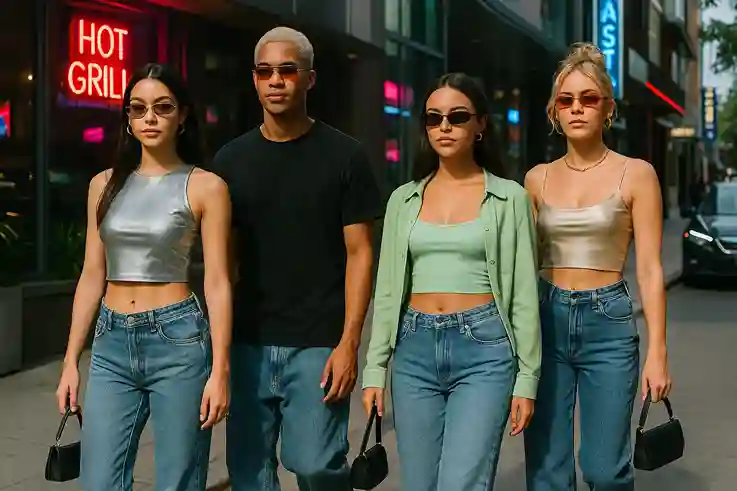
2000s fashion has made a striking comeback, but this time, it’s living in the digital age. Across TikTok and Instagram, Gen Z creators are reviving the Y2K aesthetic with creative energy and self-awareness. Their approach celebrates individuality while reimagining the past through sustainability and storytelling. What once defined teen rebellion now expresses eco-conscious creativity. The glossy, futuristic looks of the early millennium — metallic pants, baby tees, and mini bags — have been reborn for a new era of self-expression.
The Role of TikTok and Instagram
Social media now acts as the runway for modern fashion nostalgia. TikTok challenges and Instagram reels spread trends faster than any fashion magazine ever could. Short videos show quick outfit transformations, thrift hauls, and DIY styling tutorials that make old-school pieces feel new again. Because Gen Z’s style is shaped by both immediacy and individuality, their fashion revival feels participatory rather than exclusive. Viewers don’t just watch; they remix. Online, the Y2K look thrives in this cycle of reinterpretation and reinvention. Therefore, social media doesn’t just showcase style — it shapes it in real time.
Sustainability and Thrift Culture
Unlike the consumer-heavy mindset of the early 2000s, today’s youth are redefining fashion through sustainability. Thrift shopping and secondhand platforms like Depop and Poshmark dominate their wardrobes. These spaces give vintage denim, velour tracksuits, and sparkly tops a second life. Because each thrifted item carries a personal story, it makes fashion feel emotional again. Moreover, this movement challenges fast fashion’s wasteful nature while celebrating creativity over consumption. Old garments gain new value through reinterpretation — stitched, dyed, or reimagined into modern silhouettes.
Digital Nostalgia and Creative Remixing
The revival of Y2K fashion isn’t purely aesthetic; it’s emotional. Gen Z never lived the decade’s chaos firsthand, yet they find comfort in its optimism. For them, the early internet represents freedom — messy, colorful, and full of possibility. Old trends connect. New audiences remix. This connection bridges generations, uniting memory with reinvention.
The result is a style that honors the past but adapts for the present. Gen Z turns low-rise jeans into gender-neutral pieces, rhinestone tops into minimalist statements, and butterfly clips into artful accents. The digital world fuels this creativity, allowing each outfit to carry meaning. Ultimately, the Y2K aesthetic proves that fashion’s evolution isn’t linear — it spirals. Fashion loops back, but always with a twist.
Styling 2000s Looks Today
The return of 2000s fashion isn’t about recreating every outrageous outfit from the past — it’s about refinement. Today’s revival focuses on taking the best of Y2K style and blending it with modern simplicity. Instead of dressing like a pop star from 2003, the goal is to nod to the era’s energy while keeping things wearable, versatile, and effortlessly chic.
Reimagine the Essentials
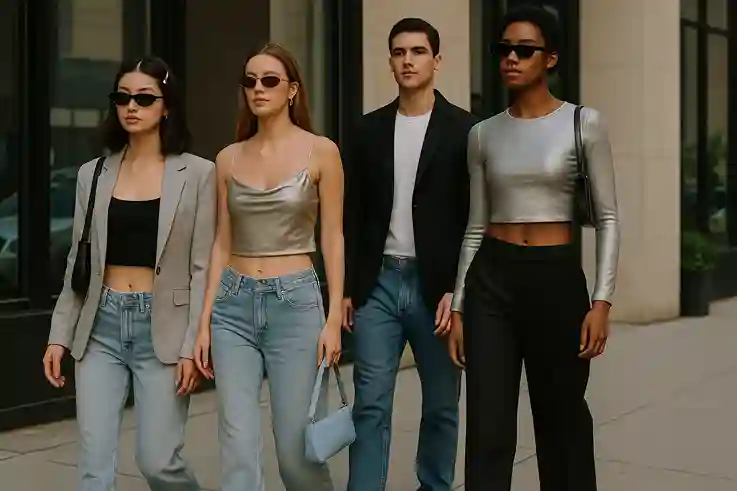
Start with practical pairings. Cargo pants, a true Y2K staple, feel fresh again when styled with fitted crop tops or ribbed tanks. Choose muted tones like khaki or slate to keep the look sophisticated. Pair them with sleek sneakers or platform sandals for balance. Likewise, low-rise jeans can work when paired with structured blazers or longline cardigans, creating harmony between past and present. Because contrast defines this trend, modern tailoring can refine even the most nostalgic silhouettes.
Accessorize with a Hint of Sparkle
Accessories carried the spirit of the 2000s, and they still do today. Rhinestone clips, metallic handbags, and butterfly necklaces instantly revive the playful sparkle of the decade. However, restraint is key — think one standout piece rather than a full glitter overload. Layered jewelry works beautifully here: combine thin chains with charm pendants or stack delicate rings for subtle depth. Glossy lips and lightly shimmered eyeshadow complement this aesthetic without feeling overdone. Consequently, these small details deliver a soft glow that honors the original Y2K mood.
Balance, Don’t Copy
The most successful modern Y2K-inspired looks rely on balance. Mix one bold throwback element — perhaps a halter top or shiny bomber jacket — with contemporary staples like wide-leg trousers or a minimalist bag. This approach avoids costume-like excess while still capturing the vibe. Because today’s fashion values authenticity, personal interpretation matters more than replication.
The secret to mastering the look lies in control — not chaos. Remember, style evolves through reinterpretation, not imitation. So, experiment confidently, edit thoughtfully, and wear nostalgia like art. Blend nostalgia with balance for timeless charm.
Why the 2000s Still Inspire Designers
Even decades later, 2000s fashion continues to captivate designers around the world. Its revival isn’t only about aesthetics — it’s about emotion. The early millennium carried a unique sense of optimism, born from the rise of the internet and a belief that technology could make everything brighter. That spirit, bold yet innocent, continues to echo through modern collections. Before smartphones and constant connectivity, fashion felt spontaneous, expressive, and full of personality. Clothes weren’t just styled; they were lived in, and that authenticity still attracts creative minds today.
The Emotional Pull of Simplicity
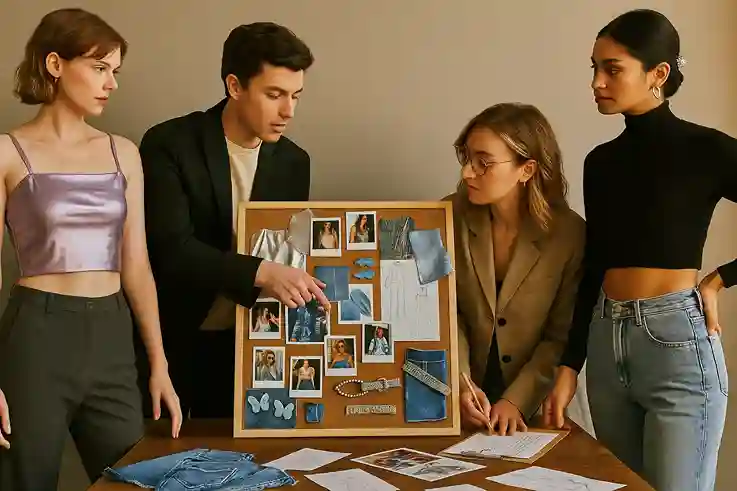
The early 2000s represented freedom — a space between analog past and digital future. People experienced technology as novelty, not dependency. Designers now chase that same emotional simplicity, longing for a world where expression mattered more than perfection. Therefore, nostalgia becomes a design language, translating collective memory into wearable art. Sequins, denim, and holographic materials resurface not because they’re trendy, but because they remind audiences of a time when the future still felt magical. Designers borrow emotion. Audiences return connection.
Digital Optimism and Futuristic Dreams
In the Y2K era, fashion imagined what the future could look like — shiny, tech-inspired, and full of promise. Metallic fabrics mirrored computers and cell phones; translucent plastics mimicked digital transparency. Today, that same futuristic vision resurfaces through AI-inspired textures, reflective fabrics, and cyber-style silhouettes. Yet, unlike the past, this generation views technology with nuance — both fascination and fatigue. Consequently, designers reinterpret Y2K optimism through sustainability and balance, merging digital aesthetics with organic materials.
Self-Expression Reimagined
The 2000s celebrated individuality — from DIY patchwork jeans to bold makeup and mixed textures. Designers now echo that creative freedom, encouraging wearers to personalize looks rather than follow uniform trends. Runways embrace chaos, layering, and experimentation, reminding audiences that imperfection can be beautiful. Because of this mindset, 2000s influences never feel outdated; they evolve with every new reinterpretation.
In the end, the decade’s energy — emotional, optimistic, and endlessly expressive — remains alive. The Y2K mood still shimmers through runways.
The Cultural Impact of 2000s Fashion
Fashion in the early 2000s wasn’t just about clothing — it was a mirror reflecting cultural transformation. 2000s fashion carried the pulse of a society learning to define itself through visibility, technology, and pop culture. The decade’s looks didn’t emerge in isolation; they evolved alongside social change, media revolutions, and shifting perceptions of gender and fame. As America moved into a digital age, style became a tool for identity-making — bold, performative, and deeply expressive.
Gender Play and Fluid Expression
The early 2000s blurred lines between masculine and feminine style long before it became mainstream conversation. Women wore cargo pants and oversized hoodies; men experimented with highlights, pink tees, and accessories once labeled “feminine.” Artists like Gwen Stefani and André 3000 embodied this freedom, proving that expression could defy tradition. This fluidity mirrored a growing desire for individuality — a rebellion against the rigid binaries of the past. Therefore, fashion became a playground for authenticity, not conformity.
Tech Optimism and the Digital Dream
The rapid rise of technology shaped both aesthetic and attitude. Shiny fabrics, silver accessories, and futuristic cuts reflected the excitement surrounding digital progress. Every outfit felt like a nod to the new millennium’s promise — a belief that innovation equaled liberation. Even pop stars mirrored this digital fascination; music videos looked like holographic fantasies, blending virtual and real worlds. Because the internet was still novel, it inspired creativity rather than fatigue. Designers and consumers alike dressed for a world that felt full of potential.
Celebrity Culture and Media Obsession
The 2000s marked the golden age of celebrity fashion. Reality TV shows like The Simple Life and athNewlyweds turned wardrobes into status symbols. Paparazzi photos became daily fashion guides, and tabloids like Us Weekly and People dictated trends faster than any runway. Paris Hilton, Britney Spears, and Lindsay Lohan didn’t just wear clothes — they sold lifestyles. As a result, fame and fashion merged into one ecosystem where exposure equaled influence.
Fashion captured the energy of a country redefining itself through technology, fame, and freedom. It dressed a generation that valued self-expression over restraint, experimentation over uniformity. Through fabric and flash, America reshaped its identity.
For readers interested in exploring the economic and cultural evolution of the U.S. fashion industry, visit the official government resource provided by the Bureau of Labor Statistics.
FAQs About 2000s Fashion
Conclusion: The Future Glows with 2000s Inspiration
2000s fashion reminds us that style is more than fabric — it’s emotion, memory, and evolution. The Y2K aesthetic, once futuristic, now feels timeless because it captured hope, creativity, and individuality. Its shimmer lives on through modern reinvention, sustainable choices, and digital expression. Fashion keeps looping back, but always with a twist. The decade’s fearless spirit still inspires designers and dreamers alike. Through nostalgia, we rediscover courage — and through style, we remember joy.
What’s your favorite memory or trend from 2000s fashion?
Share your throwback looks, nostalgic stories, or Y2K-inspired outfits in the comments below — let’s relive the era that made fashion fearless!

Silvia Heart is a lifestyle and wellness writer with a background in apparel and a degree in fashion. She blends creativity with practical insights, guiding readers toward intentional, balanced living. Through her approachable style and thoughtful storytelling, Silvia inspires her community to embrace both everyday joy and personal growth.