1980s fashion blazed across the decade like neon against night, turning self-expression into spectacle. Every outfit spoke rebellion, ambition, and creativity—woven tightly into a culture hungry for change. Power suits mirrored success; ripped denim shouted resistance. Style became armor, and attitude its weapon. Colors clashed intentionally—electric blue with hot pink, metallics with matte leather—because conformity bored the era. Television, music, and film fused glamour with grit, creating icons whose wardrobes defined identity as much as talent.
Beneath the glitter lay tension: youth pushing against norms, women claiming space, artists rewriting what “cool” could mean. Yet through chaos, cohesion emerged—the rhythm of reinvention. Fashion no longer followed rules; it wrote them in sequins and sweat. From Wall Street to dance floors, the decade pulsed with visual noise and vivid confidence. Now, let’s explore how that daring energy shaped every corner of 1980s style.
Power Dressing in 1980s Fashion: Strength in Shoulder Pads

In the heart of 1980s fashion, power dressing rose as both armor and art. Women reshaped the corporate world, stepping into offices with confidence stitched into every seam. Sharp blazers, padded shoulders, and tailored suits created silhouettes that demanded attention. The look projected authority, independence, and control—values pulsing through a decade obsessed with ambition. Broad shoulders symbolized equality, while bold colors and metallic fabrics added flair to determination.
Icons such as Joan Collins in Dynasty epitomized the glamour of the era, turning shoulder pads into symbols of dominance. Princess Diana, on the other hand, refined the same aesthetic—her softly structured jackets balancing strength with grace. Together, they captured a movement where fashion reflected empowerment.
By nightfall, those office suits shimmered anew. Sequins replaced silk blouses, and confidence became charisma. Power dressing in 1980s fashion didn’t fade after work—it simply transformed into evening allure.
“In 1980s fashion, power wasn’t whispered—it was worn, boldly padded at the shoulders and gleaming with intent.”
Street Style Rebellion: Denim, Leather, and Edge
The 1980s fashion scene wasn’t just about boardrooms and ballrooms—it was also about the streets. There, style wasn’t polished; it was powerful. Urban youth turned rebellion into a wardrobe, transforming grit into identity and defiance into design. Street style became a living protest, where every tear in denim or stud in leather spoke louder than words. It rejected perfection and embraced authenticity.
The Rise of Raw Expression
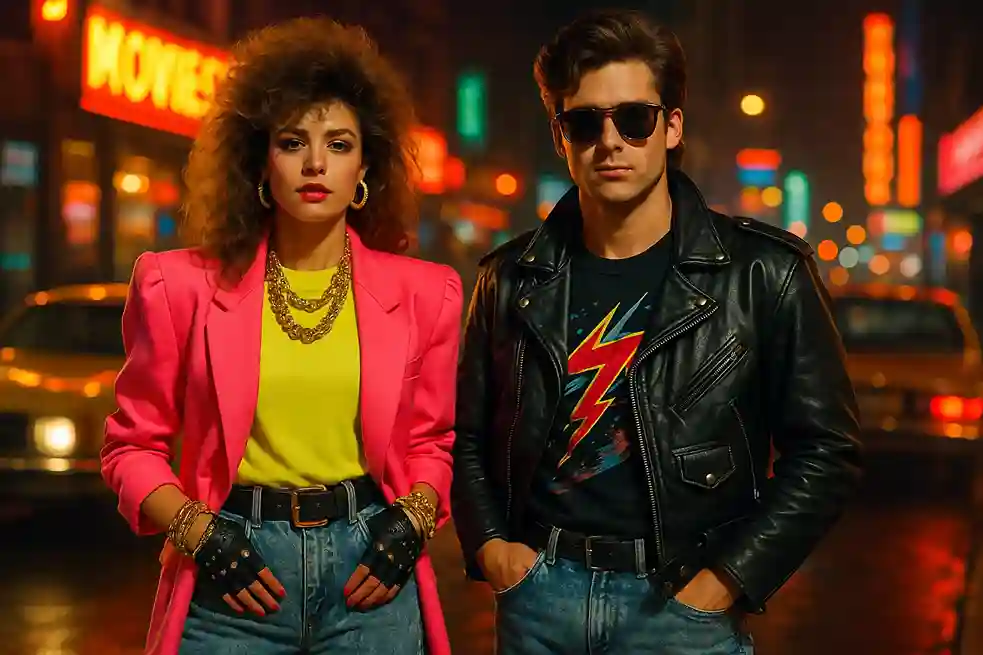
The polished glamour of runways didn’t define this movement—neighborhoods did. Teenagers, musicians, and skaters built an aesthetic that challenged conformity. Denim became armor, its rips intentional, its stains symbolic. Leather jackets told stories of rebellion and resilience, stitched with attitude and worn with pride. Every crease marked resistance against mass-produced monotony.
Sneakers exploded into icons of youth culture. High-tops, often scuffed and customized, carried identity across pavement and dance floors. Streetwear wasn’t about luxury; it was about presence. People wore what felt real—what matched their rhythm, not anyone else’s expectations.

Punk and Rock Influence
At the core of 1980s fashion rebellion pulsed the sounds of punk and rock. Bands like The Clash and Sex Pistols tore through cultural norms as aggressively as they tore through shirts. Safety pins became jewelry, chains replaced pearls, and slogans replaced labels. The punk aesthetic rejected polish, celebrated imperfection, and turned anger into artistry.
Meanwhile, rock infused swagger—tight jeans, leather gloves, and rebellious hairstyles. Think of icons like Billy Idol or Joan Jett: their looks fused energy with defiance. They didn’t follow trends; they created them. The street adopted their edge, translating performance into personal style.
The Power of Individualism
Street fashion in the 1980s wasn’t just an outfit—it was an attitude. Urban youth didn’t wait for designers; they became designers of their own look. The layering of denim vests, the DIY patches, the safety pins—all symbolized ownership of style. The result was a collision of function and rebellion that felt raw, real, and alive.
From Rebellion to Pop Culture Shine
As rebellion gained rhythm, mainstream media took notice. MTV and music videos brought gritty street looks into living rooms across America. Suddenly, what began in alleys and underground clubs appeared on screens and runways. Designers borrowed the rebellion, softening its edges but keeping its spark. The street had spoken—and the world listened.
Through denim, leather, and attitude, 1980s fashion turned rebellion into revolution, and rebellion into lasting style.
Pop Icons: MTV and the Culture of Excess
When MTV launched in 1981, it didn’t just revolutionize music—it transformed the visual landscape of fashion. For the first time, audiences didn’t only hear the beat; they saw it. Music television turned wardrobes into storytelling tools, merging sound with image, rhythm with design. Through glowing screens, 1980s fashion exploded into a new kind of theater—one driven by fame, fantasy, and fearless self-expression.
MTV: Fashion’s New Stage
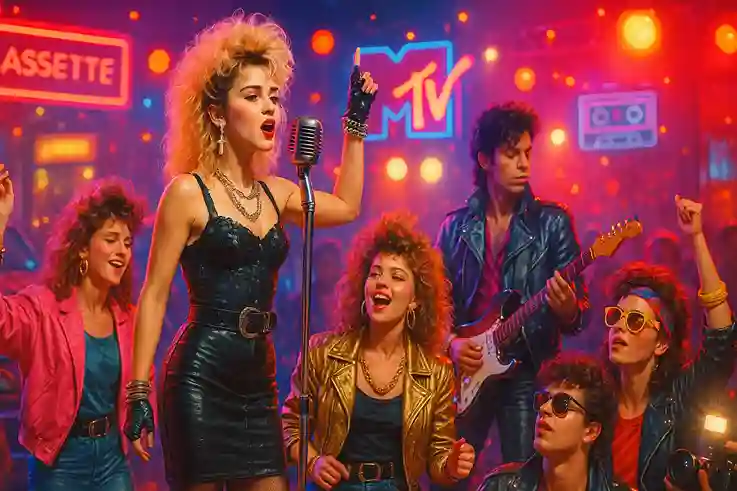
Before MTV, fashion belonged mostly to magazines and movie stars. After MTV, musicians became the new style authorities. Each video release doubled as a runway show, where every outfit became a visual hook. Viewers absorbed trends instantly, copying the looks of their idols with DIY precision. Sequins, leather, lace, and metallic fabrics dominated screens—textures chosen not just to shine under lights but to symbolize extravagance. The television became a mirror, and audiences began to dress like the stars they adored.
The 1980s weren’t subtle; they were cinematic. Flashing lights, synthesizers, and visual spectacle turned fashion into movement. MTV didn’t simply promote clothes—it promoted confidence. Every artist’s look told a story about ambition, rebellion, and individuality.
Madonna: The Queen of Reinvention
No star embodied the decade’s daring better than Madonna. Her layered lace, fingerless gloves, crucifix necklaces, and corsets blurred the lines between streetwear and sensuality. She made imperfection powerful, transforming secondhand fabrics into statements of freedom. With each music video—from Like a Virgin to Material Girl—she redefined how women could express control and sexuality through fashion. Madonna didn’t follow trends; she authored them.
Her influence trickled into thrift shops and high fashion alike. Teens tied bows in their hair, wore tulle skirts, and embraced confidence as couture. The keyword was attitude—the kind that made 1980s fashion unforgettable.
Prince and Michael Jackson: The Icons of Excess
While Madonna ruled rebellion, Prince and Michael Jackson commanded charisma. Prince dazzled in silk ruffles, bold purples, and high-heeled boots, merging masculinity and femininity into pure magnetism. His look made vulnerability stylish and flamboyance fearless.
Michael Jackson, meanwhile, sculpted pop precision. His red leather Thriller jacket, glittering glove, and tailored military jackets became universal symbols of excellence. Every zipper, stud, and sparkle was intentional—a statement of mastery through detail. His influence transcended gender, age, and geography.
Both artists made exaggeration aspirational. They proved that fashion could amplify identity rather than mask it.
From Celebrity Glam to Everyday Adaptation
The energy didn’t stay on stage for long. Fans rushed to replicate the looks—ripped jeans paired with sequin tops, leather jackets mixed with lace gloves. Thrift stores overflowed with creativity. Street style echoed screen style, and soon, 1980s fashion blurred the boundary between pop stardom and ordinary life.
What began as visual rebellion became cultural revolution. MTV democratized glamour, making everyone feel like they could perform their own story. Fashion no longer belonged to designers—it belonged to the dreamers watching at home.
Fitness and Flash: Neon, Lycra, and Leg Warmers
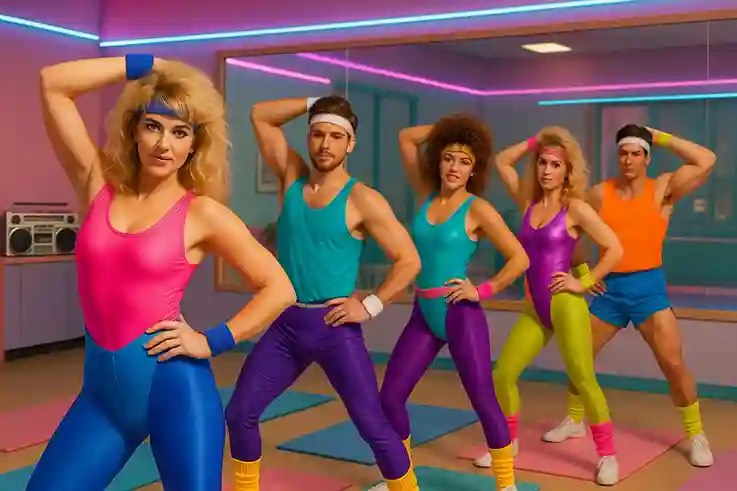
During the 1980s, fashion didn’t just decorate the body—it celebrated it. A new movement emerged, one that linked health, style, and spectacle. 1980s fashion found its pulse in the rise of fitness culture, where exercise became not only a lifestyle but also an aesthetic. Television, film, and advertising transformed workout wear into mainstream fashion. Consequently, neon spandex, Lycra bodysuits, and leg warmers burst from the gym and danced straight into everyday wardrobes.
The Fitness Boom: Style in Motion
The decade’s obsession with fitness began as a social shift. Gyms appeared on every corner, and exercise classes filled with determined faces moving to electronic beats. Thanks to celebrities like Jane Fonda and Olivia Newton-John, aerobics became a cultural phenomenon. Therefore, activewear turned into a new symbol of empowerment and energy.
Lycra, the miracle fabric of stretch and shine, shaped this trend. It allowed freedom of movement while sculpting the body into sleek lines. Neon colors—vibrant pinks, electric blues, and lime greens—commanded attention, embodying optimism and vigor. Eventually, workout gear became a badge of participation in a generation obsessed with motion and self-improvement.
From the Gym to the Streets
As fitness culture flourished, its aesthetic rapidly escaped the studio. People began pairing leggings with oversized sweatshirts, sneakers with skirts, and headbands with casual wear. This blending of sport and street created the first wave of what we now call athleisure. Moreover, it reflected a new idea: being active wasn’t a hobby—it was a lifestyle worth showing off.
Music videos and movies reinforced this shift. From Flashdance to Perfect, the screen magnified the sweaty glamour of gym life. As a result, movement became entertainment, and style became motivation. The rhythmic pulse of aerobics videos spread across living rooms, making even home workouts look like runway moments.
Branding, Media, and Momentum
Soon, major brands capitalized on this energy. Nike, Reebok, and Adidas didn’t just sell shoes—they sold aspiration. Advertisements promised transformation, both physical and emotional. Bright colors and shiny textures symbolized more than fitness; they symbolized success. Additionally, television programs and print ads blurred the lines between health and fashion, turning every commercial break into a motivational montage.
The fusion of branding and media influence fueled an identity shift. People didn’t just wear clothes to move—they moved to belong. Fitness became fashion, and fashion became the heartbeat of modern life.
From Movement to Memory
Today, the legacy of this vibrant era lingers in every retro revival. Those neon leotards, metallic leggings, and striped leg warmers resurface on runways and in nostalgia-driven collections. Even now, their boldness reminds us of a decade that celebrated effort, expression, and energy.
Thus, the 1980s taught us something timeless: when culture moves, fashion follows. And even decades later, the flash of 1980s fashion still glows—bright as ever—in our collective memory.
Men’s Revival in 1980s Fashion: From Prep to Rock Rebel
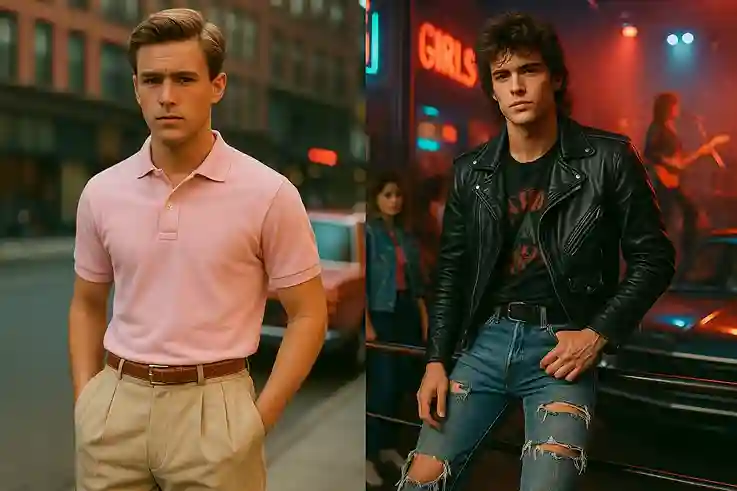
The 1980s marked a bold transformation in men’s style. 1980s fashion for men balanced formality with rebellion, blending ambition with attitude. This was the decade where contrast ruled—Wall Street’s polished suits stood beside concert stages dripping in denim and leather. The result was a wardrobe that reflected both success and self-expression, shaping an era where men dressed to declare who they were and what they stood for.
The Corporate Edge: Precision and Power
On one side of the style divide, men wore their ambition like armor. The Wall Street elite adopted tailored suits, crisp shirts, and patterned ties to project authority. Loafers gleamed beneath pinstriped trousers, while silk pocket squares added polish. This look—epitomized by Wall Street’s Gordon Gekko—wasn’t just clothing; it was confidence measured in fabric.
Meanwhile, the preppy movement brought a softer version of success. Polo shirts, pastel sweaters, and chinos defined weekend refinement. Inspired by Ivy League sophistication, this look communicated affluence without aggression. It reflected stability, composure, and charm—the quieter side of masculine pride in 1980s fashion.
The Rock Rebel: Leather and Defiance
In contrast, another movement exploded from underground clubs and radio waves. Rock stars and punk icons turned rebellion into style currency. Leather jackets, ripped jeans, and band tees became declarations of freedom. Every tear and scuff signified authenticity—a rejection of conformity and a celebration of individuality.
Influences from films like The Breakfast Club and Top Gun amplified this aesthetic. Bomber jackets, aviator sunglasses, and denim dominated youth culture. Attitude became accessory; self-assurance became style. Moreover, music and cinema blurred together, creating icons whose wardrobes spoke louder than dialogue.
From Masculine Codes to Unisex Experimentation
By the decade’s end, men’s fashion began breaking traditional boundaries. Inspired by figures like Prince and David Bowie, fluidity entered the frame—silk shirts, eyeliner, and jewelry redefined masculinity. Strength no longer meant stiffness; it meant expression.
Thus, 1980s fashion for men captured a new truth: identity was dynamic. Whether dressed for the boardroom or the stage, men could embody power, passion, and individuality—all in one look.
Accessories That Screamed Personality
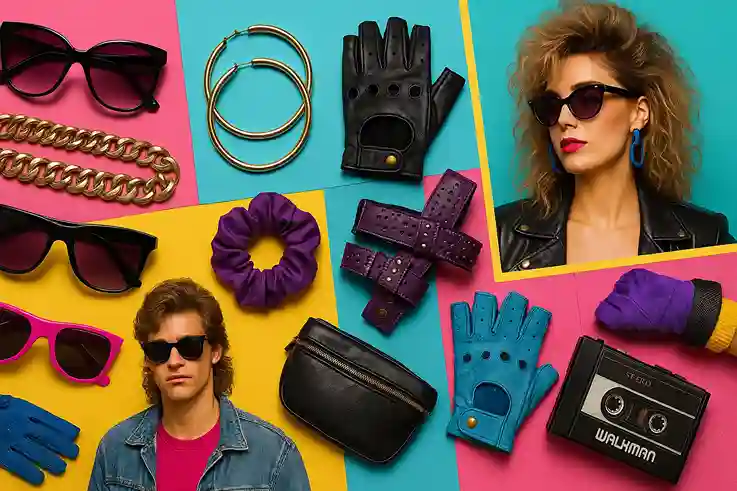
In the world of 1980s fashion, subtlety took a back seat while self-expression grabbed the spotlight. Accessories weren’t just additions—they were declarations. Every necklace, glove, and belt carried meaning, broadcasting identity in bold and unapologetic ways. People didn’t wear pieces to match outfits; they wore them to command attention.
Statement Jewelry: Boldness in Metal and Shine
Jewelry in the 1980s was anything but quiet. Chunky gold chains, oversized hoops, and layered bangles clinked with confidence. The bigger, the better—that was the rule. Both men and women embraced metallic excess, using accessories to project success, rebellion, or flair. Even costume jewelry became elevated, thanks to television icons and pop stars who mixed glamour with grit.
Necklaces rested high and heavy, often spelling out words or initials. Earrings stretched past jawlines, designed to shimmer under nightclub lights. Each piece radiated attitude, transforming accessories into armor of personality.
Fingerless Gloves, Belts, and Sunglasses: The Uniform of Cool
If jewelry announced confidence, gloves and belts screamed defiance. Fingerless gloves—made famous by Madonna and punk icons—blurred the line between street grit and stage glamour. They symbolized rebellion yet retained elegance, especially when paired with lace or leather.
Big belts, often cinched tightly at the waist, structured outfits and amplified silhouettes. Whether worn over dresses, blazers, or jumpsuits, they added proportion and drama. Sunglasses, on the other hand, were essential shields of mystery. Oversized frames—square, mirrored, or gradient-tinted—hid emotion and heightened allure.
Together, these accessories defined personality: edgy yet playful, powerful yet expressive.
Hair That Spoke Louder Than Words
The 1980s wasn’t just accessorized in gold—it was accessorized in hair. Perms, mullets, and teased volume ruled salons. The bigger the hair, the bolder the statement. Men and women alike embraced height, curls, and texture, using mousse and hairspray like instruments of identity. Each strand seemed to defy gravity—and convention.
From Accessories to Modern Reinterpretation
Today, the legacy of these expressive details endures. Modern fashion revisits them through subtler forms—structured belts, oversized frames, and revived curls. Designers borrow from the past while polishing its edges. Yet, the message remains the same: 1980s fashion taught the world that accessories don’t just complete an outfit—they complete the story.
The Modern Comeback: 1980s Fashion Reimagined

In today’s style landscape, 1980s fashion has made a powerful return—revived, redefined, and more relevant than ever. Streetwear and high fashion alike echo the decade’s signature boldness, from oversized blazers and power shoulders to neon tracksuits and high-waisted jeans. Designers reinterpret the excess of the past with refined tailoring, turning nostalgia into innovation.
Thrift culture drives much of this resurgence. Gen Z, drawn to authenticity and sustainability, embraces secondhand shopping as both rebellion and responsibility. Vintage stores, online resale platforms, and upcycled collections keep 1980s silhouettes alive while reducing waste. Consequently, each piece feels personal—like wearing a fragment of cultural history.
On runways, designers channel the era’s confidence through metallics, structured jackets, and exaggerated proportions. Yet this time, the focus lies less on excess and more on expression. The spirit of individuality, once born from rebellion, now thrives in conscious creativity.
For younger generations, the decade represents more than style—it represents self-definition. Through thrifted jackets and retro sneakers, they reclaim the daring energy that defined an era. And as fashion continues to evolve, the legacy of 1980s fashion reminds us that confidence never goes out of style—it only changes form.
For deeper insight into the trends and influences of the decade, readers can explore historical resources on 1980s fashion from trusted U.S. fashion archives and museums.
FAQs About 1980s Fashion
Conclusion: When Glam Met Grit—and Stayed
The legacy of 1980s fashion endures because it celebrated courage, creativity, and contrast. From power suits to punk leather, every look told a story of confidence and individuality. Its fearless energy continues to inspire today’s designers and dreamers alike. The decade taught fashion to be loud, proud, and unapologetically expressive—and that spirit still pulses through every bold silhouette and shining thread we wear today.
Which 1980s fashion trend would you bring back—power suits, neon fitness wear, or punk-inspired leather?
Share your favorite look or memory from the decade in the comments below and keep the retro energy alive!

Silvia Heart is a lifestyle and wellness writer with a background in apparel and a degree in fashion. She blends creativity with practical insights, guiding readers toward intentional, balanced living. Through her approachable style and thoughtful storytelling, Silvia inspires her community to embrace both everyday joy and personal growth.