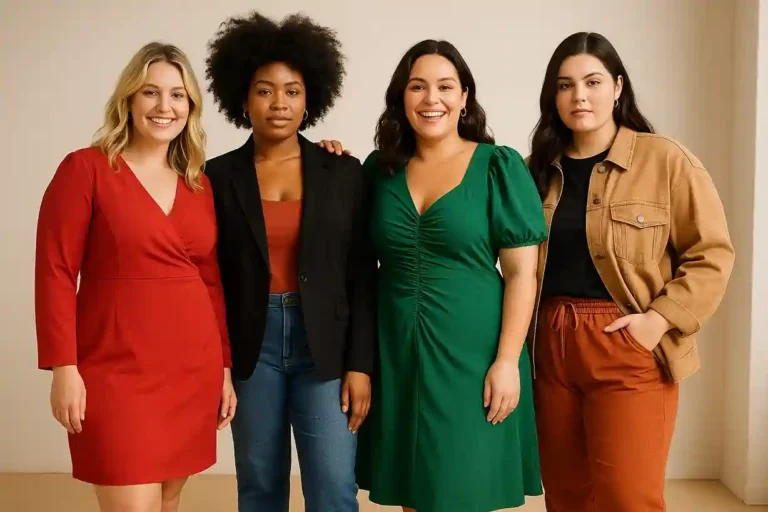
1920s fashion changed everything. Clothes no longer served only tradition—they became bold expressions of identity and freedom. The world had survived a war, and now people wanted joy, rhythm, and renewal. Jazz music filled cities, its syncopated beats inspiring movement and rebellion. Women cut their hair short, danced freely, and dressed without restriction. Men, too, loosened collars and embraced relaxed elegance. Each outfit mirrored a shifting world where gender norms softened and individuality bloomed.
The hemlines rose as confidence grew, while fabrics flowed with a sense of liberation. In every speakeasy, on every dance floor, fashion spoke louder than words. People didn’t just wear clothes—they wore change itself. The 1920s gave style a voice that echoed far beyond its decade. As culture evolved, fashion became its most vivid storyteller, linking freedom, music, and modern identity in one daring, unforgettable movement.
The Social Spark Behind 1920s Fashion
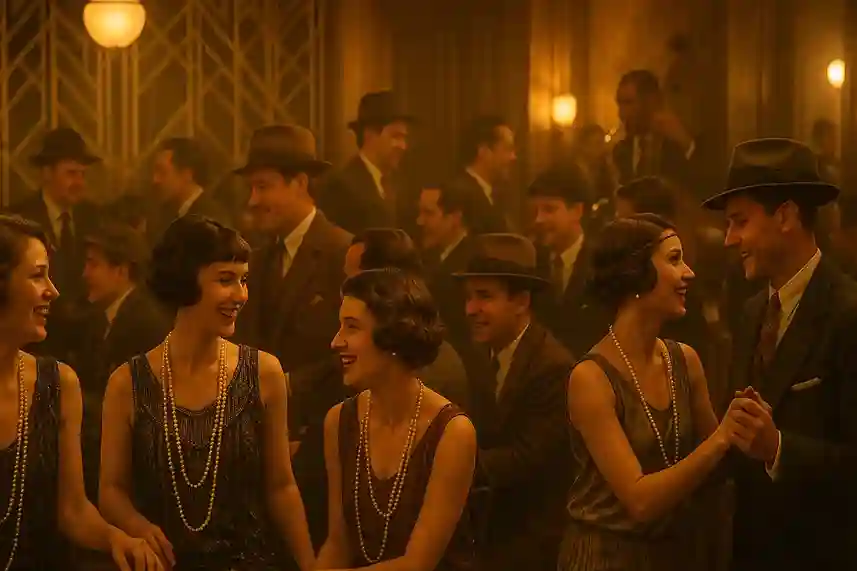
When World War I ended, the world sought renewal. Hope replaced hardship, and 1920s fashion captured that spirit. The conflict had shifted gender roles, opening doors for women to work, vote, and express independence. Out of this change came the “New Woman”—modern, fearless, and eager for freedom.
That freedom appeared first in dress. Corsets vanished. Skirts rose. Fabrics grew lighter. Clothes no longer confined; they moved with the body. Style became a visible form of independence. Each garment said, I choose how I live.
Cities expanded, and urban culture thrived. Movie theaters, jazz clubs, and cafés became fashion runways for everyday people. Stars like Clara Bow and Louise Brooks inspired audiences to experiment with daring cuts and bold makeup. Jazz music’s rhythm encouraged energy and motion, shaping both dance and dress.
Men also followed the shift. Formal suits relaxed. Soft fabrics and slimmer lines replaced stiffness.
Every social change sparked a style response, and each fashion trend reinforced new attitudes. Freedom led to creativity; creativity strengthened freedom. Together, they built a new visual language for modern life. In every thread, 1920s fashion carried the pulse of a society eager to redefine itself.
“Fashion in the 1920s wasn’t just about clothes—it was about courage, freedom, and the rhythm of a world learning to live again.”
Women’s Liberation in Style
The 1920s marked a radical shift in how women dressed—and how they lived. After decades of restrictive clothing and rigid expectations, 1920s fashion offered liberation through simplicity, movement, and bold expression. The flapper became its most iconic symbol: confident, carefree, and entirely modern.
The Rise of the Flapper Dress
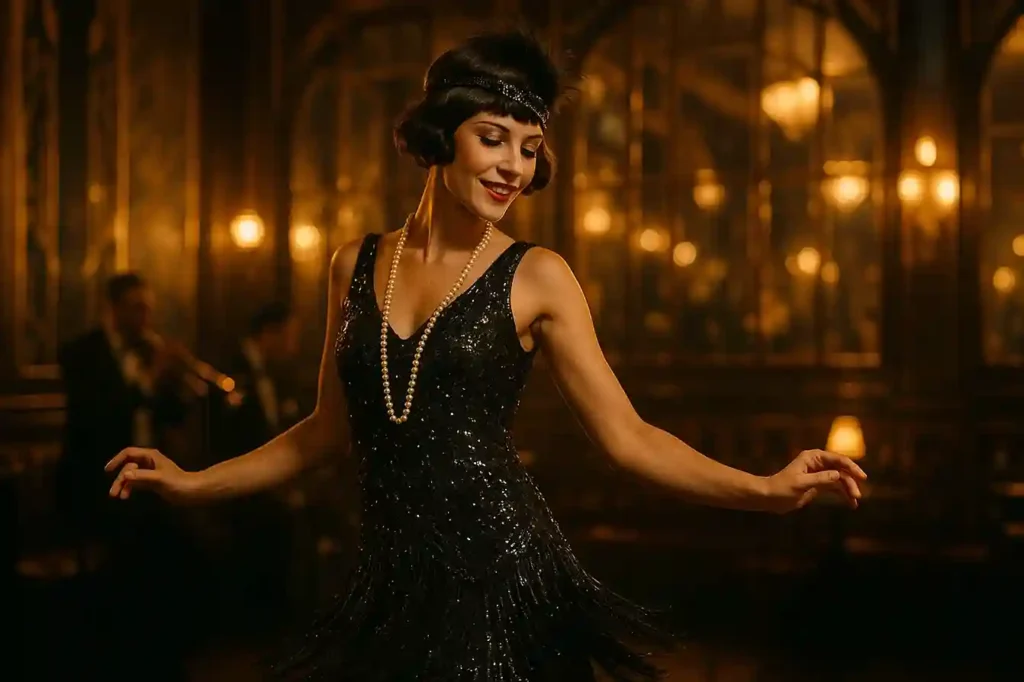
The flapper dress redefined femininity. Gone were the corsets, petticoats, and layers of lace that once confined women. In their place came loose, straight-cut dresses with dropped waists and shorter hemlines. For the first time, knees appeared—an act once considered scandalous but now celebrated. These dresses allowed women to dance freely to the beat of jazz. The fabric flowed with the body, not against it. This comfort felt revolutionary. It meant freedom of movement, expression, and choice.
Simplicity as Liberation
The simplicity of these new silhouettes carried deep meaning. A plain, unstructured dress represented more than fashion—it symbolized equality. Without tight lacing or exaggerated curves, women looked strong, not ornamental. Clothes became functional, designed for living, not impressing. This minimalism allowed individuality to shine. Each woman could style her own version of modern freedom. In cities across America, the shift was visible: women walking tall, unbound, and unapologetic.
The Bold New Look: Hair and Makeup
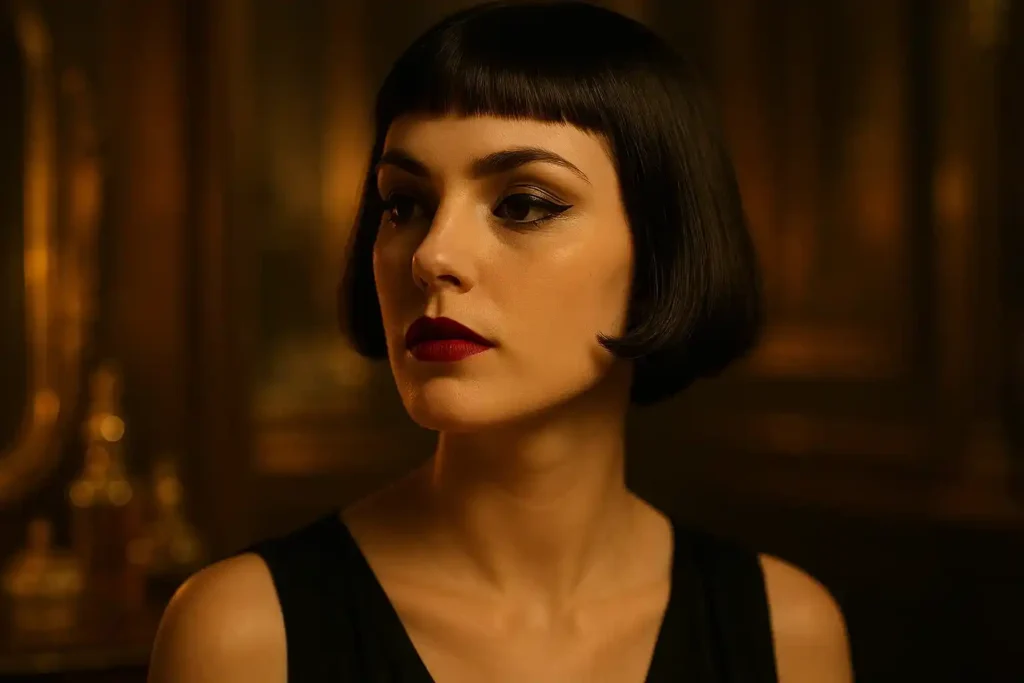
Hair and makeup became statements of power. The bob haircut framed faces with sharp precision, signaling rebellion against outdated beauty norms. Red lipstick and kohl eyeliner amplified confidence, while pale powder created contrast under the glow of speakeasy lights. These details were deliberate. They told society that women would no longer hide behind convention. Beauty became choice, not expectation.
Designers Who Empowered the Change
Designers like Coco Chanel and Jean Patou captured this new spirit. They replaced excess with elegance, introducing lightweight fabrics and relaxed tailoring. Their creations celebrated confidence without restriction. Chanel’s simple black dress became a timeless emblem of independence. Fashion no longer followed rules—it set them.
In every seam, 1920s fashion stitched together confidence, individuality, and movement. Women finally wore clothes that reflected who they were, not who society demanded them to be. The flapper’s dance wasn’t just about joy—it was about power, self-expression, and the thrill of living freely.
“A flapper’s dress didn’t just move—it breathed with the rhythm of a woman finally free to be herself.”
Men’s Elegance: Tailored Yet Relaxed
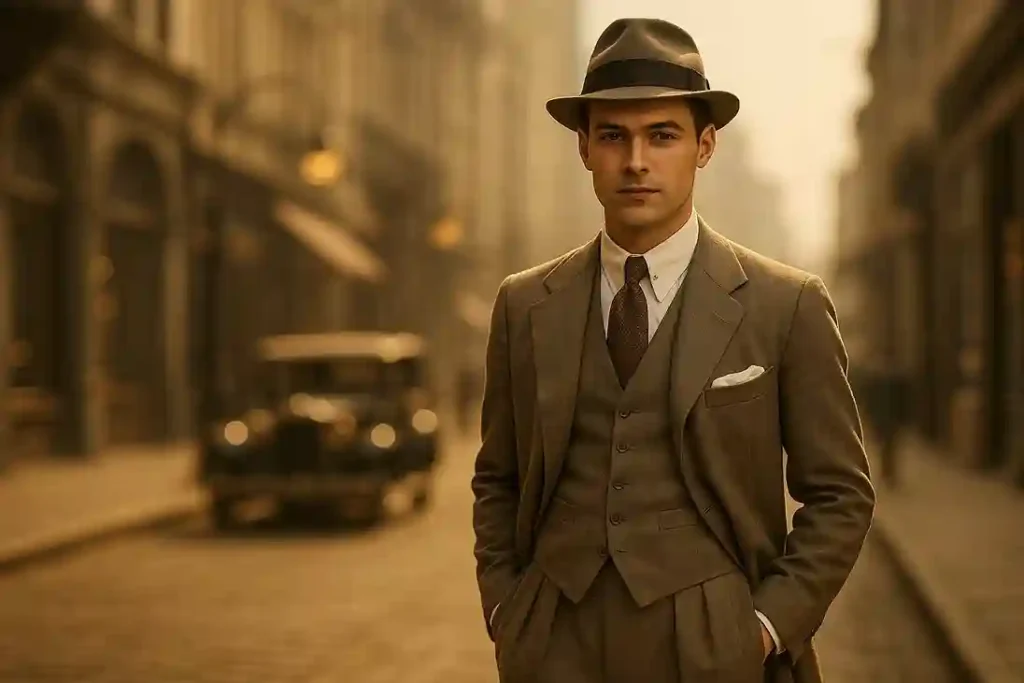
As the 1920s unfolded, men’s fashion experienced its own quiet revolution. The old stiffness of the Victorian era faded, replaced by relaxed confidence and modern flair. For the first time, men dressed not only for duty but also for self-expression. Style, once tied to class, began to reflect personality. This transformation, though subtle, mirrored the broader cultural shift toward freedom, leisure, and individuality.
From Stiff to Stylish
Before the 1920s, men’s suits were heavy, rigid, and formal. However, as lifestyles changed, so did clothing. The end of World War I brought a desire for ease, and designers responded with softer, looser cuts. Jackets lost padding, and trousers widened slightly, allowing natural movement. Therefore, men began to favor comfort over formality. The three-piece suit remained, but now it conveyed relaxed sophistication rather than strict decorum. Moreover, clothing reflected optimism—an escape from wartime severity into a world that embraced rhythm and freedom.
The Rise of Casual Sophistication
Urban life introduced new expectations. Because men worked by day and socialized by night, versatility became essential. Lighter fabrics like linen, tweed, and cotton replaced the thick wools of the past. Additionally, pastel tones and subtle patterns appeared, signaling confidence and creativity. Sportswear also entered daily wardrobes. Golf knickers, cardigans, and Oxford shoes blurred the line between athletic and formal wear. Consequently, style began to follow lifestyle, not the other way around.
Icons of Influence: Jazz and Hollywood
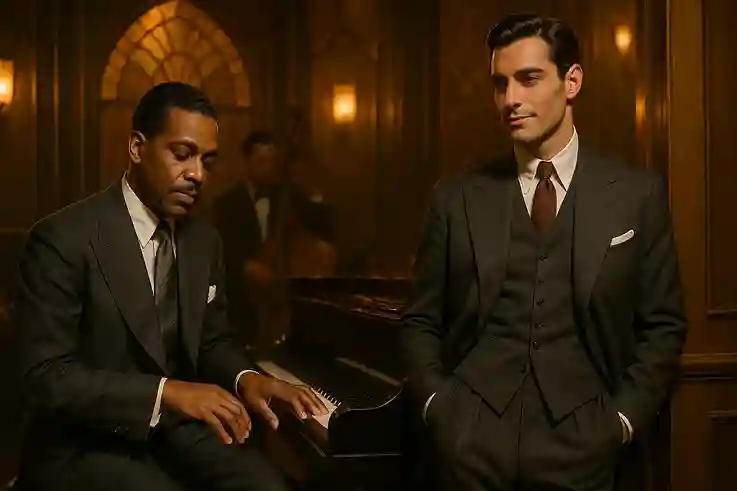
Cultural icons shaped this new aesthetic. Jazz musicians like Duke Ellington brought flair with silk ties, pocket squares, and two-tone shoes. Meanwhile, Hollywood stars such as Rudolph Valentino and Cary Grant projected effortless charm through well-tailored suits. Because films reached every corner of America, their style became both accessible and aspirational. The screen taught men how fashion could amplify charisma and class mobility. As a result, elegance evolved from a privilege into a personality.
Confidence Tailored In
This shift did more than change wardrobes—it changed mindsets. Men dressed to express independence and ambition. Tailoring emphasized movement, not restraint. Hence, clothing became symbolic of modern masculinity: confident, approachable, and adaptable.
By blending ease with elegance, 1920s fashion created a timeless template for men’s style. Its balance of comfort and class still defines how men dress today—proof that freedom, once stitched into fabric, never truly fades.
Accessories That Defined the Decade
Accessories gave 1920s fashion its spark. Every outfit, simple or extravagant, found identity through detail. Small pieces—hats, jewelry, shoes—tied elegance to purpose. Each accessory said something about freedom, taste, and modern life.
The Cloche Hat
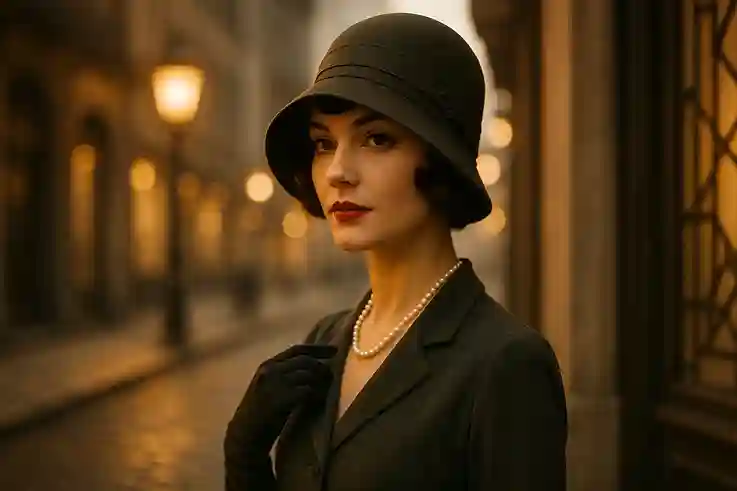
The cloche hat shaped the decade’s look. Its close fit framed the bob haircut perfectly. It wasn’t just protection; it was expression. Women wore it tilted, mysterious, and bold. Silk, felt, or lace—each texture told a story. The cloche turned a walk down the street into a statement of independence.
Pearls and Headbands
Pearls became more than ornaments; they symbolized grace in motion. Long strands swung as women danced, catching light and rhythm. Headbands, meanwhile, added sparkle to evening glamour. Beads, feathers, and sequins shimmered under jazz lights. Together, they created rhythm between movement and luxury. Each piece worked with the body, not against it—an idea central to 1920s design.
Mary Jane Shoes
The Mary Jane shoe defined flapper movement. Its low heel and strap offered security for dancing yet kept elegance intact. It blended practicality with playfulness. Leather, satin, or patent finish—all made freedom look polished. A woman could move fast and still appear refined.
Men’s Accessories
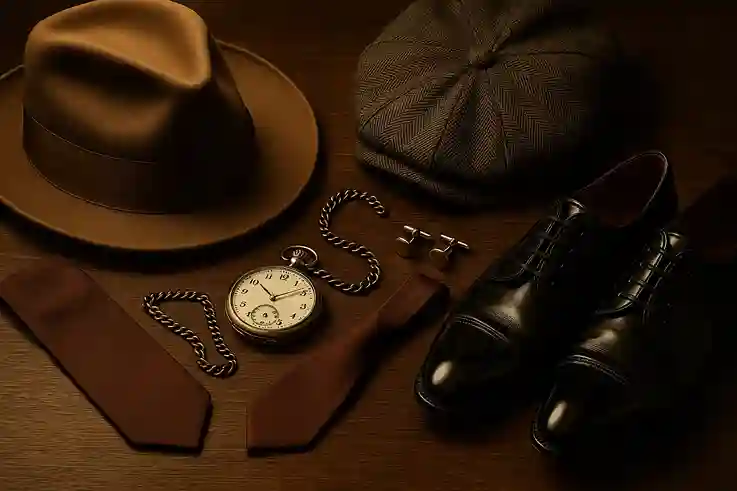
Men’s accessories held equal significance. Fedoras and newsboy caps completed tailored suits, showing confidence and taste. Pocket watches connected precision with prestige, often handed down or engraved. Patent shoes gleamed under jazz-club lights, signaling attention to detail. Each item carried function first, style second—but together they shaped image and identity.
Flair That Defined Freedom
Accessories in the 1920s weren’t decoration; they were declaration. Every hat, jewel, or shoe reflected change—society stepping forward, elegantly and confidently. Through small choices, both men and women built their modern selves. Each accent completed not only the look but also the spirit of liberation that defined an unforgettable era.
“In the 1920s, accessories weren’t just added—they finished the sentence fashion had started.”
The Global Reach of 1920s Fashion
By the 1920s, style had escaped borders. American cinema and glossy magazines carried 1920s fashion across oceans, turning local trends into global icons. The silver screen became the decade’s loudest runway, projecting images of glamour, confidence, and freedom to every corner of the world. As audiences watched stars dance, dress, and defy old norms, they absorbed not just entertainment—but aspiration.
Cinema
Hollywood shaped fashion dreams. Actresses like Clara Bow and Louise Brooks didn’t just perform—they modeled identity. Their flapper dresses, bob cuts, and sequined gowns set global standards of modern beauty. Each film created a shared visual language that transcended class and culture. Moviegoers, inspired by what they saw, copied hairstyles, makeup, and silhouettes. Thus, fashion became democratized—accessible, imitable, and instantly recognizable.
Magazines and Media
Magazines like Vogue and Harper’s Bazaar linked continents through glossy pages. Their photographs, editorials, and fashion illustrations delivered American and European styles to households worldwide. Paris remained the creative hub, while New York emerged as its bold rival. Together, the two cities dictated trends that defined elegance. As print culture grew, imitation replaced limitation. Fashion now traveled faster than ever before.
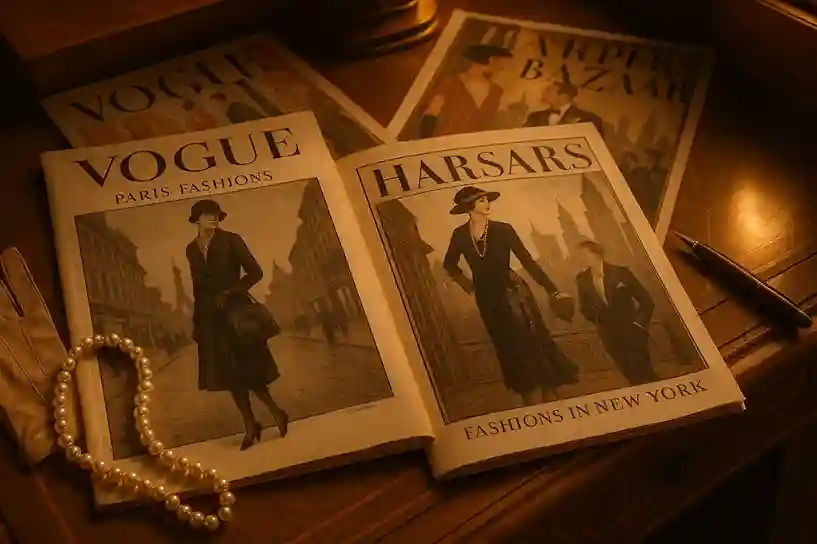
Global Exchange
The 1920s marked the birth of fashion globalization. Tailors in London, designers in Tokyo, and dressmakers in Buenos Aires drew from shared imagery. Styles adapted to climate, culture, and class—but the core spirit remained: freedom through fashion. This worldwide exchange blurred the lines between elite and everyday style.
Legacy
Even now, the legacy endures. Runways still echo flapper silhouettes, loose tailoring, and Art Deco details. Modern designers revive 1920s fashion because it represented change that never faded. The decade proved that fashion could unite people through creativity, ambition, and identity.
How 1920s Fashion Shapes Modern Trends
A century later, 1920s fashion still pulses through modern wardrobes. Its spirit—bold, liberated, and forward-looking—remains timeless. Today’s minimalist cuts, gender-fluid tailoring, and sequined glamour all trace their roots to the Jazz Age. What began as rebellion has become design philosophy.
Minimalism
The clean silhouettes of the 1920s paved the way for modern minimalism. Then, designers like Coco Chanel simplified excess; now, brands echo her clarity through neutral palettes and sleek lines. Loose shapes, dropped waists, and effortless drape reappear in every era that values ease. The focus on comfort over constraint continues to define style today. Each simple line still carries that old message—freedom through form.
Gender Fluidity
In the 1920s, women wore trousers and men embraced softer fabrics. Those choices broke barriers that fashion now celebrates openly. Contemporary unisex clothing, cropped suits, and boxy silhouettes recall that boundary-blurring decade. Designers use androgyny not as shock but as statement. Fashion once whispered rebellion; today, it declares inclusion.
Glamour Returns
Sequined gowns, fringed skirts, and metallic details dominate red carpets and runways again. The shimmer that once danced beneath jazz lights now gleams under camera flashes. Vintage-inspired accessories—pearls, cloche hats, and T-strap shoes—appear in collections by major designers, proving that 1920s luxury still captivates. Pop culture revives it, too—films, television, and themed events reintroduce the decade’s fearless elegance.
Cycle of Revival
Fashion is cyclical because culture is cyclical. Each generation rediscovers what freedom looks like—and how to wear it. The 1920s defined that freedom first. Its confidence, simplicity, and movement shape modern aesthetics from streetwear to haute couture.
As we step forward, the echoes of the Jazz Age remain. Style continues to reinvent itself, but its heartbeat—set in the 1920s—still plays beneath every modern thread.
Learn more about historic American fashion at the U.S. National Archives.
The Role of Designers in 1920s Fashion
Designers shaped 1920s fashion into a movement, not just a style. Coco Chanel, Jean Patou, and Paul Poiret led that transformation. Each one challenged tradition, replacing decoration with purpose. Chanel rejected corsets, offering simple lines and soft fabrics that celebrated freedom. Her designs felt light, modern, and effortless—clothing made for living, not posing.
Jean Patou refined elegance through sportswear, blending comfort with class. He created clothing women could move in, yet still look refined. His vision reflected the decade’s energy—active, ambitious, and forward-looking. Meanwhile, Paul Poiret brought drama through artistic cuts and exotic influence, giving women bold silhouettes that redefined femininity.
Together, they democratized luxury. Their work made fashion accessible yet aspirational, showing that sophistication could exist without excess. Every hemline, seam, and fabric choice carried the new idea of modern beauty—clean, functional, and confident.
This shift laid the foundation for timeless design principles: simplicity, movement, and individuality. Because of them, clothing became communication—a way to express identity rather than conform. The 1920s proved that fashion could evolve with life itself, marking the start of an era where design and freedom walked hand in hand.
Frequently Asked Questions (FAQ)
Conclusion: A Decade That Never Faded
1920s fashion did more than change how people dressed—it transformed how they lived. The decade’s bold spirit redefined beauty, identity, and freedom. Every flapper dress, tailored suit, and sparkling accessory carried the rhythm of a society in motion. Designers turned rebellion into elegance, and ordinary people turned style into self-expression. Though time has moved on, the influence of the Jazz Age endures. Its confidence, simplicity, and individuality still pulse through modern fashion. The 1920s didn’t just set trends—it built the foundation for a world where clothing speaks, moves, and inspires without restraint.
The 1920s changed how the world dressed—and how we express ourselves today.
Which 1920s fashion trend inspires you most: the flapper’s fearless style or the gentleman’s effortless charm?
Share your thoughts in the comments below! Let’s keep the conversation alive about how this bold decade still shapes modern fashion.

Silvia Heart is a lifestyle and wellness writer with a background in apparel and a degree in fashion. She blends creativity with practical insights, guiding readers toward intentional, balanced living. Through her approachable style and thoughtful storytelling, Silvia inspires her community to embrace both everyday joy and personal growth.